


Introduction
Nurse Chidinma still remembers March 2020. As COVID cases surged in Lagos, her clinic’s single mercury thermometer broke under the strain of hundreds of daily temperature checks. “We had to choose between infrared vs contact thermometers quickly,” she recalls. “But which was truly better?” This dilemma remains relevant today across Nigerian homes and healthcare facilities. Should you invest in the speed of infrared thermometers or go for the best thermometer for clinics in 2025?
Imagine a small clinic nestled on the outskirts of Kaduna. Dr. Ahmed runs a mid-sized practice with a handful of dedicated nurses and assistants. One rainy Monday morning, a young boy was rushed in by his frantic mother. He was running a high fever. Dr. Ahmed reached for the clinic’s old thermometer, only to find it broken. The seconds ticked by, and a simple temperature check became a guessing game.
That moment changed everything for Dr. Ahmed.
He realized how crucial it was to equip his clinic with the best thermometer for 2025, not just any device, but one that delivers speed, accuracy, and hygiene. The role of a reliable thermometer has expanded beyond mere readings; it’s a frontline defense against misdiagnosis and delayed treatments.
If you’re a clinic owner, a nurse, or a procurement officer asking, “Which thermometer should clinics have in 2025?” This guide is for you. In a world increasingly focused on precision, having the best thermometer for clinics in 2025 isn’t just about staying up to date; it’s about protecting lives, maintaining credibility, and providing seamless care.
So, let’s help you choose smartly so your clinic never misses a beat. Because when it comes to fever detection, there’s no room for error, and the best thermometer for clinics in 2025 could be the tool that saves a life.
Understanding the Two Types
What Is a Contact Thermometer?
These traditional devices require physical touch to measure temperature. In Nigeria, you’ll commonly find:
- Digital stick thermometers (₦2,000–₦5,000), Used orally, underarm or rectally
- Flexible tip models, safer for children
- Mercury-free alternatives since NAFDAC banned mercury devices
“In rural clinics without electricity, basic digital thermometers are lifesavers,” says Dr. Adebayo from Osun State.
What Is an Infrared Thermometer?
These “no-touch” devices detect heat radiation from surfaces (usually foreheads). Since COVID, they’ve become ubiquitous in:
- Airports & schools
- Busy hospitals
- Nigerian households
“Parents love infrared for checking sleeping kids without disturbance,” notes Pediatric Nurse Obiageli.
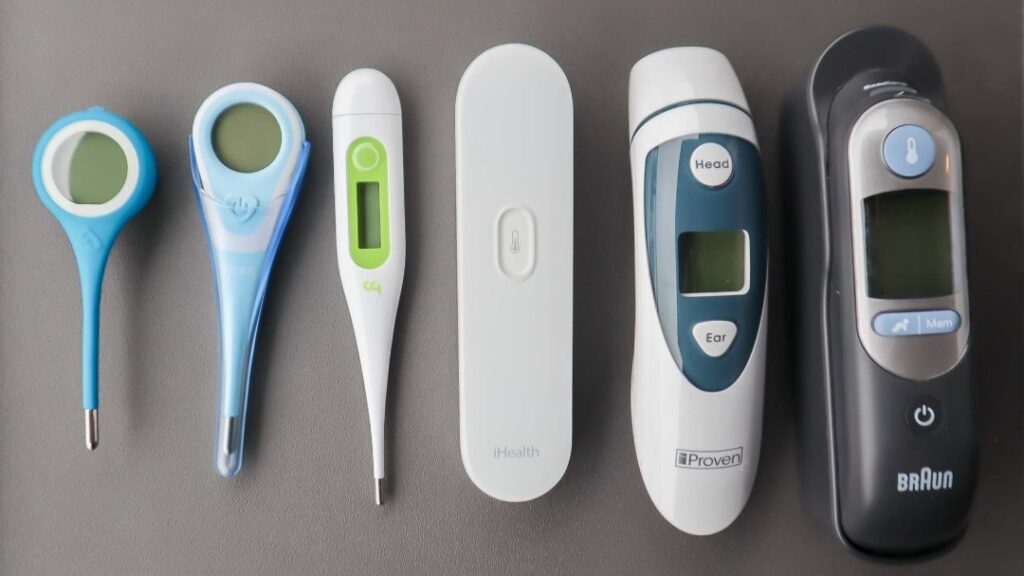
Infrared vs Contact Thermometers: Key Differences
1. Speed & Convenience
Infrared: Delivers readings in 1–3 seconds; ideal for mass screenings.
Contact: Requires 30+ seconds of proper placement.
Verbatim: “During peak COVID, we screened 200+ people/hour using infrared. With contact thermometers? Maybe 50.” – Security Officer, Lagos Airport
2. Hygiene & Safety
Infrared: Zero infection risk, perfect for contagious outbreaks.
Contact: Requires alcohol swabbing between uses. A 2023 NCDC report found 68% of Nigerian clinics reuse probes without proper cleaning.
3. Accuracy & Reliability
Contact: Gold standard for diagnostics. Oral readings have ±0.1°C precision.
Infrared: A Nigerian study found forehead scanners missed 87% of fevers compared to oral thermometers (PMC Nigeria).
Common Issues:
- Sweat/grease skews infrared readings
- Reflective headwear causes false lows
- Dusty environments affect sensors
Real-World Evidence from Nigeria
The Shocking 13% Sensitivity Rate
A 2024 study across 12 Nigerian hospitals revealed:
| Method | Fever Detection Rate |
|---|---|
| Oral Contact | 98% |
| Forehead Infrared | 13% |
“We caught more fevers with ₦3k oral thermometers than ₦25k infrared units,” confessed Dr. Ibrahim at LUTH.
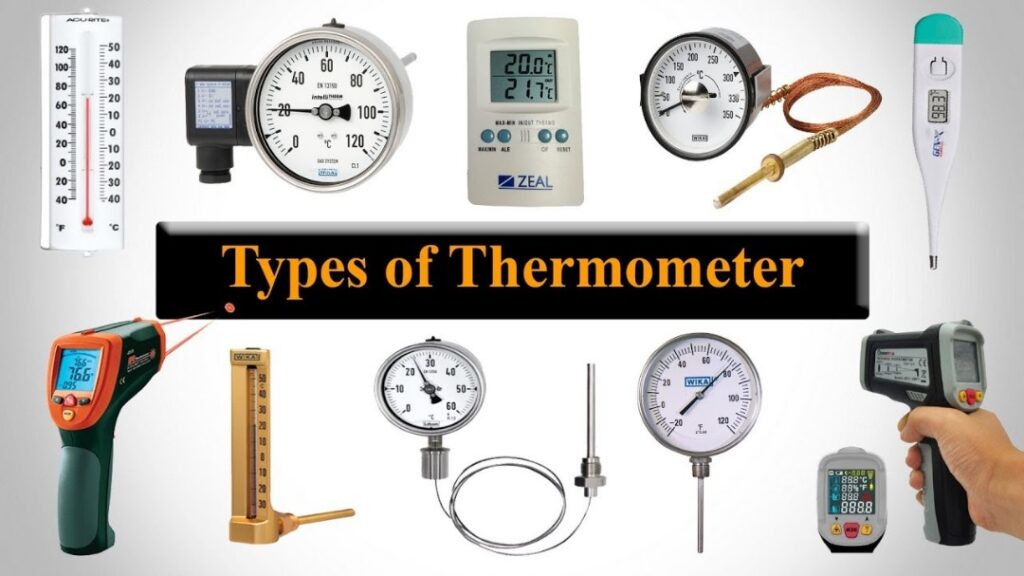
Understanding the Types of Thermometers for Clinical Use
Before you invest, it’s essential to understand your options. Thermometers in 2025 are more diverse, user-friendly, and purpose-driven than ever.
Infrared (Non-contact) Thermometers
- Benefits: No contact needed, super-fast results, minimizes contamination.
- Drawbacks: Can be less accurate if not used correctly.
- Best for: High-volume, pediatric, or emergency care settings.
Digital Contact Thermometers
- Benefits: Affordable and accurate for oral and rectal use.
- Drawbacks: Slower, requires cleaning between uses.
- Best suited for: Low- to medium-traffic clinics.
Tympanic (Ear) Thermometers
- Benefits: Accurate and quick, especially for children.
- Drawbacks: Accuracy depends on ear canal placement.
- Best for: Pediatrics and maternity units.
Forehead Strip Thermometers
- Benefits: Ultra-affordable.
- Drawbacks: Poor accuracy, not recommended for clinical settings.
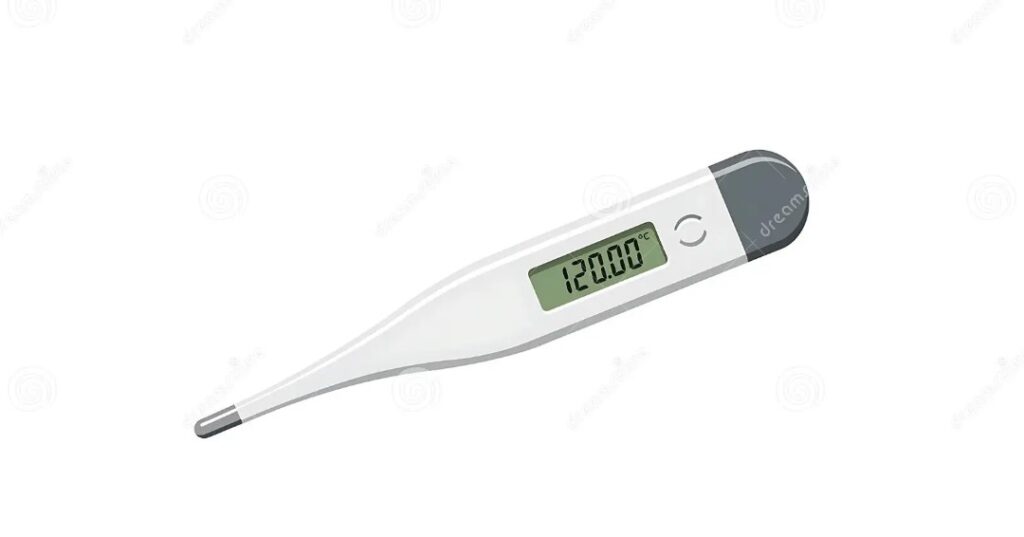
Key Features to Look for in the Best Thermometer for Clinics in 2025
Selecting a thermometer should go beyond price. Here’s what makes the best thermometer for clinics in 2025 worth every Naira:
Clinical Accuracy
Look for thermometers with NAFDAC approval or international medical certifications. False readings lead to wrong treatments.
Speed of Reading
Non-contact thermometers deliver results in 1–3 seconds. In emergencies or busy clinics, speed saves time, and sometimes, lives.
Hygiene & Safety
Choose models with protective caps or non-contact options to reduce the spread of infections.
Battery Efficiency
Opt for rechargeable batteries or low-consumption models. Nigerian clinics often face power interruptions.
Display Readability
Larger backlit screens with intuitive icons ensure easy use, even by non-technical staff.
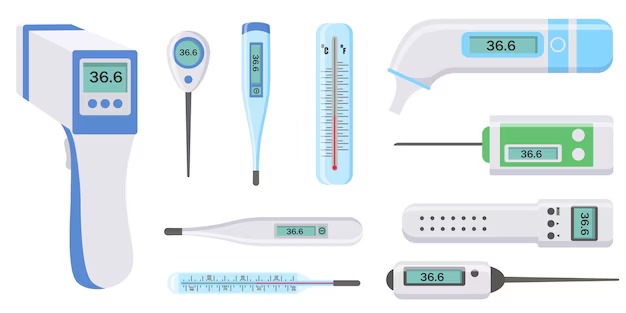
Best Thermometers for Clinics in 2025 (Top Picks for Nigerian Clinics)
We’ve compiled top-performing models based on usability, affordability, and reliability for the Nigerian clinical environment.
Berrcom JXB-178 Infrared Thermometer
- Non-contact design
- 32-reading memory
- Fever alert technology
- Available on HEMACNG
Omron MC-246 Digital Thermometer
- Oral, rectal, or underarm use
- Fast readings in under a minute
- Long battery life
Braun ThermoScan 7
- Age precision technology
- Pre-warmed tips for comfort
- Ideal for neonatal and pediatric use
Cofoe Multi-functional Infrared Thermometer
- Dual mode: body and surface temperature
- User-friendly
Infrared vs. Contact Thermometers: The Big Debate
Let’s settle the age-old question: Is non-contact better?
Infrared Thermometers
- Advantages: Hygiene, convenience, quick results
- Challenges: Sensitive to environmental interference
Contact Thermometers
- Advantages: Accuracy when used correctly
- Challenges: Time-consuming; needs cleaning after each use
Expert Tip: For best results, many Nigerian clinics now stock both types to suit varying patient needs and traffic levels. Explore Infrared vs Contact Thermometers
Which Thermometer Is Right for You?
Quick Decision Guide
| Scenario | Best Choice |
|---|---|
| School/office screenings | Infrared |
| Pediatric home use | Contact (flexible tip) |
| Clinical diagnostics | Oral contact thermometer |
| Public health campaigns | Infrared + contact confirmation |
Pro Tips for Accurate Readings
For Infrared Thermometers
- Measure from 3–5 cm distance
- Wipe foreheads free of sweat/oil
- Avoid direct sunlight or fans
For Contact Thermometers
- Wait 30 mins after eating/drinking
- Clean with 70% alcohol after each use
- For oral use: Place under tongue fully
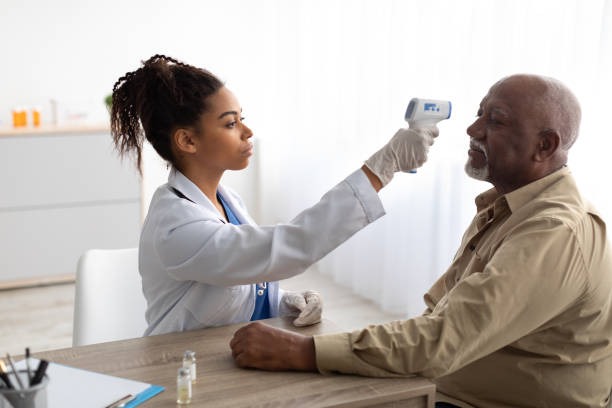
How to Use a Thermometer Correctly (And Train Your Staff Too)
Even the best thermometer for clinics in 2025 won’t perform well without proper usage.
Using Infrared Thermometers
- Ensure the forehead is clean and dry.
- Hold 3–5 cm away from the skin.
- Point directly at the center of the forehead.
- Press and wait for the beep.
Using Contact Thermometers
- Clean the tip with alcohol.
- Place correctly (oral, rectal, or armpit).
- Instruct the patient to stay still.
- Wait for the digital signal.
Maintenance Tips
- Always sanitize before and after use.
- Replace batteries regularly.
- Store in a clean, dry environment.
Common Mistakes Clinics Make When Choosing Thermometers
Avoid these pitfalls that lead to frustration and costly replacements:
- Skipping certification: Only buy NAFDAC-approved devices.
- Buying for price, not performance: A cheap thermometer can cost more in errors.
- Failing to train staff: User error is a leading cause of inaccurate readings.
- Ignoring maintenance: Regular cleaning and battery checks are non-negotiable. WHO Training on Medical Equipment Use

Where to Buy the Best Thermometer for Clinics in 2025 (Nigeria)
Skip the unreliable market. Trust platforms like HEMACNG.com
- Certified suppliers of medical-grade equipment
- Detailed product info and customer reviews
- Nationwide delivery.
Conclusion: Why the Right Thermometer Matters More Than Ever
In Nigeria’s evolving healthcare system, trust starts with accurate data. And it begins with the thermometer. From diagnosing COVID-19 to checking neonatal fever, the best thermometer for clinics in 2025 becomes your invisible assistant, working silently, yet impactfully.
Let this be your takeaway: Precision is not optional. Hygiene is not negotiable. And preparation is your best investment.
So as you upgrade your clinic this year, ask not just what is affordable, but what is dependable. The best thermometer for clinics in 2025 won’t just be another tool on the shelf, it will be your first line of defense in giving your patients the care they deserve.
Ready to equip your clinic with high-performing thermometers? Explore options on HEMACNG