

Uncategorized
Wheelchair Accessories & Mobility Aids in Nigeria: Types, Prices & Where to Buy

A wheelchair can change the way a person moves through the world, but sometimes the wheelchair itself is only part of the solution. A cushion may make a long day more comfortable. A ramp can make a doorway easier to navigate. A walking stick can give someone the extra support they need to move around the house. For families searching for wheelchair accessories and mobility aids in Nigeria, these seemingly simple products can make everyday routines more manageable.
Think about an elderly parent who wants to move from the bedroom to the sitting room without constantly calling for assistance. Or a stroke survivor who is learning to move around again after a major change in mobility. Even caregivers can benefit when the right equipment makes transfers, positioning and daily movement more practical.
That is why choosing mobility equipment should be about more than finding the cheapest product available. The right accessory or mobility aid should suit the person using it, fit the existing equipment where necessary, and work within the environment where it will be used.
In this guide, we will look at common wheelchair accessories, mobility aids for elderly people and people recovering from stroke, factors that affect prices, what to check before buying, and where you can find mobility equipment in Nigeria.
What Are Wheelchair Accessories and Mobility Aids?
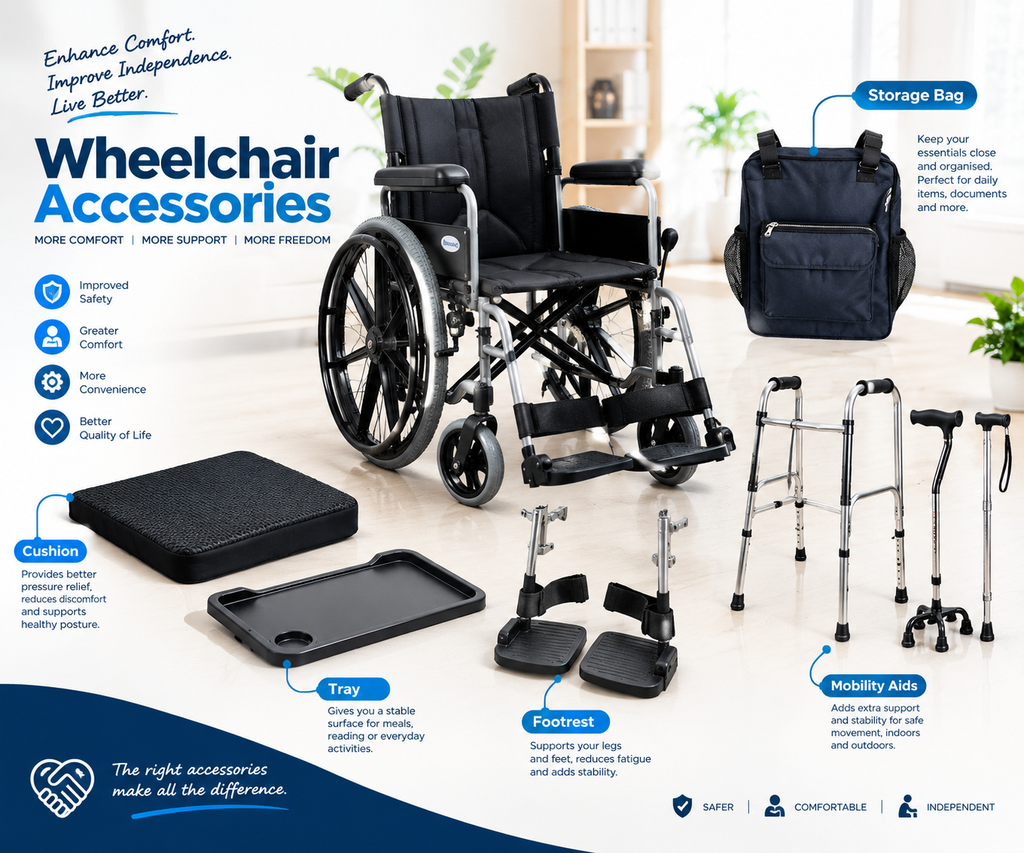
Wheelchair accessories are products designed to add functionality, convenience, comfort or support to an existing wheelchair.
Some are simple additions. Others can be more specialised.
Examples include:
- Wheelchair cushions
- Wheelchair trays
- Footrests
- Leg supports
- Storage bags
- Replacement wheels
- Rain covers
- Positioning accessories
- Transfer boards
- Wheelchair ramps
Mobility aids are broader. They include equipment that helps people move, stand, walk or transfer more safely or independently.
Common examples include:
- Walking sticks
- Crutches
- Walking frames
- Rollators
- Wheelchairs
- Patient transfer equipment
- Mobility ramps
- Standing and rehabilitation aids
The World Health Organization considers wheelchairs important assistive products because they can support mobility, participation, and independence. However, WHO also stresses that appropriate wheelchair provision involves individual assessment, fitting, training, and follow-up. That distinction matters. A product can be well made and still be unsuitable for a particular person.
Why Do Wheelchair Accessories Matter?
Imagine buying a good wheelchair only to discover that the user spends hours sitting uncomfortably.
Or perhaps the chair works perfectly indoors but becomes difficult to use because there is a small step at the entrance. Maybe the person needs somewhere to keep medication, a phone, or a water bottle while moving around. These are everyday problems. Fortunately, some can be addressed with the right accessories.
Wheelchair accessories may help with:
- Everyday convenience
- Comfort
- Positioning
- Storage
- Transfers
- Access around the home
- Outdoor mobility
- Equipment maintenance
However, accessories should not be viewed as one-size-fits-all solutions. For users with complex positioning, posture or mobility needs, it is sensible to involve an appropriately qualified healthcare professional. WHO’s wheelchair guidance specifically highlights the importance of assessment and fitting rather than simply handing someone a wheelchair and expecting it to work for them.
10 Wheelchair Accessories Worth Considering in Nigeria
1. Wheelchair Cushions
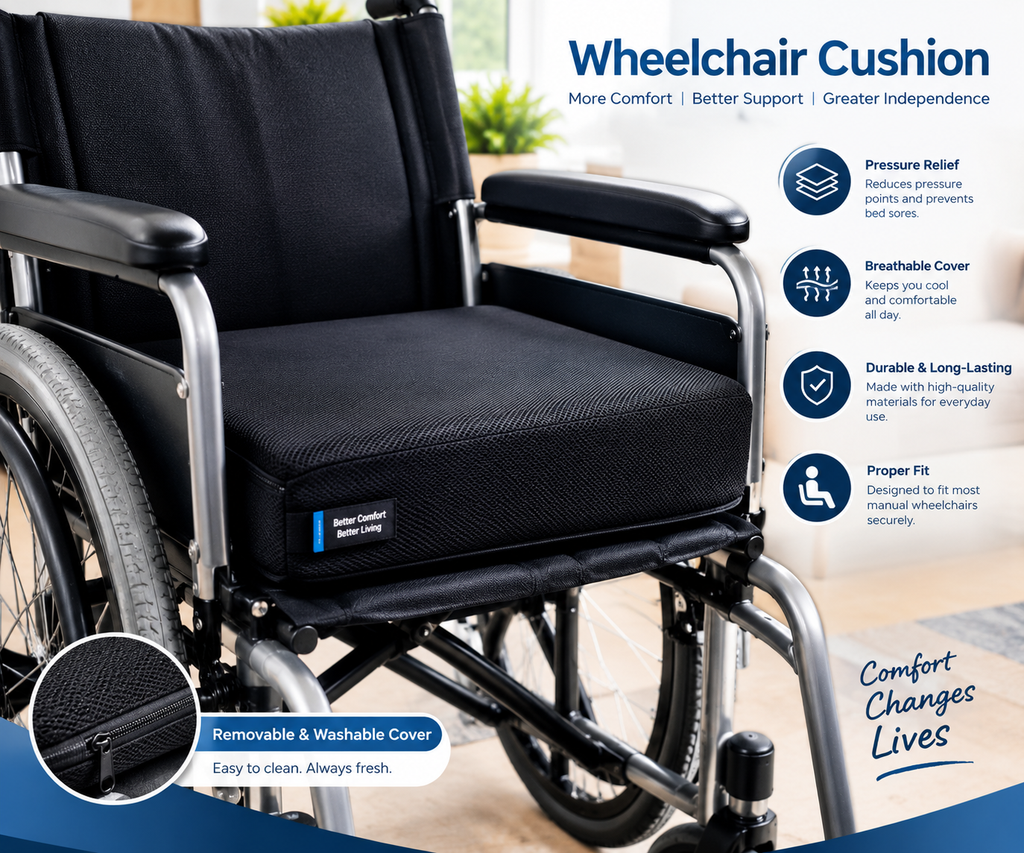
A wheelchair cushion may look like a small addition, but for someone who spends several hours sitting, it can become an important part of the overall setup.
Cushions come in different materials, shapes, and designs. The right option depends on factors such as the wheelchair, the user’s body dimensions, how long they sit each day and their positioning requirements.
When buying a wheelchair cushion, check:
- Seat width
- Seat depth
- Cushion dimensions
- Material
- Intended use
- Compatibility with the wheelchair
Do not simply buy the softest cushion you can find. Comfort and suitability are not always the same thing. For people with more complex seating needs, professional advice is particularly important.
2. Wheelchair Ramps
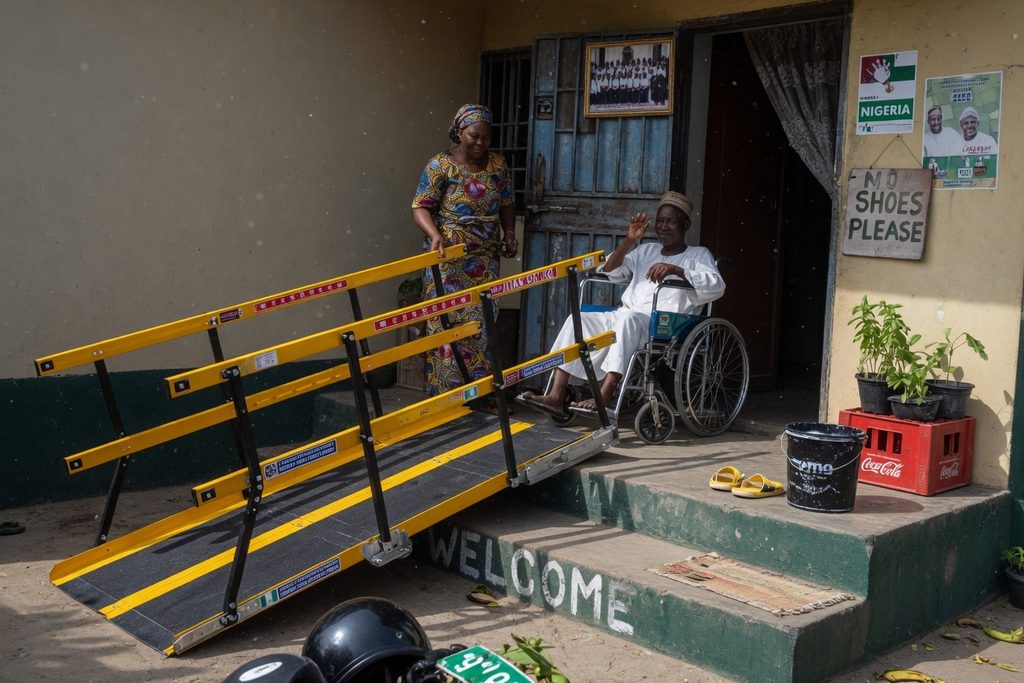
A wheelchair may provide excellent mobility, but a single step can still become a major obstacle.
That is where an appropriate wheelchair ramp can help. Portable and threshold ramps may be useful around certain entrances, doorways, and small changes in level. However, ramp length, slope, width, weight capacity, and surface all matter. Before buying one, measure the area where the ramp will be used. A ramp that is too short or unsuitable for the height of the step may create another safety problem instead of solving the first one.
What to check before buying a wheelchair ramp
- Maximum weight capacity
- Ramp length
- Ramp width
- Surface grip
- Folding mechanism
- Portability
- Intended height
- Compatibility with the wheelchair
3. Wheelchair Storage Bags
Sometimes mobility is not the difficult part. It is carrying everything else. A wheelchair storage bag can provide space for everyday items such as:
- Water
- Medication
- Personal documents
- Phone
- Wallet
- Small personal belongings
For caregivers, this can also make trips outside the home less stressful. Before purchasing, check how the bag attaches to the wheelchair and whether its size is appropriate for the chair.
4. Wheelchair Trays
A wheelchair tray can provide a practical surface for certain activities. Depending on the design and user’s needs, it may be used for:
- Eating
- Reading
- Writing
- Using a tablet
- Keeping personal items nearby
However, compatibility matters. Not every tray fits every wheelchair. Check the chair’s armrest configuration and the dimensions of the tray before ordering.
5. Footrests and Leg Supports
Footrests are often included with wheelchairs, but replacement or specialised options may also be available. They help position the user’s feet and legs while seated. Depending on the wheelchair, you may encounter:
- Detachable footrests
- Swing-away footrests
- Elevating leg rests
- Adjustable supports
If a user has significant leg weakness, swelling, contractures or positioning difficulties, professional assessment can help determine what type of support is appropriate.
6. Positioning Accessories
Some wheelchair users require more than basic seating. Depending on individual needs, positioning accessories may include supports designed to help maintain a particular seated position. These should be selected carefully.
A positioning accessory is not automatically suitable simply because it fits the wheelchair. Its use should take into account the person’s physical abilities and needs. This is particularly important for people with neurological conditions or significant postural difficulties.
7. Wheelchair Gloves
For people who self-propel manual wheelchairs, the hands can experience considerable friction and repeated contact with the push rims. Wheelchair gloves may provide additional grip and hand protection. When choosing them, consider:
- Grip
- Material
- Size
- Ventilation
- Ease of putting them on
- Intended frequency of use
They are a relatively simple accessory, but for someone who propels a wheelchair regularly, small improvements in handling can make a difference.
8. Wheelchair Rain Covers
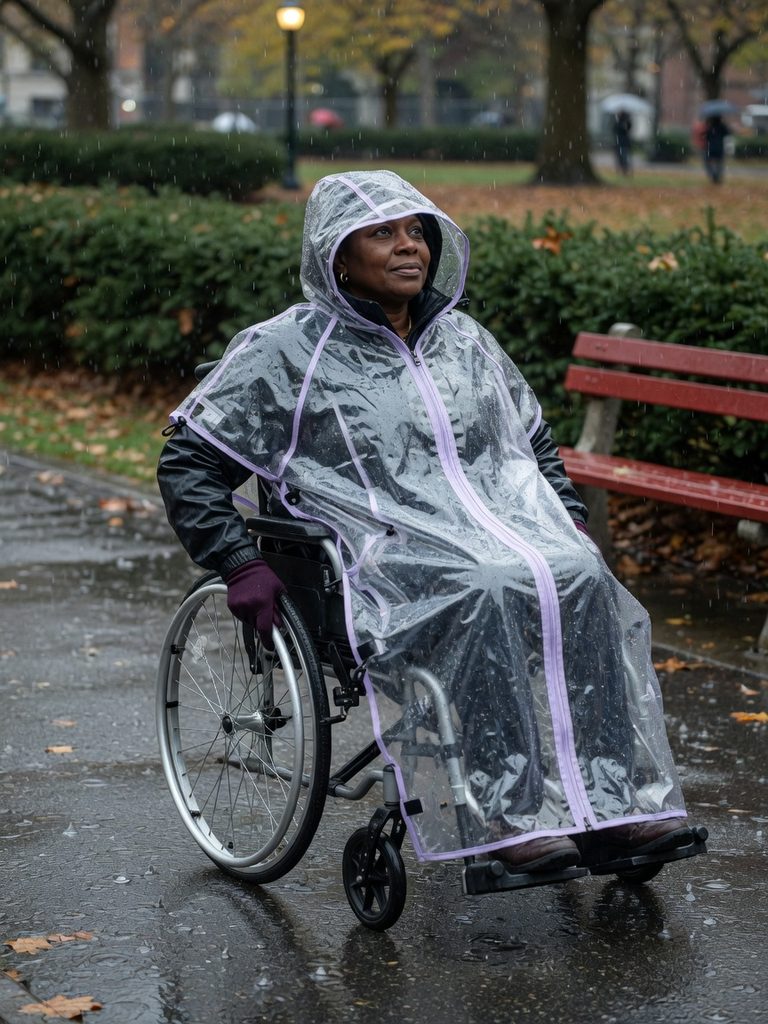
Nigeria’s weather can change quickly. For someone who depends on a wheelchair outdoors, rain protection can therefore be more than a convenience.
A suitable rain cover may help protect the wheelchair and user from sudden rainfall during outdoor journeys. Look for features such as:
- Appropriate wheelchair size
- Waterproof material
- Easy storage
- Ventilation
- Visibility
- Simple fitting
The cover should not interfere with safe wheelchair operation.
9. Replacement Wheels, Tires, and Castors
Wheelchairs are not maintenance-free. Over time, wheels, tires, tubes, castors, and other components may wear out or become damaged.
Instead of immediately replacing the entire wheelchair, it may sometimes be possible to replace a compatible component. Before purchasing a replacement part, confirm:
- Wheel size
- Tyre type
- Axle specifications
- Wheelchair model
- Castor dimensions
- Brake compatibility
This is one reason it is useful to buy from a supplier that can provide clear product information and support.
10. Transfer Boards and Transfer Aids
Getting into a wheelchair is only one part of mobility. Getting from a bed to the wheelchair, from a wheelchair to a chair or into another position can sometimes be more challenging.
Transfer boards and other transfer aids are designed for particular transfer situations. However, their safe use depends heavily on the individual’s strength, balance, environment and transfer technique.
Where a person has significant mobility limitations, a physiotherapist, occupational therapist or other qualified professional can provide appropriate guidance.
Mobility Aids for Elderly People in Nigeria
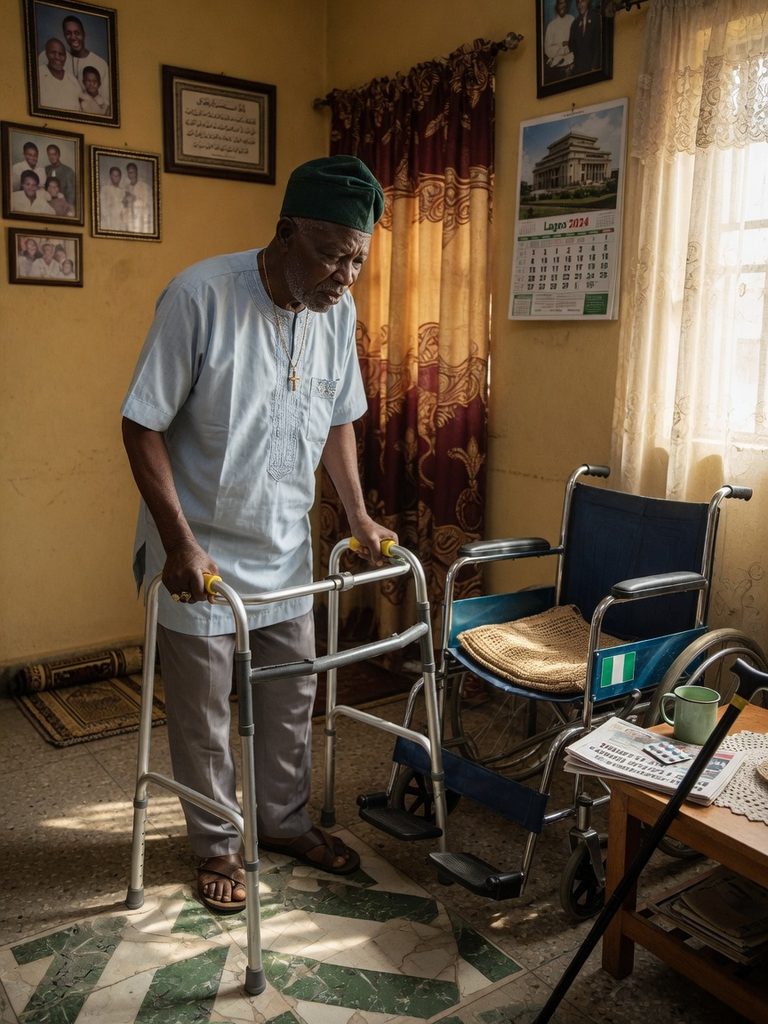
Growing older does not automatically mean someone needs a wheelchair. Some older adults remain fully mobile. Others may experience changes in balance, strength, coordination or endurance. That is where different mobility aids can become useful.
Walking Sticks
A walking stick can provide support for some people who need assistance while walking. The height and type should be appropriate for the user. HemacNG currently lists a walking stick at ₦12,000. Prices can change, so buyers should confirm the current listing before ordering.
Walking Frames
A walking frame can provide more support than a single walking stick. HemacNG currently lists a walking Zimmer frame at ₦35,000. Again, the product should be suitable for the individual’s mobility level and environment.
Rollators
Rollators generally combine wheels with hand-operated brakes and may include a seat or storage area, depending on the model. They can be useful for certain users who need walking support while retaining some ability to move independently.
Wheelchairs
When walking becomes unsafe, exhausting or impractical, a wheelchair may become part of the mobility plan. HemacNG currently lists a range of wheelchair products, including manual, commode, electric and reclining models. Explore Wheelchairs on HemacNG
Mobility Aids for Stroke Patients
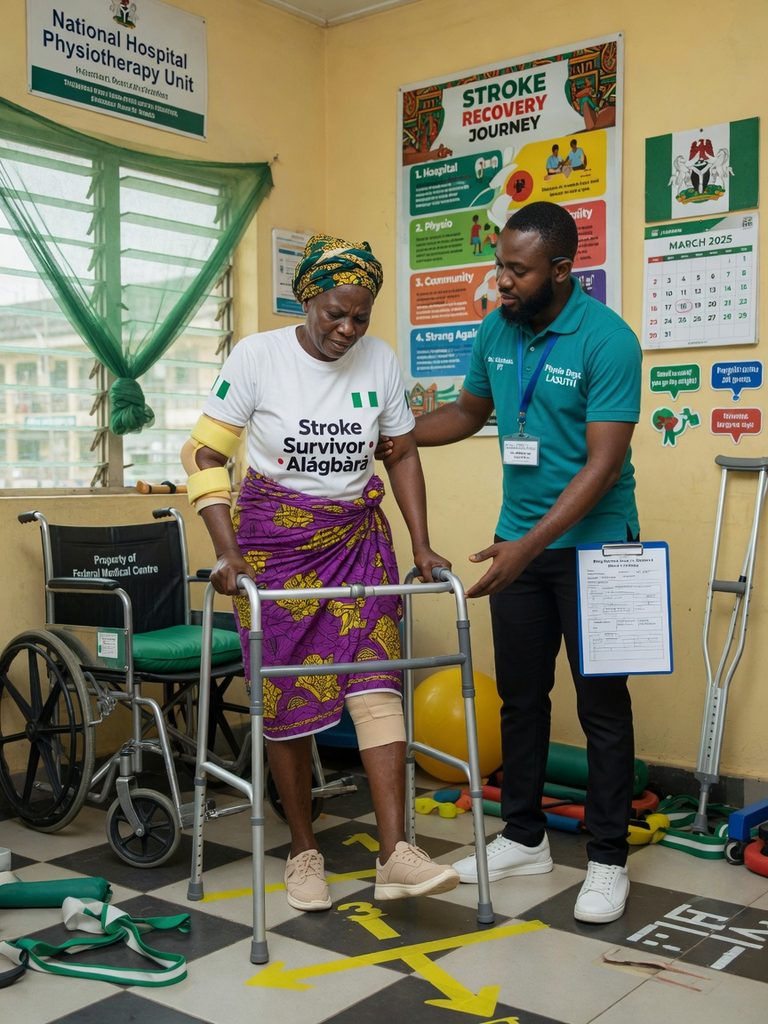
A stroke can change a person’s mobility very quickly. Someone who once walked around the house without assistance may suddenly struggle with balance, coordination, strength or transfers. As rehabilitation progresses, the equipment they need may also change.
For example, one person may eventually walk with a stick. Another may need a walking frame. Someone else may continue to require a wheelchair for longer journeys. This is why there is no single “best” mobility aid for every stroke survivor. Possible equipment may include:
- Walking sticks
- Walking frames
- Wheelchairs
- Commode wheelchairs
- Transfer aids
- Positioning accessories
- Rehabilitation equipment
The right choice should reflect the person’s abilities and rehabilitation goals. WHO’s wheelchair provision guidelines recommend personalised assessment, fitting, training and follow-up.
Therefore, if you are buying wheelchair accessories and mobility aids in Nigeria for someone recovering from stroke, avoid choosing equipment based solely on appearance or price. Ask what the person can safely use. Ask where they will use it. And where their needs are complex, ask a qualified healthcare professional for guidance.
Wheelchair Accessories vs Buying a New Wheelchair
Sometimes you do not need an entirely new wheelchair. You may simply need the right accessory. Consider these examples:
| Problem | Possible solution |
|---|---|
| The chair lacks storage | Wheelchair storage bag |
| User needs a more suitable seating surface | Appropriate wheelchair cushion |
| Small entrance step creates difficulty | Suitable wheelchair ramp |
| Existing footrest is damaged | Compatible replacement |
| Wheels are worn | Compatible replacement wheels/tyres |
| User needs toileting support | Commode wheelchair |
| Manual propulsion is not practical | Consider an appropriate powered wheelchair |
| User needs additional reclining functionality | Consider a reclining wheelchair |
The important word here is possible.
An accessory may solve a practical problem, but it cannot turn an unsuitable wheelchair into the right one for every user.
WHO notes that no single wheelchair model or size can meet everyone’s needs, which is why having a suitable range of products and proper assessment matters.
How Much Do Wheelchair Accessories and Mobility Aids Cost in Nigeria?
There is no single price for mobility equipment.
Prices depend on:
- Product type
- Brand
- Materials
- Size
- Features
- Weight capacity
- Importation costs
- Availability
- Exchange rates
- Supplier
- Delivery requirements
For example, HemacNG’s current mobility-aid catalogue includes products ranging from a ₦12,000 walking stick and ₦35,000 walking frame to wheelchairs and powered mobility products costing considerably more. Its current listings include a standard wheelchair at ₦145,000, a commode wheelchair at ₦165,000, an executive/reclining commode wheelchair at ₦300,000, a cerebral palsy wheelchair at ₦450,000 and electric wheelchair options listed at ₦650,000, ₦800,000 and ₦1.5 million, depending on the model.
These are supplier-listed prices at the time of checking, not permanent market prices. Therefore, always confirm the current price and stock before making payment. Browse HemacNG Mobility Aids
How to Choose the Right Wheelchair Accessories
Buying mobility equipment becomes much easier when you start with the user rather than the product.
Start With the Person
Ask:
- Who will use the equipment?
- What can they currently do independently?
- Do they need a caregiver?
- How often will the equipment be used?
- What is their approximate weight and height?
- Do they have specific positioning requirements?
These questions help narrow down the options.
Consider the Environment
A mobility aid used inside a house may face very different conditions from one used outdoors.
Think about:
- Door widths
- Steps
- Ramps
- Flooring
- Bathroom access
- Vehicle access
- Storage space
Check Compatibility
This is particularly important for accessories. Before buying a cushion, tray, footrest or replacement wheel, check whether it is compatible with the existing wheelchair. Do not assume that products with similar appearances will automatically fit.
Check Weight Capacity
Always follow the manufacturer’s stated weight limit. This is especially important for wheelchairs, transfer equipment, ramps and other load-bearing products.
Consider Maintenance
Ask whether replacement parts are available. Also consider whether the supplier provides after-sales support if something goes wrong. A cheaper product that becomes difficult to maintain may cost more in the long run.
Where to Buy Wheelchair Accessories and Mobility Aids in Nigeria
When buying mobility equipment, the supplier is part of the decision. You are not simply buying a chair, walking frame, or accessory. You may need help understanding specifications, choosing compatible products, confirming availability, or dealing with replacement parts later. HemacNG’s current mobility-aid catalogue includes wheelchairs, walking sticks, walking frames, electric wheelchairs, patient lifts, and other mobility-related products. Shop Medical Equipment on HemacNG
The company also has a dedicated wheelchair range featuring manual, commode, electric, reclining, and specialized wheelchair options. View HemacNG’s wheelchair range. When ordering medical or assistive equipment, ask the supplier about the exact model, specifications, current availability, warranty, and return conditions.
For regulated medical devices, buyers should also pay attention to applicable regulatory requirements. NAFDAC’s current medical-device guidelines state that medical devices covered by the regulations must be registered before manufacture, import, export, advertisement, sale, distribution, or use in Nigeria. That means it is better to ask questions than simply assume that every online listing has the necessary documentation.
Why Choose HemacNG for Mobility Equipment?
When a family buys equipment for an elderly parent or someone with reduced mobility, trust matters.
HemacNG offers a range of mobility products rather than limiting customers to one type of wheelchair.
Its current catalogue includes:
- Standard wheelchairs
- Commode wheelchairs
- Electric wheelchairs
- Electric reclining wheelchairs
- Cerebral palsy wheelchairs
- Walking sticks
- Walking frames
- Patient lifts
- Other mobility and rehabilitation products
This variety is useful because mobility needs are different from person to person. WHO similarly stresses that a sufficient range of wheelchair products should be available because one model or size cannot meet the needs of every user. So instead of saying, “I need a wheelchair,” it is often better to explain the situation: “I am buying for an elderly person who weighs approximately 80 kg, needs caregiver assistance and will mainly use the chair indoors.” That information gives the supplier a much better starting point. Contact HemacNG About Mobility Equipment
Common Mistakes to Avoid When Buying Mobility Aids
Choosing Only by Price
Budget matters, but the cheapest option is not automatically the most suitable. Consider durability, specifications, compatibility and after-sales support too.
Ignoring Weight Capacity
Never guess. Always check the manufacturer’s stated capacity.
Buying the Wrong Size
A wheelchair that is too narrow, too wide, or poorly fitted can be uncomfortable and may not provide appropriate support.
Forgetting the Environment
Measure doorways and consider steps, flooring, and available storage space.
Buying an Accessory Without Checking Compatibility
A tray, cushion, footrest, or replacement wheel must be compatible with the existing equipment.
Assuming One Product Works for Everyone
This is perhaps the biggest mistake. The person using the equipment should remain at the center of the decision.
Ignoring Professional Guidance
For straightforward mobility needs, product information may be enough to narrow your options. However, complex seating, posture, or neurological or rehabilitation needs may require professional assessment.
Frequently Asked Questions About Wheelchair Accessories and Mobility Aids in Nigeria
What are the most useful wheelchair accessories?
Useful accessories depend on the user. Common options include cushions, trays, storage bags, ramps, footrests, leg supports, replacement wheels, and transfer aids.
How much do wheelchair accessories cost in Nigeria?
Prices vary depending on the accessory, material, brand, size, and availability. Buyers should confirm current supplier prices because medical equipment prices can change.
Where can I buy mobility aids in Nigeria?
You can explore mobility equipment from specialist medical equipment suppliers such as HemacNG, which currently lists wheelchairs, walking sticks, walking frames, electric wheelchairs, and other mobility products.
What mobility aid is suitable for an elderly person?
That depends on the person’s mobility and environment. Some older adults may use a walking stick or frame, while others may need a wheelchair. A professional assessment is advisable where mobility or balance problems are significant.
What mobility aid is suitable after a stroke?
There is no universal answer. Depending on the person’s abilities, mobility equipment may include a walking stick, walking frame, wheelchair, or other assistive product. The choice should reflect the person’s rehabilitation and mobility needs.
Can I add accessories to my existing wheelchair?
In many cases, accessories can be added or replaced. However, compatibility is important. Check the wheelchair model, dimensions, and attachment points before buying.
How do I choose a wheelchair cushion?
Consider the wheelchair’s seat dimensions, the user’s body size, how long they sit, and their positioning requirements. For users with complex seating needs, seek professional advice.
Are wheelchair ramps available in Nigeria?
Wheelchair ramps and accessibility products are available through various medical and mobility equipment suppliers. Before buying, check the ramp’s dimensions, weight capacity, slope requirements, and intended location.
Does HemacNG sell wheelchairs and mobility aids?
Yes. HemacNG’s current catalogue includes standard, commode, electric, and reclining wheelchairs, as well as walking sticks, walking frames, and other mobility products.
Make Everyday Movement a Little Easier
At the end of the day, mobility equipment is not really about wheels, frames, cushions or handles.
It is about the stroke survivor taking another step towards greater independence. And it is about the caregiver who needs practical equipment to make daily routines a little less demanding. That is why choosing wheelchair accessories and mobility aids in Nigeria deserves more thought than simply comparing prices. Start with the person. Consider their environment. Check the specifications. Confirm compatibility. When needs are complex, involve a qualified healthcare professional.
WHO’s wheelchair guidance supports a people-centred approach built around assessment, fitting, training and follow-up. If you are looking for wheelchairs, walking aids or other mobility equipment, explore the available options before making your decision. Shop Mobility Aids on HemacNG. Explore HemacNG’s Medical Equipment Store
And if you are unsure which product fits your needs, contact the supplier with information about the user’s mobility level, approximate weight, intended environment and the type of support required. Contact HemacNG