
Uncategorized
What is Meant by Medical Equipment After-Service? A Complete Guide
Ever bought a piece of medical equipment and wondered, “What happens next?” You’re not alone. Let’s talk about something that doesn’t get enough attention: medical equipment after-service.
Here’s the truth most people don’t tell you:
Buying medical equipment is just the beginning of the journey. The real magic, and honestly, the real challenge, starts after that equipment arrives at your facility. Think about it. A brand-new CT scanner sitting in your radiology department means nothing if nobody knows how to operate it properly. A ventilator that hasn’t been calibrated in months? That’s not just a machine collecting dust. That’s a patient safety risk.
And this is exactly where medical equipment after-service comes into the picture.
Whether you run a small clinic in Lagos or manage a large hospital in Abuja, understanding what after-service means could literally save lives, and save you a lot of money too. So, grab a cup of coffee, and let’s break this down together.
So, What Exactly is Medical Equipment After-Service?
Let’s keep it simple.
Medical equipment after-service refers to every form of support and service you receive after purchasing medical equipment. It’s not just about fixing things when they break. Oh no, it’s much bigger than that.
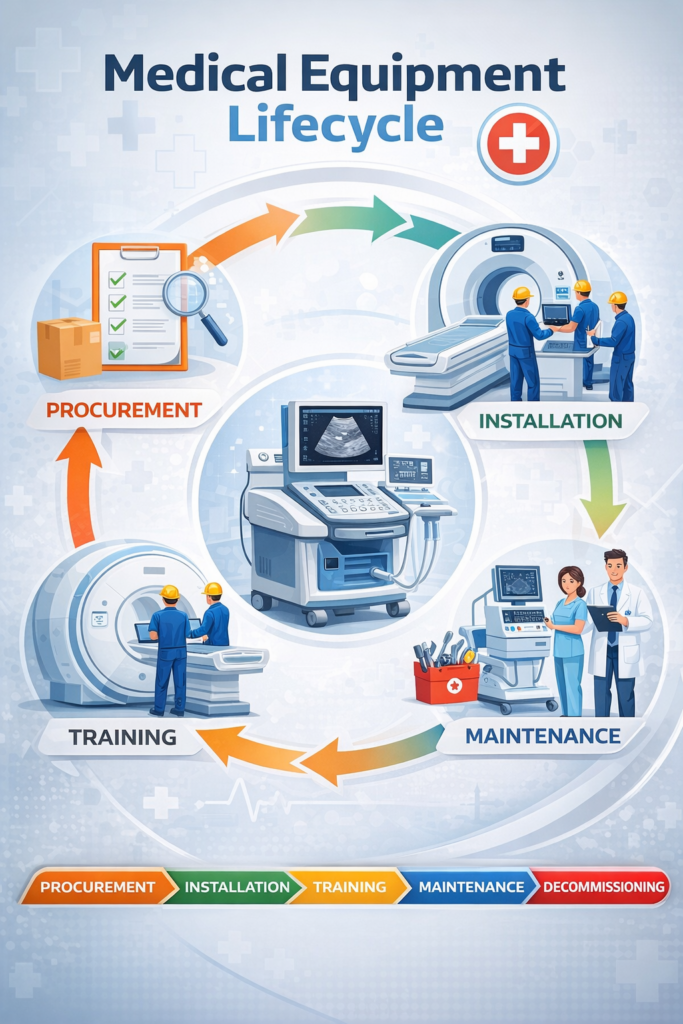
After-service covers everything from the moment that equipment is delivered to your doorstep. Installation. Training your staff. Regular maintenance. Repairs when something goes wrong. Calibration to make sure readings are accurate. Even supplying spare parts years down the line.
In other words, medical equipment after-service is the backbone that keeps your healthcare facility running smoothly.
Now, you might be thinking, “Isn’t that just a warranty?”
Not quite. A warranty is a part of after-sales service, but after-sales service goes far beyond warranty. A warranty typically covers defects for a limited period. After-service, on the other hand, is an ongoing relationship between you and your equipment provider, one that lasts throughout the entire lifespan of the equipment.
Organizations like the World Health Organization (WHO) emphasise that proper medical equipment management, including after-service, is essential for effective healthcare delivery. And international standards like ISO 13485 set the benchmark for quality management in medical device servicing.
The Key Components of Medical Equipment after-service
Now let’s get into the meat of it. What does medical equipment after-service actually look like in practice? Here are the core components:
Installation and Commissioning
First things first. When your equipment arrives, it needs to be properly installed and set up. This isn’t something you want to leave to guesswork. Professional installation ensures that the equipment is configured correctly, the environment meets the required specifications, and everything passes initial testing.
At HemacNG, our team handles installation with precision, making sure your equipment is ready to perform from day one.
User Training and Education
Here’s something that breaks my heart. I’ve seen hospitals with state-of-the-art equipment gathering dust simply because the staff didn’t know how to use it. What a waste, right?
That’s why training is a critical part of medical equipment after-service. Your healthcare workers need hands-on training on how to operate the equipment safely and effectively. They need to understand safety protocols, troubleshooting basics, and best practices.
And it shouldn’t be a one-time thing either. Refresher courses and ongoing education keep your team sharp and confident. HemacNG’s training programs are designed specifically for Nigerian healthcare facilities, ensuring your staff gets practical, real-world knowledge.
Preventive Maintenance
If there’s one thing I want you to remember from this entire article, it’s this: preventive maintenance saves lives and money.
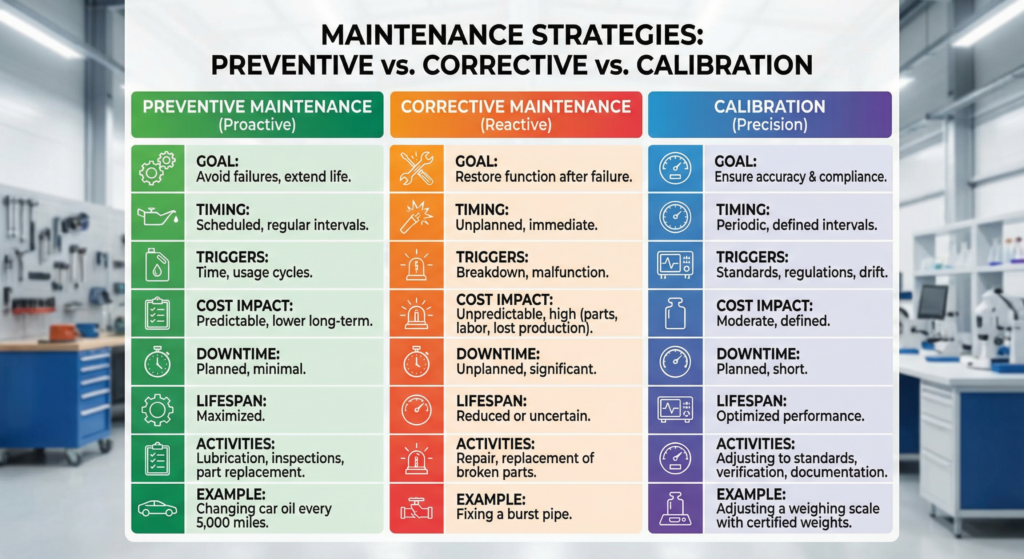
Preventive maintenance involves scheduled inspections, cleaning, lubrication, part replacements, and testing, all done before something breaks. It’s like taking your car for regular servicing instead of waiting for the engine to seize.
The benefits are enormous:
- Reduced downtime — Your equipment stays operational
- Extended lifespan — You get more years out of your investment
- Compliance — You meet regulatory requirements
- Patient safety — Accurate, reliable equipment means better care
Corrective Maintenance and Repairs
Sometimes, despite your best efforts, things break. It happens. What matters is how quickly and effectively the problem gets fixed.
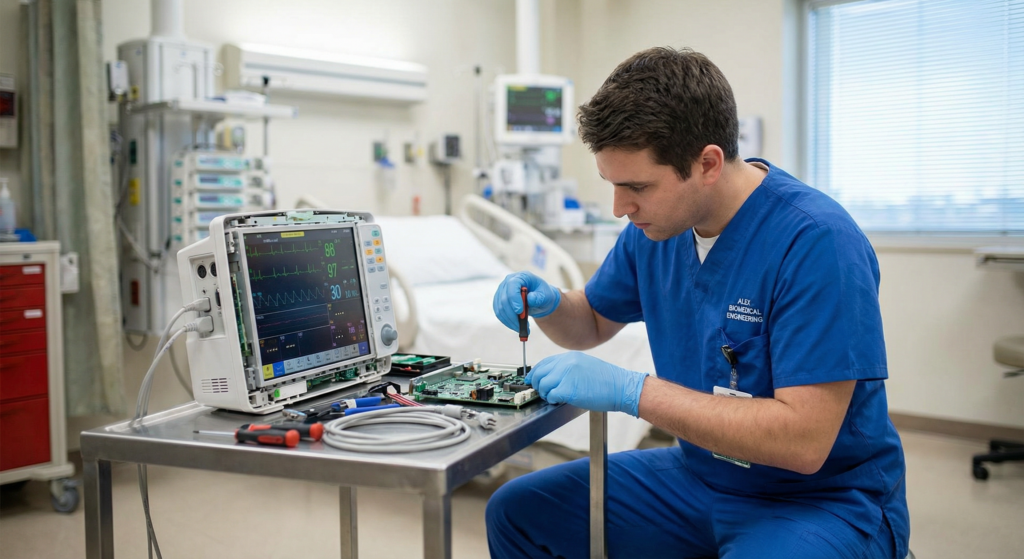
Corrective maintenance is all about diagnosing faults and repairing equipment when it malfunctions. This requires skilled biomedical engineers who understand the intricacies of medical devices. Response time is critical here; every hour of downtime could affect patient care.
At HemacNG, we pride ourselves on rapid response times and a team of certified technicians ready to get your equipment back up and running.
Calibration Services
Imagine a blood pressure monitor that gives inaccurate readings. Or a laboratory analyzer that produces unreliable results. Scary, right?
Calibration ensures that your medical equipment maintains its accuracy and precision. It’s not optional; it’s a regulatory requirement for many devices. Regular calibration of patient monitors, ventilators, defibrillators, and lab equipment is a non-negotiable part of medical equipment after-service.
Spare Parts Supply
One of the biggest headaches in Nigerian healthcare? Getting genuine spare parts. Many facilities experience extended equipment downtime simply because they can’t source the right parts.
A reliable after-service provider maintains an inventory of genuine and OEM-approved spare parts, ensuring timely delivery when you need them most. HemacNG partners with global manufacturers to ensure our clients never have to wait unnecessarily.
Software Updates and Technical Upgrades
Modern medical equipment is increasingly digital. That means software updates, firmware upgrades, and security patches are part of the after-service package. These updates improve functionality, fix bugs, and keep your equipment compliant with evolving standards.
Service Contracts and Warranty Management
Finally, service contracts formalize the after-service relationship. These contracts outline what’s covered, how often maintenance will be performed, response times for emergencies, and costs.
Common types include:
- Comprehensive contracts — Everything included (parts, labour, preventive and corrective maintenance)
- Preventive-only contracts — Scheduled maintenance only
- On-call contracts — Pay-per-service when issues arise
Why Does Medical Equipment After-Service Matter So Much?
Let me paint a picture for you.
A hospital in Port Harcourt purchases an advanced ultrasound machine. It works beautifully for six months. Then, gradually, the image quality starts deteriorating. Nobody notices at first. A misdiagnosis happens. Then another. By the time someone realizes the machine needs servicing, the damage, both to patients and the hospital’s reputation, is already done.
This scenario is more common than you’d think. And it’s entirely preventable with proper medical equipment after-service.
Patient Safety Comes First
At the end of the day, we’re talking about human lives. Malfunctioning equipment can lead to misdiagnoses, treatment errors, and even fatalities. Regular after-service ensures that every piece of equipment in your facility performs accurately and safely.
Regulatory Compliance
Healthcare regulatory bodies, including NAFDAC and SON in Nigeria, require that medical equipment be properly maintained. Failure to comply can result in penalties, shutdowns, or legal liability.
Protecting Your Investment
Medical equipment is expensive. We’re talking millions — sometimes hundreds of millions — of naira. After-service protects that investment by extending equipment lifespan and maintaining its value.
Reducing Total Cost of Ownership
Here’s a fact that surprises many administrators: preventive maintenance is significantly cheaper than emergency repairs. A small, regular investment in after-service can save you from catastrophic repair bills, or worse, having to replace equipment entirely.
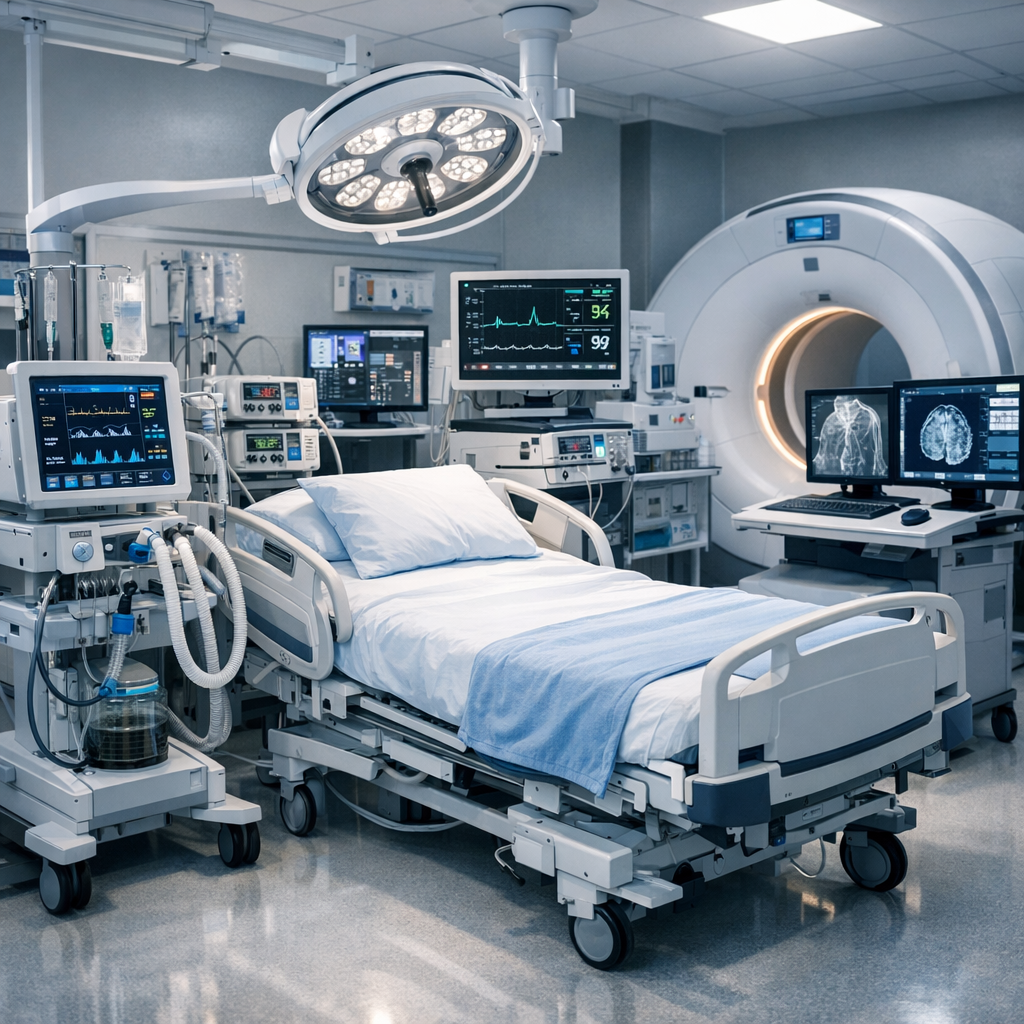
Common Service Plans: Which One Fits Your Facility?
Not all service plans are created equal. Understanding your options helps you choose what’s right for your workload and risk level.
Standard Manufacturer Warranty
Typically includes:
- Limited time frame (1–2 years)
- Coverage for manufacturing defects
- Sometimes labour, sometimes not
Good for:
Very new equipment, low usage facilities, and the early phase after purchase.
Limitations:
It won’t cover wear and tear, misuse, or many common failures. Not a full after-service solution.
Annual Maintenance Contracts (AMCs)
An AMC usually covers:
- Scheduled preventive maintenance visits
- Basic calibration (depending on contract)
- Priority support for issues (although parts may be extra)
Good for:
Facilities want predictable maintenance costs and less downtime than “call us when it fails.”
You can create or link to an AMC-specific page, e.g.:
Annual Maintenance Contracts for Medical Equipment
Comprehensive Service Contracts
These are more all-inclusive and may cover:
- Preventive maintenance
- Corrective repairs
- Labour
- Select all spare parts
Good for:
Busy hospitals and labs where downtime is expensive and unacceptable.
They offer budget predictability and significantly lower operational risk.
Pay-Per-Call or On-Demand Service
This is a “no contract” approach where you only pay when something breaks.
Good for:
Small clinics or low-usage equipment where risk is lower.
Limitations:
Higher risk of extended downtime and unpredictable costs.
Best Practices to Get the Most from Your Medical Equipment After-Service
Even with a strong provider, your internal processes matter too.
Keep an Updated Equipment Inventory
Maintain a simple, accurate list including:
- Equipment name, model, and serial number
- Location (ward, theatre, lab, etc.)
- Purchase date and warranty status
- Service provider contact details
This helps your medical equipment after-service provider respond faster and more accurately.
If you cover this topic elsewhere, you can link to it, e.g.:
How to Build a Medical Equipment Inventory
Follow a Preventive Maintenance Schedule
Work with your service partner to:
- Plan yearly maintenance for each device
- Align with manufacturer recommendations
- Avoid scheduling during peak usage times
Consistency is key—random, last-minute maintenance rarely works well.
Train Staff to Report Issues Early
Encourage your team to:
- Report unusual noises, errors, or behaviour immediately
- Avoid “temporary workarounds” that become permanent
- Treat visible damage (frayed cables, cracked screens) as urgent
Early reporting allows medical equipment after-service teams to fix problems before they escalate.
Organize Service and Calibration Records
Don’t let service reports pile up in a drawer.
Instead:
- Store them digitally in a shared folder or asset management system
- Label by equipment and date
- Keep them ready for audits and accreditation visits
This also helps you identify repeat problems and make smarter decisions about replacement.
Budget for Service, Parts, and Upgrades
Successful facilities plan for after-service costs.
Create a budget that includes:
- Annual service contracts
- Expected spare parts for critical devices
- Planned upgrades or replacements over 3–5 years
Think of this as securing the future health of your equipment fleet.
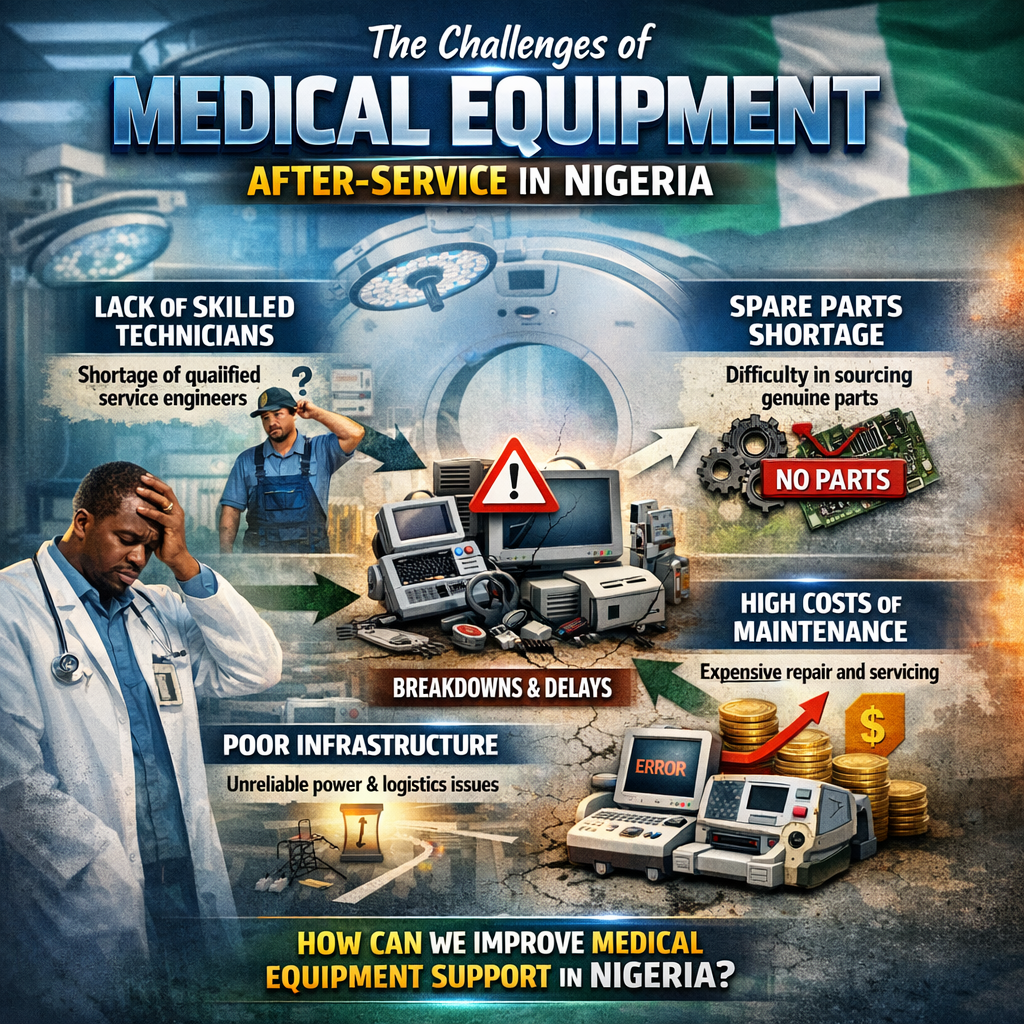
The Challenges of Medical Equipment After-Service in Nigeria
Let’s be honest. Nigeria faces unique challenges when it comes to medical equipment after-service. Ignoring these challenges doesn’t make them go away, but understanding them helps us find solutions.
Limited skilled biomedical engineers. There simply aren’t enough qualified technicians to service the growing number of medical devices across the country.
Difficulty sourcing genuine spare parts. Many hospitals resort to counterfeit or incompatible parts, which creates even bigger problems down the road.
Budget constraints. Both public and private healthcare facilities often prioritize equipment acquisition over maintenance budgets. It’s like buying a car but never budgeting for fuel.
Over-reliance on foreign OEMs. When something breaks, some facilities have to wait weeks or months for an engineer to fly in from overseas. That’s unacceptable.
Lack of structured maintenance programs. Many facilities operate on a “fix it when it breaks” mentality instead of implementing preventive maintenance schedules.
These are real challenges. But they’re not insurmountable.
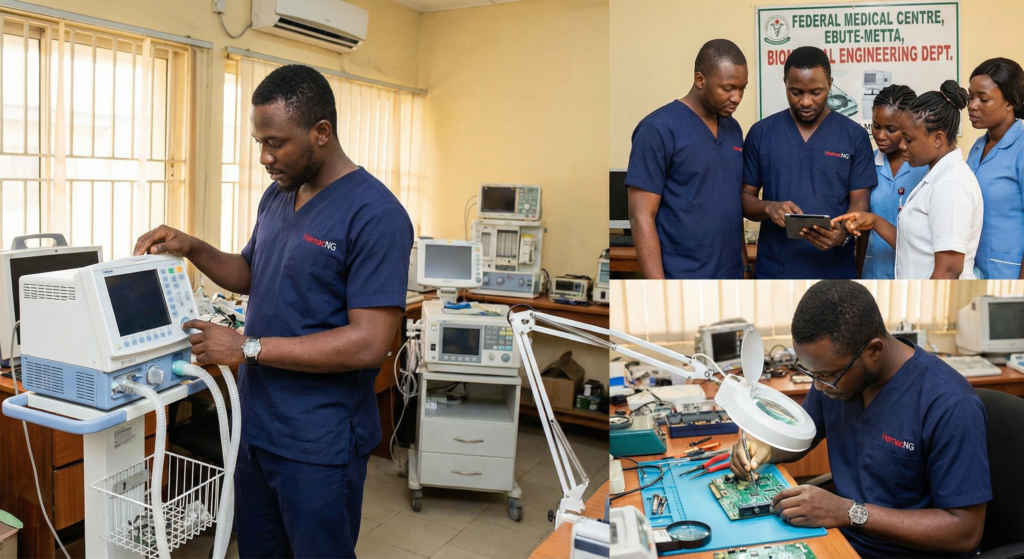
How HemacNG is Changing the Game
This is where we come in. At HemacNG, we believe that every healthcare facility in Nigeria deserves world-class medical equipment after-service. And we’re making it happen.
Here’s what sets us apart:
- Dedicated Biomedical Engineering Team — Our certified engineers are trained to service a wide range of medical equipment, from imaging systems to laboratory analyzers.
- Global OEM Partnerships — We work directly with international manufacturers, giving us access to genuine spare parts, technical documentation, and advanced training.
- Customized Preventive Maintenance Programs — We don’t believe in one-size-fits-all. Our maintenance programs are tailored to your facility’s specific equipment and needs. Learn more about our services.
- Responsive Technical Support — When emergencies happen, we respond quickly. Because we understand that every minute of downtime matters.
- Staff Training Programs — We equip your healthcare workers with the knowledge and confidence to operate equipment safely and effectively.
- Local Presence — We’re based in Nigeria. We understand the local context, the challenges, and the opportunities. You won’t be waiting for an engineer to fly in from another continent.
- Explore our full range of medical equipment and discover why healthcare facilities across Nigeria trust HemacNG
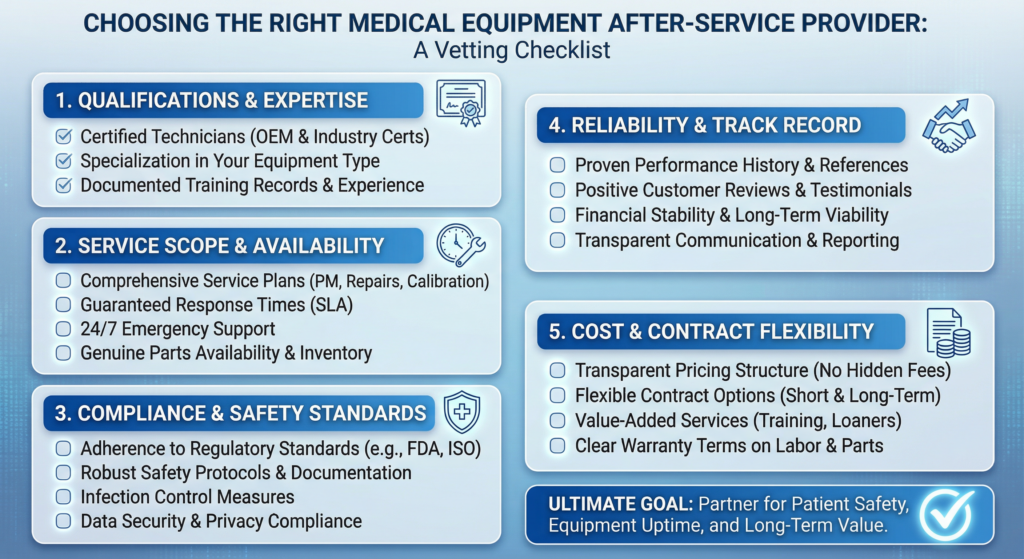
How to Choose the Right Medical Equipment After-Service Provider
If you’re evaluating after-service providers, here are some things to look for:
- Certification and experience — Are their engineers qualified? Do they have a track record?
- OEM partnerships — Can they access genuine parts and manufacturer support?
- Response times — How quickly can they respond to emergencies?
- Range of services — Do they offer comprehensive after-service or just basic repairs?
- Local presence — Are they accessible when you need them?
- References — What do their existing clients say about them?
- Transparency — Are their contracts clear and fair?
When you weigh all these factors, HemacNG consistently comes out on top. But don’t take our word for it, reach out and see for yourself.
Frequently Asked Questions
What does after-service mean for medical equipment?
Medical equipment after-service encompasses all support services provided after purchase, including installation, training, preventive maintenance, corrective repairs, calibration, spare parts supply, and software updates.
Why is after-sales service important for hospital equipment?
It ensures patient safety, maintains regulatory compliance, reduces costs, minimizes downtime, and extends the useful life of expensive medical devices.
What’s the difference between preventive and corrective maintenance?
Preventive maintenance is proactive, scheduled servicing to prevent problems before they occur. Corrective maintenance is reactive, fixing equipment after a breakdown happens.
Does HemacNG offer after-sales service for medical equipment in Nigeria?
Absolutely. HemacNG provides comprehensive medical equipment after-service across Nigeria, including installation, training, maintenance, repairs, calibration, and spare parts supply.
How often should medical equipment be serviced?
It depends on the equipment type and manufacturer guidelines, but most medical devices require professional servicing every 3 to 12 months.
Final Thoughts
Medical equipment after-service isn’t a luxury. It’s not an afterthought. It’s a fundamental part of healthcare delivery that directly impacts patient outcomes, operational efficiency, and your bottom line.
When you invest in quality after-service, you’re not just maintaining machines. You’re protecting lives. You’re safeguarding your investment.
Therefore, when you partner with HemacNG, you’re choosing a team that understands this deeply. We’ve seen firsthand what happens when equipment is neglected, and we’ve seen the transformation that proper medical equipment after-service brings to healthcare facilities across Nigeria.
Finally, so here’s my question to you: Is your medical equipment getting the after-service it deserves?If the answer is no, or even “I’m not sure”, let’s talk. Contact HemacNG today and let’s make sure your equipment is always ready to save lives.