
Uncategorized
What to Consider Before Buying an Infant Radiant Warmer in Nigeria (2026 Guide)
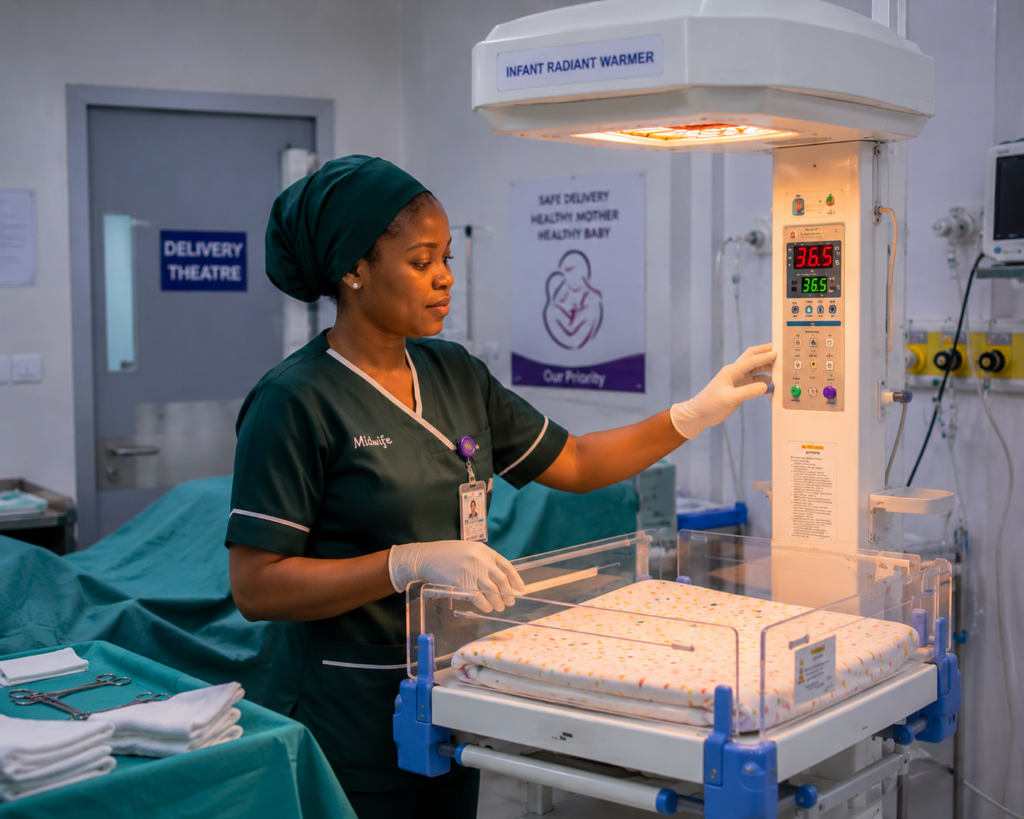
The delivery was tense from the start. Twins. Thirty‑two weeks. The first baby came out limp and cold. The team moved quickly, but the old radiant warmer in the corner never reached target temperature. There were no visible alarms. The staff were working hard, yet they were fighting the equipment as much as the emergency. Later, the matron said quietly, “If we had chosen better when we bought this unit, today would have been different.” If you are a medical director, matron, neonatologist, or hospital owner, that sentence stays with you. It is why thinking carefully before buying an infant radiant warmer in Nigeria is not just about budgets or brand names. It is about whether the equipment in your delivery room or NICU will truly support your team when seconds matter.
This guide walks you through what you need to think about:
- Why your choice of radiant warmer is so critical
- How these devices work and when they are used
- The key technical features you must check
- Power, space, and infection‑control realities in Nigerian hospitals
- Price ranges, warranties, and supplier issues
- Common mistakes to avoid before buying an infant radiant warmer in Nigeria
- How to get expert help and reliable equipment from trusted suppliers such as HemacNG
Let’s start with the basic question: why does this device matter so much?
Why Your Choice of Radiant Warmer Matters in Every Nigerian Delivery Room
Newborns, particularly preterm and low‑birth‑weight babies, lose heat at a frightening pace. Their skin is thin, they have little fat, and they cannot regulate their own temperature effectively. A few minutes of exposure to a cold room, metal trolley, or operating theatre air can drop their core temperature sharply.
The World Health Organization lists thermal protection as one of the pillars of newborn care. Hypothermia increases the risk of:
- Low blood sugar
- Breathing problems
- Infection
- Death, especially in fragile infants
In Nigerian hospitals, we often deal with:
- Air‑conditioned theatres
- Crowded labour wards with fans
- Limited incubators in the NICU
An infant radiant warmer gives you something absolutely vital: immediate, open access warmth on a stable platform where resuscitation and procedures can happen.
When you take time to think deeply before buying an infant radiant warmer in Nigeria, you are not just ticking an equipment box. You are deciding whether those first minutes of life happen in a cold struggle or in a controlled, warm environment where your team can do its best work.
Quick Primer: How an Infant Radiant Warmer Actually Works
To choose wisely, you need a clear picture of what the device does.
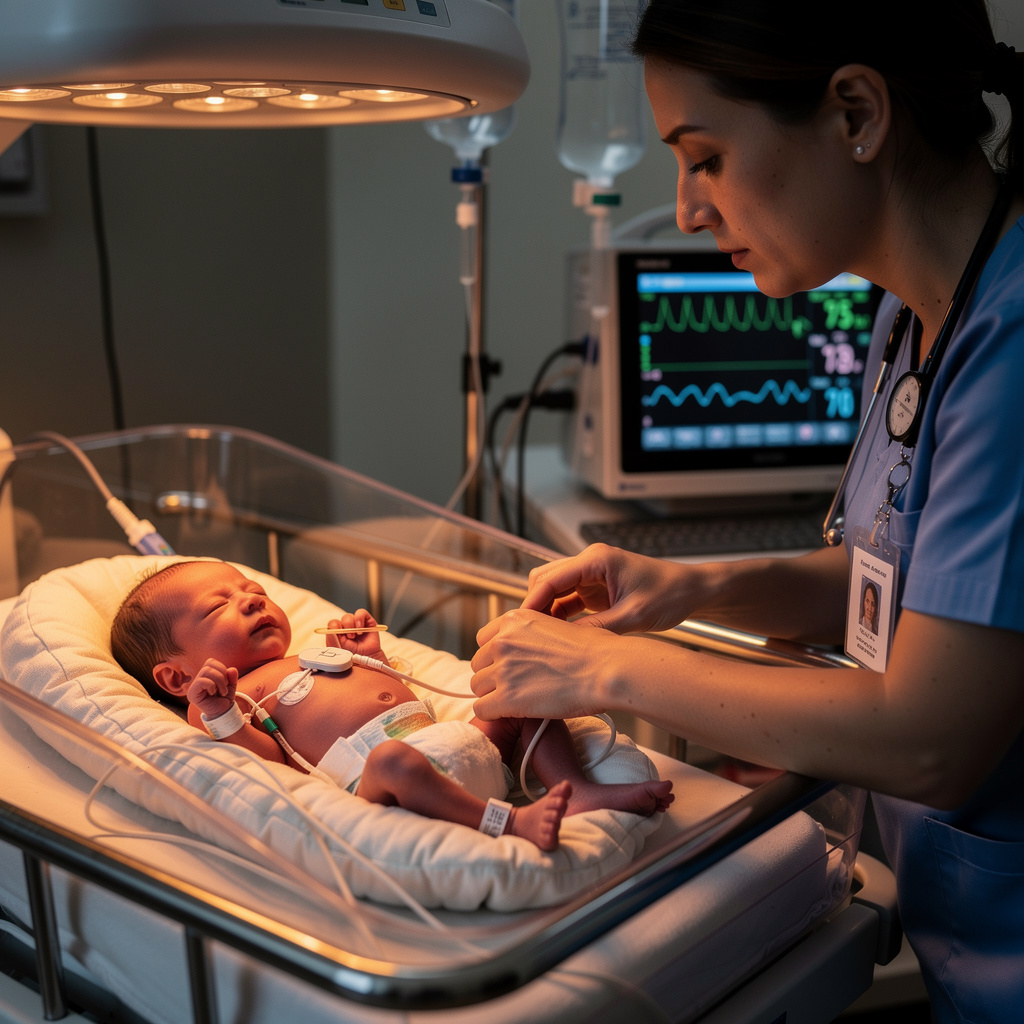
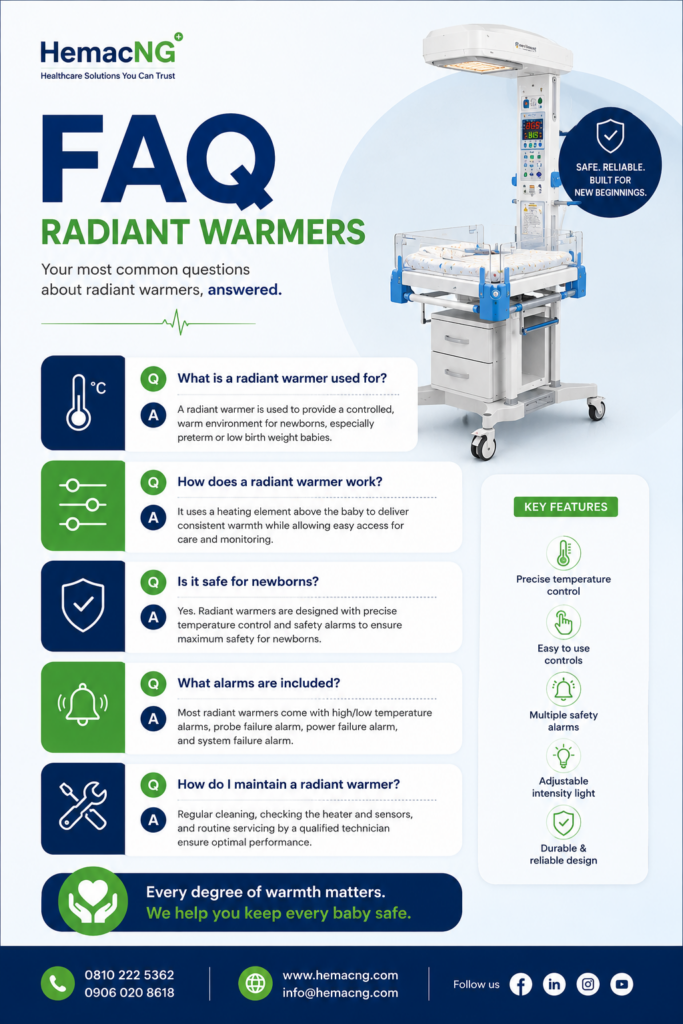
At its core, an infant radiant warmer has three main parts:
- Overhead heater – Positioned above the baby, it sends controlled radiant heat downward.
- Baby platform – A firm mattress or tray where the newborn lies for resuscitation, assessment, or procedures.
- Control system – A panel that allows staff to select temperature modes and shows current values, often with audible and visual alarms.
There are usually two temperature control modes:
- Manual (air) mode – Staff set a fixed heater output. The device regulates based on ambient conditions.
- Servo (skin) mode – A probe attached to the baby’s skin sends readings to the controller, which adjusts heater output to keep the baby at a target temperature.
Because the bed is open, staff can access the baby from all sides. That makes radiant warmers ideal for:
- Immediate care in labour wards
- Resuscitation in theatres
- Procedures in NICUs
Incubators, by contrast, enclose the baby to provide controlled temperature and humidity over longer periods, but staff must open ports or doors for many procedures. You need both types of equipment in a well‑resourced unit, yet radiant warmers are often the first line in emergencies.
Understanding this basic function helps you ask the right questions before buying an infant radiant warmer in Nigeria.
Step One: Define Your Clinical Needs Before Buying an Infant Radiant Warmer in Nigeria
It is tempting to start with a catalogue and price list. Resist that urge. First, ask some hard questions about your facility.
What kind of facility are you?
- Small maternity home
- Faith‑based clinic
- General hospital
- Teaching hospital or referral centre
Where will the warmer be used most?
- Main delivery room
- Caesarean theatre
- NICU / SCBU
- Emergency room for neonatal resuscitation
How busy is your unit?
- Number of deliveries per month
- How many preterm or high‑risk births you handle
- Whether you receive referrals from smaller centres
What procedures do you regularly perform under the warmer?
- Basic drying and observation
- Bag‑and‑mask resuscitation
- Intubation
- Umbilical venous line insertion
- Combined jaundice treatment (if using phototherapy‑equipped warmers)
Clarity here is vital. A small maternity home that performs a handful of normal deliveries each week will need a different configuration compared with a tertiary NICU running multiple high‑risk resuscitations daily.
When you define these issues before buying an infant radiant warmer in Nigeria, the subsequent feature and price decisions become much easier.
Technical Features You Must Evaluate Before Buying an Infant Radiant Warmer in Nigeria
Once you know your clinical needs, it is time to look under the hood. Not every warmer is suitable for every setting.
Heating Technology and Control Modes
Ask suppliers:
- What type of heating element does the unit use (infrared, quartz, ceramic)?
- Does it have both manual and servo (skin‑probe) modes?
- How accurate is the temperature control?
For preterm and low‑birth‑weight infants, servo mode is especially important. With the probe placed correctly on the baby’s abdomen or chest, the warmer constantly adjusts output to maintain the chosen skin temperature. That precision could be a life‑saving difference.
Safety Alarms and Monitoring
In a busy Nigerian ward, staff cannot stand next to the warmer at every second. Strong safety alarms help compensate.
Look for:
- Over‑temperature alarms
- Skin probe disconnection or displacement alerts
- System fault indicators
- Visual and audible alarm indicators
Advanced models may integrate pulse oximetry and heart‑rate monitoring. These can be valuable in NICUs and tertiary settings, though not always essential for smaller clinics.
When you review specifications before buying an infant radiant warmer in Nigeria, treat alarm quality as non‑negotiable for any high‑risk environment.
Resuscitation and Monitoring Integration
Some infant radiant warmers are simply heaters with beds. Others function as full resuscitation stations, combining:
- Oxygen blender
- Suction
- Apgar timer
- T‑piece resuscitator or bag‑and‑mask systems
These integrated units suit:
- Major maternity hospitals
- High‑volume emergency obstetric centres
- NICUs that handle complex resuscitations frequently
They cost more, but they also reduce clutter and speed up response when every second matters.
Phototherapy Compatibility
Neonatal jaundice is common in Nigeria. In space‑constrained units, radiant warmers that include:
- Overhead phototherapy lamps, or
- Under‑mattress phototherapy units
can treat jaundice while maintaining warmth. If your facility regularly manages jaundiced infants and has limited room, this combination may be a smart investment before buying an infant radiant warmer in Nigeria.
Ergonomics and Staff Access
Finally, consider how your team will use the device in real life:
- Can staff easily reach the baby from all sides?
- Does the bed tilt for procedures or reflux management?
- Are bed height and warmer head adjustable?
- Is the unit stable yet easy to move, with reliable brakes?
These details influence how smoothly care happens at 2 a.m. during a complicated resuscitation.
Power and Infrastructure: Hard Truths for Nigerian Hospitals
You cannot talk about biomedical equipment in Nigeria without talking about power.
Before buying an infant radiant warmer in Nigeria, sit down with your biomedical engineer or maintenance head and ask:
- What is our typical power supply situation in delivery rooms and theatres?
- Are there dedicated circuits for critical equipment?
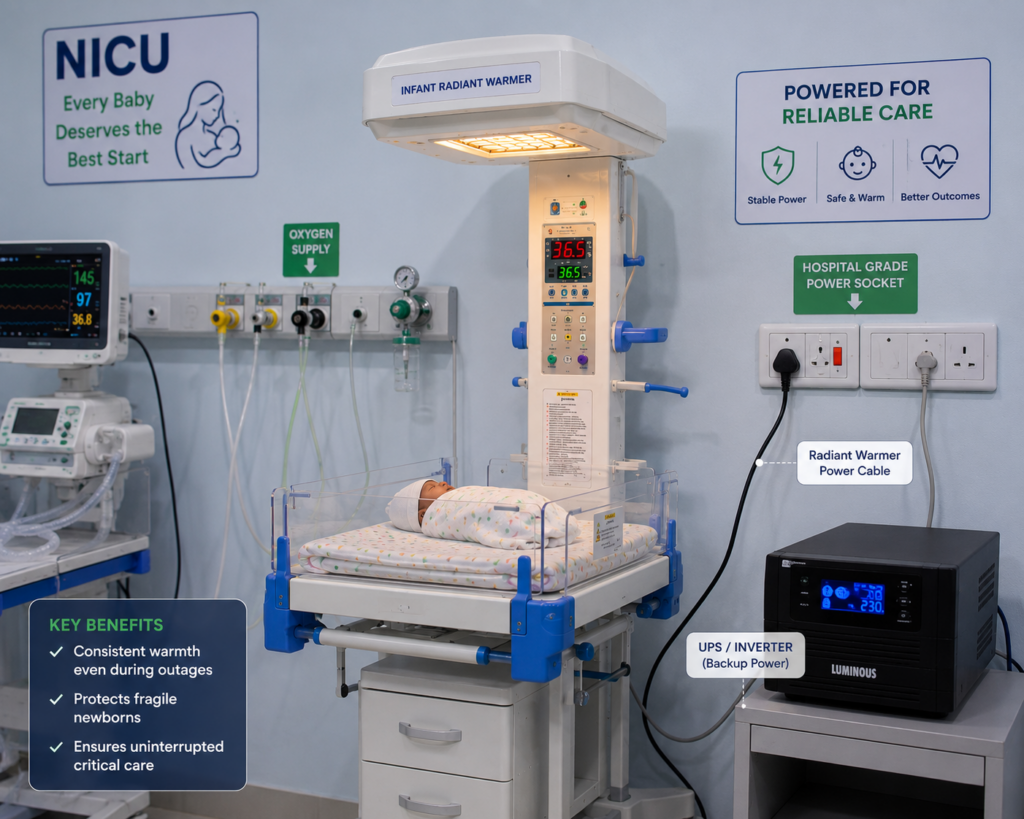
- Do we have a functioning inverter or UPS that can support neonatal devices during outages?
- What is the capacity of our generators, and how heavily are they already loaded?
Most radiant warmers are designed for:
- 220–240 V AC
- 50 Hz
They draw a moderate amount of power, but remember that they may run for hours at a time, especially in NICUs.
In an ideal setup, your infant radiant warmer should be:
- On a priority electrical circuit
- Protected by a small UPS or connected to an inverter system
- Shielded from power surges with appropriate protection devices
If you discuss these issues openly with your supplier before buying an infant radiant warmer in Nigeria, they can help you choose models that match your power reality and advise on backup solutions.
Space, Workflow, and Infection Control: Planning the Physical Reality
Even the best device becomes a burden if it does not fit your space or cleaning routine.
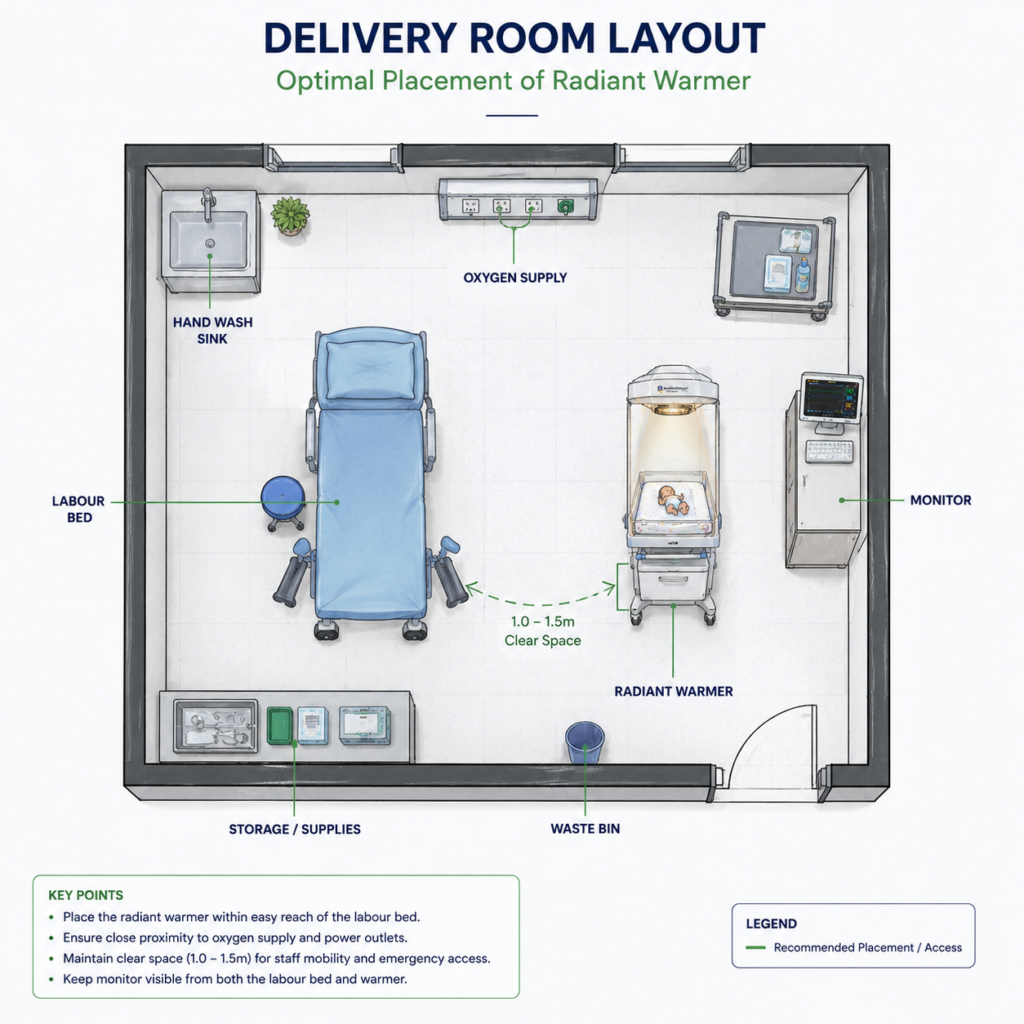
Think about:
- Size of your delivery rooms and theatres
- Is there enough room around the warmer for two or three staff to work at once?
- Traffic flow
- Will staff need to move the warmer frequently?
- Are doorways wide enough for safe movement?
- Location of oxygen and suction outlets
- Can the unit reach these without stretched or tangled tubes?
- Hand‑washing and sanitising points
- How easy is it to wash hands before and after contact?
Infection control teams also care about:
- Smooth, easy‑to‑clean surfaces
- Mattress materials that tolerate hospital disinfectants
- Designs without too many hidden crevices where dirt can sit
Involving your infection prevention lead and ward nurses in discussions before buying an infant radiant warmer in Nigeria often reveals practical points that finance staff alone might miss.
Budget and Total Cost of Ownership: Looking Beyond the Sticker Price
It is tempting to reduce the whole decision to one question: “How much does it cost?” Price matters, but it is only one part of the total cost of ownership.
However, you must also factor in:
- Shipping, clearing, and inland transport
- Installation and commissioning
- Staff training sessions
- Spare skin probes and accessories
- Periodic servicing or calibration
- Possible software/firmware updates
In many cases, a unit that is slightly more expensive upfront but comes from a reliable supplier with a strong warranty and service network is cheaper over five to ten years than a “bargain” that fails or cannot be repaired.
If you would like a detailed, itemised quote for your facility, you can request a neonatal equipment quote from HemacNG. Their team can help you model both initial and long‑term costs before buying an infant radiant warmer in Nigeria.
Compliance, Warranty, and Supplier Reliability: Who You Buy From Matters
High‑risk neonatal equipment should never be bought from anonymous vendors.
When you evaluate suppliers, ask:
- Can you show documentation from the manufacturer?
- What is the warranty period on major components?
- Do you have local technicians or service partners?
- How quickly can you provide spare parts if something fails?
- Are your products aligned with standards from bodies such as the Standards Organisation of Nigeria and NAFDAC?
A trusted medical equipment supplier in Nigeria, such as HemacNG, should be able to answer these questions confidently and provide references from other hospitals.
Buying an infant radiant warmer from a general trader with no warranty might seem cheaper on paper. Yet when it fails during a critical case and no one will repair it, the hidden cost becomes obvious.
New vs Refurbished: Is Refurb Ever Acceptable?
In reality, some facilities consider refurbished neonatal equipment to stretch limited budgets. There is no single answer that fits all situations, but here are a few guidelines before buying an infant radiant warmer in Nigeria:
New units:
- Pros: full manufacturer support, latest safety features, longer warranty, predictable performance.
- Cons: higher upfront price.
Refurbished units:
- Pros: lower purchase cost, can be suitable as backup units in lower-acuity settings.
- Cons: variable quality, shorter warranty, uncertain parts availability, sometimes older technology.
If you consider refurbished, ensure the following:
- The refurbishing company is reputable and experienced
- A clear warranty is provided in writing
- Parts are available in Nigeria or can be imported reliably
- The device has been properly tested and documented
For core NICU resuscitation stations or the only warmer in a busy delivery room, brand‑new equipment from a trusted source is usually the safer choice.
A Practical Checklist Before Buying an Infant Radiant Warmer in Nigeria
To bring this all together, here is a short checklist you can use in procurement meetings:
- Clarify facility level and delivery volume.
- Decide where the warmer will be used most (theatre, labour ward, NICU).
- List essential features: manual/servo modes, alarms, resuscitation integration, phototherapy if needed.
- Measure your available space and check access paths and door widths.
- Review your power situation and decide if you need a UPS/inverter package.
- Set a realistic budget range informed by 2025 price bands.
- Shortlist 1–3 trusted suppliers that specialise in medical equipment.
- Request detailed written quotes, including installation, training, and warranty terms.
- Ask about service and spare parts availability for at least 5–10 years.
- Involve clinicians, nurses, biomedical engineers, and procurement in the final decision.
If you walk through all ten steps before buying an infant radiant warmer in Nigeria, your final choice is far less likely to disappoint you later.
Where to Buy an Infant Radiant Warmer in Nigeria
For devices as critical as radiant warmers, incubators, and NICU monitors, general markets and anonymous online sellers are not sufficient.
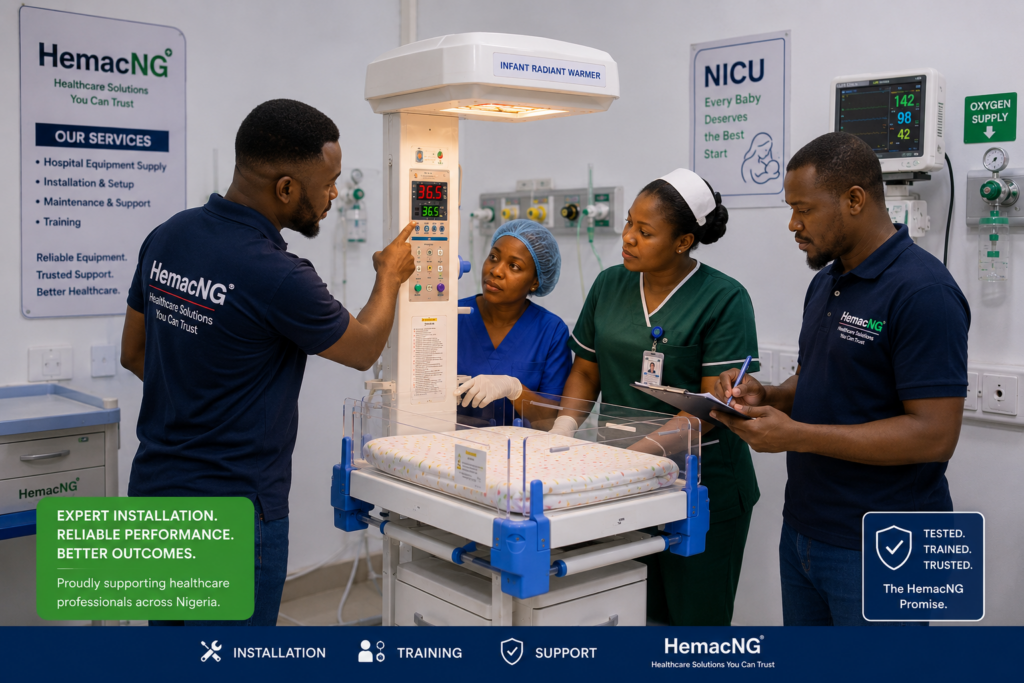
Specialised suppliers like HemacNG offer:
- Curated neonatal equipment from verified manufacturers
- Nationwide delivery across all 36 states
- Installation and commissioning support
- Basic staff orientation on use and care
- Warranty on major components
- Access to future service and spare parts
You can explore their wider range of hospital and neonatal equipment on HemacNG.com or go straight to the contact page to ask specifically about infant radiant warmers.
Common Mistakes to Avoid Before Buying an Infant Radiant Warmer in Nigeria
To finish, let’s name a few traps that many well‑meaning facilities fall into:
- Choosing purely on lowest price, without examining alarms, controls, or support.
- Failing to consider power issues, leading to frequent warmers outages.
- Underestimating space needs, resulting in cramped delivery rooms.
- Ignoring training, so staff never fully use available features.
- Buying from non‑specialist vendors, leaving no help when things break.
- Skipping maintenance planning, shortening the lifespan of the device.
If you deliberately avoid these pitfalls before buying an infant radiant warmer in Nigeria, you give your newborns and your staff a safer environment to work in.
Your Questions About Buying an Infant Radiant Warmer in Nigeria, Answered
What is the most important feature when buying an infant radiant warmer in Nigeria?
Servo-control mode with a functional skin temperature probe, the single most critical safety feature for routine neonatal temperature management. Confirm it works before purchasing.
Do I need a voltage stabilizer for my infant radiant warmer in Nigeria?
Yes, strongly and without exception. Nigerian voltage fluctuations can permanently damage sensitive neonatal electronics. A rated stabilizer is standard installation practice.
How do I confirm an infant radiant warmer is SON-approved in Nigeria?
Request SON certification documentation from your supplier before payment. HemacNG provides this as a standard purchase component.
Should I buy a combined warmer/phototherapy unit or separate devices?
This depends on your facility’s jaundice rate and existing phototherapy capability. HemacNG’s free consultation service guides this decision based on your specific clinical profile.
What warranty should I expect on a Nigerian infant radiant warmer purchase?
A minimum of two years with accessible local technical support. HemacNG provides a 2-year warranty and unconditional 100% money-back guarantee on every purchase.
What ongoing costs should I budget for after purchasing?
Skin temperature probes at ₦15,000 – ₦40,000 every three to six months, periodic mattress replacement, annual calibration service, and electricity consumption, typically 400–600W daily.
Can I get installation guidance after delivery in Nigeria?
Yes. HemacNG provides installation and commissioning guidance for every unit category delivered.
Final Thoughts: One Purchase, Many Lives
Each time a baby is born, especially in a high‑risk situation, your team writes the first lines of that child’s story. You cannot control every outcome, but you can control the tools you place in their hands.
Taking time to ask the hard questions before buying an infant radiant warmer in Nigeria is an act of leadership. It shows that you understand the weight of those first minutes for preterm and fragile newborns. It proves to your staff that you are willing to invest in equipment that supports them, not hinders them.
If you are ready to move from “we need a warmer” to “we chose the right warmer for our reality,” the next steps are simple:
- Visit HemacNG.com to explore neonatal and NICU equipment
- Request a detailed quote and consultation before buying an infant radiant warmer in Nigeria
The babies lying beneath that warm light tomorrow will never know your procurement process. They will simply feel the difference between cold stress and protected warmth as they take their first breaths.