
Uncategorized
Top Neonatal Equipment Every Hospital Needs in 2026
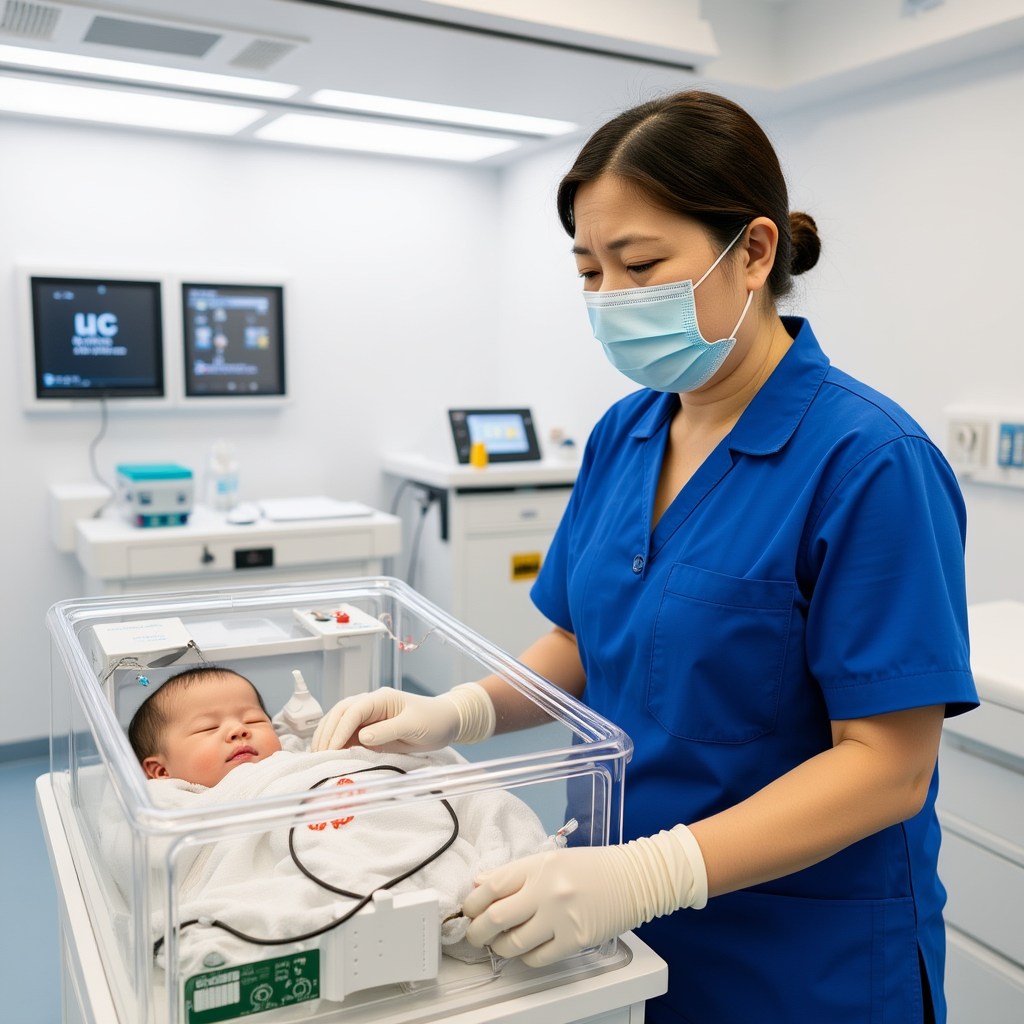
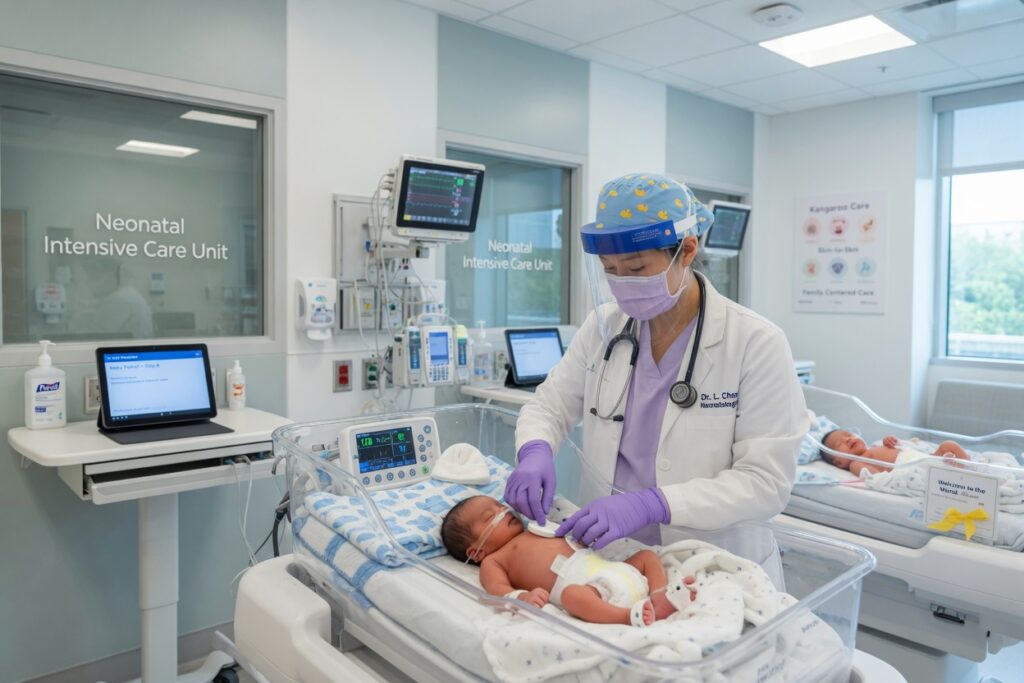
A newborn arrives, and suddenly every second feels different. The delivery team needs to assess breathing, maintain the baby’s temperature, monitor vital signs, and respond quickly if complications arise. In moments like these, having the top neonatal equipment every hospital needs is not simply about having modern machines in a room; it is about giving trained healthcare professionals the tools they need to provide safe, timely, and appropriate newborn care.
For hospital owners, maternity facility managers, and healthcare administrators, however, choosing neonatal equipment can be overwhelming. There are radiant warmers, incubators, phototherapy machines, patient monitors, resuscitation devices, oxygen systems, and countless accessories to consider. Which ones are essential? Which should be purchased first? And how do you know whether a piece of equipment is suitable for your facility?
These are important questions because newborn care is highly sensitive. The World Health Organization (WHO) identifies thermal care, resuscitation when required, infection prevention, feeding support, assessment, and recognition of danger signs as important components of essential newborn care.
Therefore, equipping a neonatal unit should never be treated as simply filling a room with machines.
It should be approached as building a system around the needs of newborns and the professionals caring for them.
In this 2026 guide, we’ll explore the top neonatal equipment every hospital needs, what each device does, what to consider before purchasing, and how to approach neonatal equipment procurement responsibly.
Why the Right Neonatal Equipment Matters
Imagine a premature baby who is unable to maintain body temperature properly.
The healthcare team needs to act.
A radiant warmer may provide controlled thermal support. A monitor may help clinicians observe vital signs. Oxygen equipment may be needed when respiratory support is indicated. If jaundice develops, phototherapy equipment may become part of the treatment plan.
No single machine solves every problem.
Instead, effective neonatal care depends on having the right combination of equipment, trained staff, clinical protocols, maintenance systems, and appropriate referral pathways.
WHO’s standards for maternal and newborn care specifically emphasize the importance of essential physical resources alongside competent healthcare personnel, effective clinical practices, and functioning referral systems.
That is why hospitals should think beyond individual product purchases.
The real question should be:
“What equipment does our neonatal service need to provide the level of care we are designed to deliver?”
That question leads to much better procurement decisions.
What Is Neonatal Equipment?
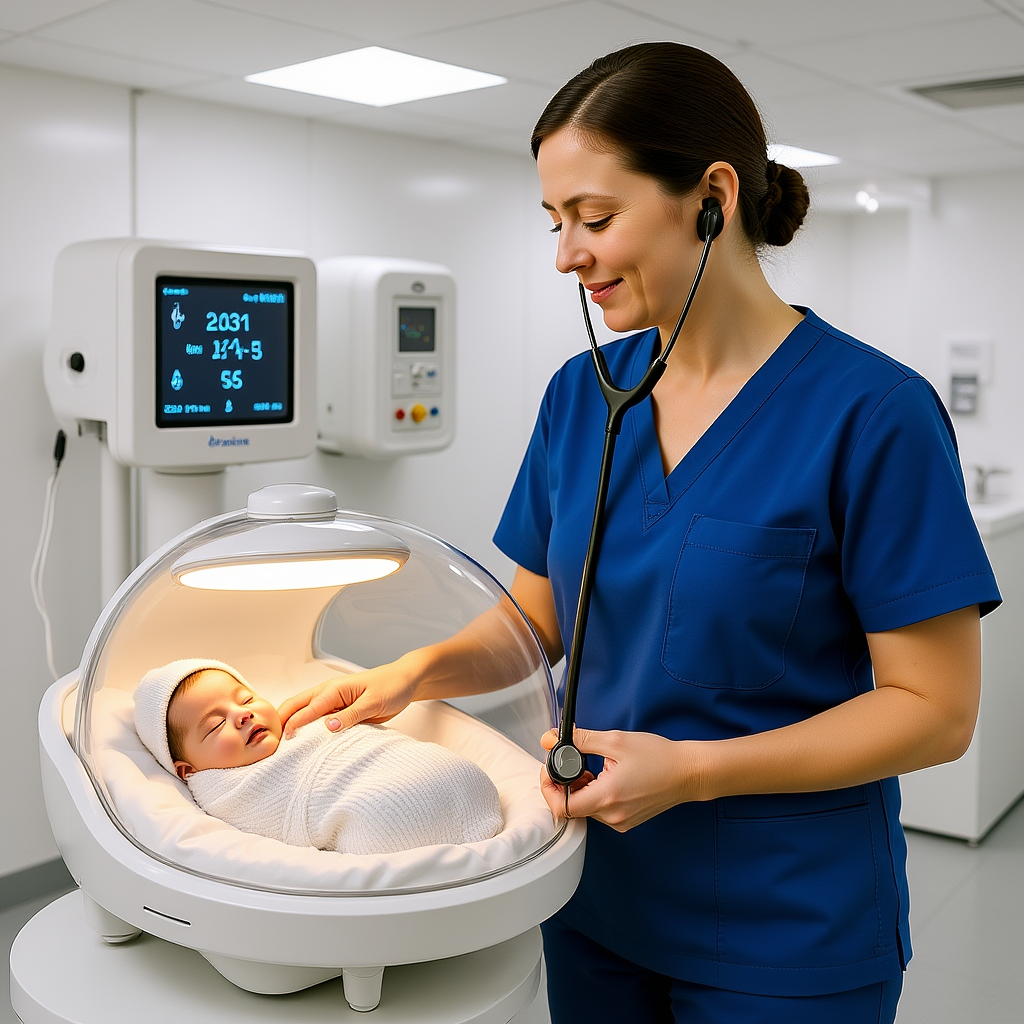
Neonatal equipment refers to specialized medical devices and supporting tools used to care for newborn babies, particularly premature, low-birth-weight, sick, or critically ill infants.
Depending on the facility, this can include:
- Infant radiant warmers
- Neonatal incubators
- Phototherapy machines
- Neonatal patient monitors
- Pulse oximeters
- Resuscitation equipment
- Oxygen delivery systems
- Suction machines
- Infant weighing scales
- Neonatal blood pressure monitors
- Feeding and supportive-care equipment
- Infection-control equipment
The exact equipment required will depend on the hospital’s level of neonatal service, patient volume, available personnel, and clinical scope.
For example, a small maternity facility may require a different equipment package from a tertiary hospital with a full neonatal intensive care unit.
So, while this guide covers the top neonatal equipment every hospital needs, it should be used as a procurement framework rather than a universal shopping list.
Top Neonatal Equipment Every Hospital Needs
1. Infant Radiant Warmer
An infant radiant warmer is one of the most recognizable pieces of equipment in a newborn care environment.
Its primary purpose is to provide a controlled source of warmth for newborns who need assistance maintaining their body temperature.
This is particularly important because newborn babies can lose heat quickly, especially immediately after birth and when they are premature or unwell.
A radiant warmer also provides healthcare professionals with convenient access to the baby during examination, procedures, and emergency care.
What to consider when buying a radiant warmer
Before purchasing one, consider:
- Temperature-control features
- Skin temperature monitoring
- Alarm systems
- Mattress size
- Accessibility from different sides
- Phototherapy integration, if required
- Ease of cleaning
- Power requirements
- Availability of replacement components
- Warranty and technical support
For Nigerian hospitals, power reliability should also be part of the conversation.
A sophisticated machine is only useful when the facility has a practical plan for keeping it safely operational.
Looking for an infant radiant warmer? HemacNG currently lists an Infant Radiant Warmer with Phototherapy among its medical equipment offerings.
2. Neonatal Incubator
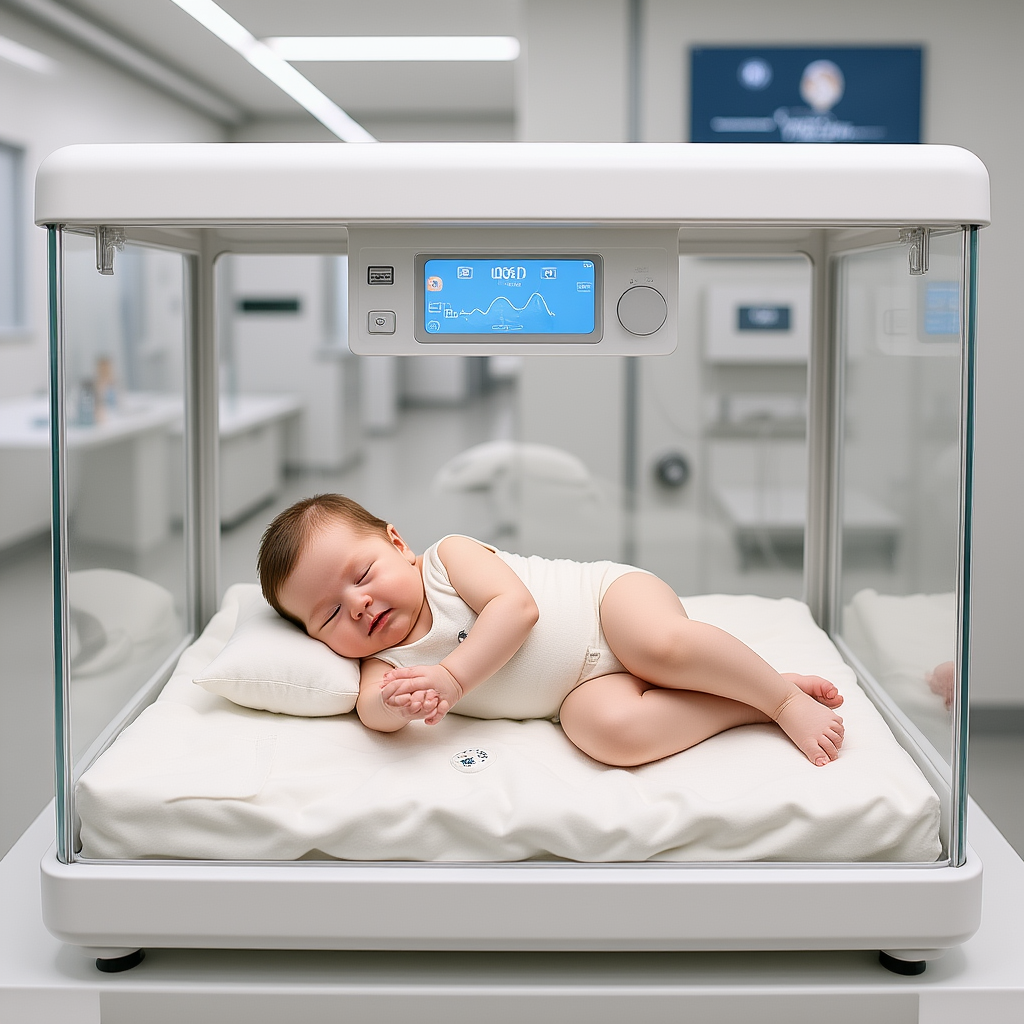
A neonatal incubator creates a controlled environment designed to support newborns who require additional thermal and environmental management.
For premature or medically vulnerable infants, maintaining an appropriate environment can be particularly important.
Unlike a radiant warmer, which provides open access to the baby, an incubator provides a more enclosed environment.
This distinction matters.
Radiant warmer vs incubator
A radiant warmer may be preferable when healthcare professionals need frequent and direct access to the newborn.
An incubator, on the other hand, may be appropriate when maintaining a controlled environment around the infant is an important part of care.
Neither should automatically be considered “better.”
The right choice depends on the clinical situation and the level of care being provided.
If your hospital is deciding between these two devices, consider patient needs, workflow, available space and the clinical protocols of your neonatal service.
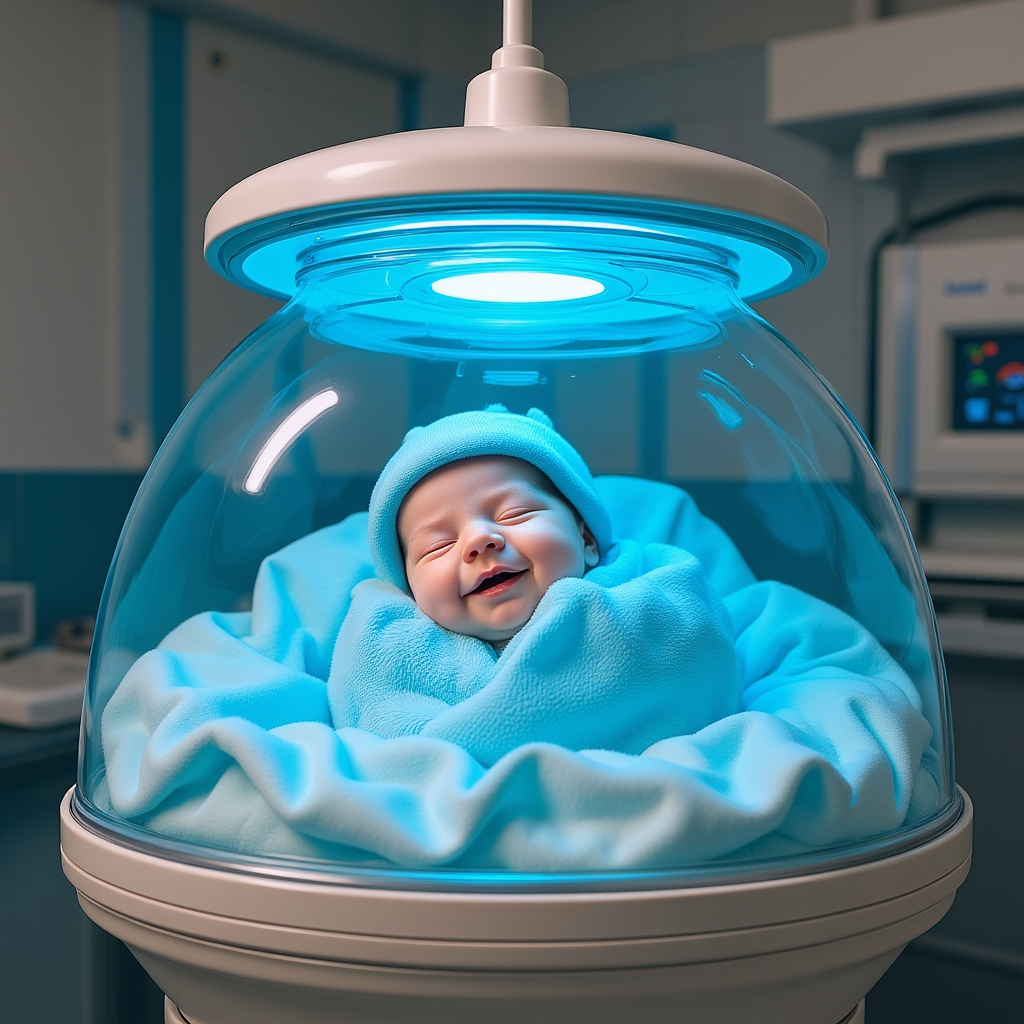
3. Neonatal Phototherapy Machine
Jaundice is common in newborns, but treatment decisions should always be based on appropriate clinical assessment.
When phototherapy is indicated, a properly designed phototherapy system can provide the therapeutic light required under the relevant clinical protocol.
Modern systems often use LED light sources and may include timers, adjustable positioning and other features intended to support consistent treatment.
HemacNG currently lists an Infant Phototherapy Unit featuring an LED light source, digital timer and adjustable positioning.
What to check before buying a phototherapy machine
Consider:
- Light source
- Wavelength specifications
- Irradiance
- Treatment area
- Timer
- Height adjustment
- Mobility
- Ease of cleaning
- Replacement parts
- Technical support
Importantly, the equipment should be used by appropriately trained healthcare professionals and according to the facility’s clinical protocols.
4. Neonatal Resuscitation Equipment
Some of the most important equipment in a delivery or newborn care area may be the equipment that healthcare professionals hope they will not need often.
Resuscitation equipment falls into that category.
When a newborn requires immediate assistance after birth, there may be very little time to search for missing equipment.
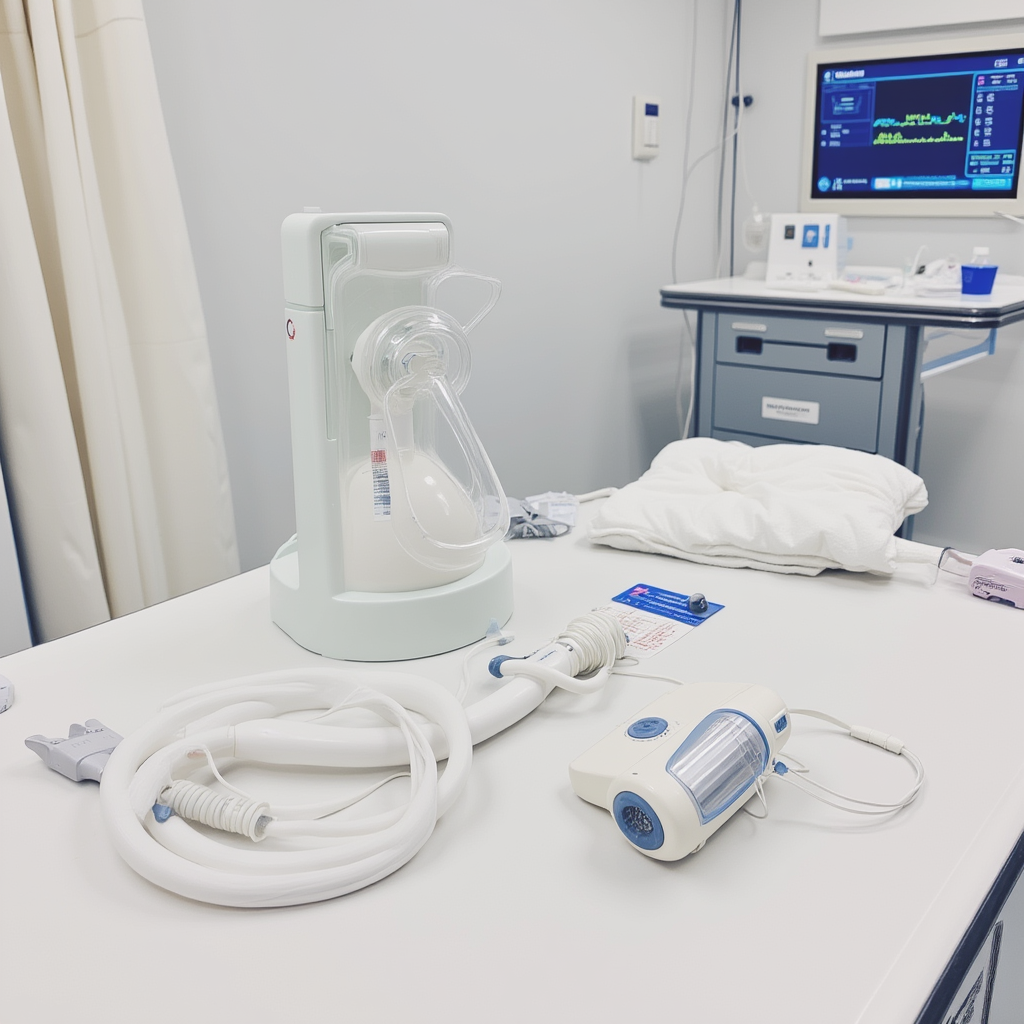
Therefore, hospitals should ensure that appropriate neonatal resuscitation equipment is readily available, organized and maintained.
This may include:
- Neonatal resuscitation bags
- Appropriate masks
- Suction equipment
- Oxygen delivery equipment
- Laryngoscopes
- Appropriate airway equipment
- Resuscitation surfaces
- Other devices specified by the facility’s protocols
WHO has published technical specifications for neonatal resuscitation devices specifically to help procurement teams, healthcare facilities, and regulators select appropriate, good-quality equipment.
WHO also emphasizes that neonatal resuscitation devices are important lifesaving equipment, particularly in settings where access to advanced care may be limited.
The lesson for hospital managers
Don’t wait for an emergency before discovering that a resuscitation device is missing a component.
Equipment checks should be part of routine neonatal-unit preparation.
5. Neonatal Patient Monitor
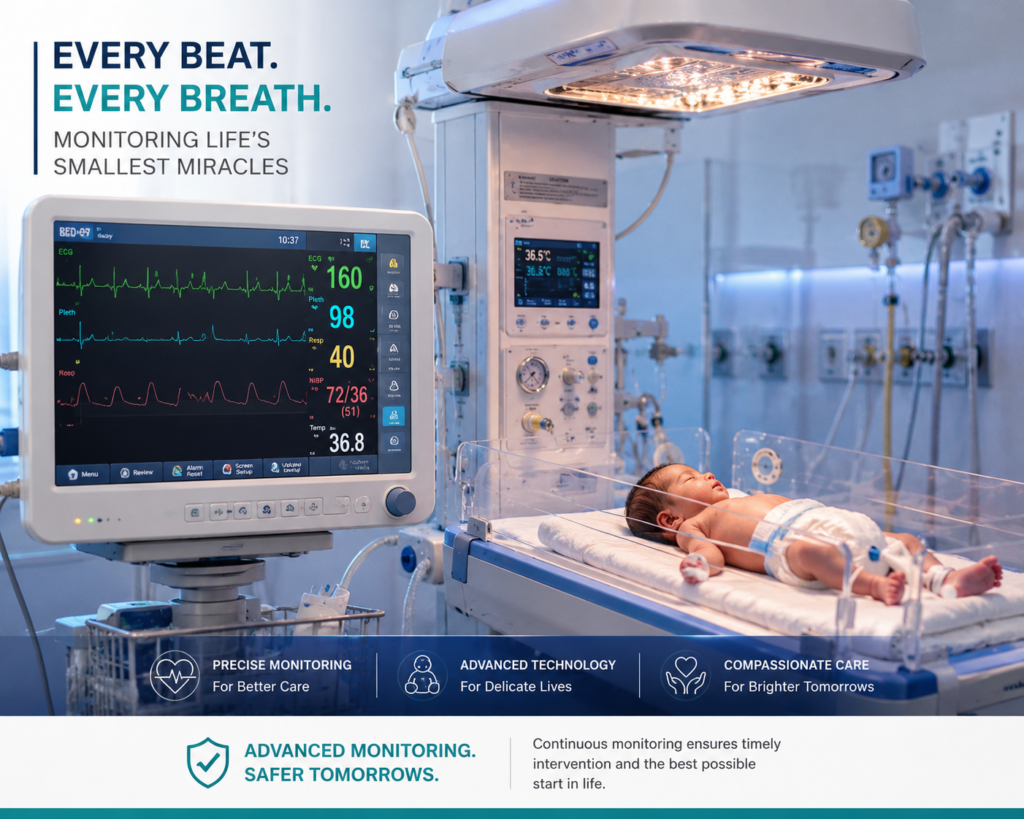
A neonatal patient monitor can help healthcare professionals continuously observe important physiological parameters.
Depending on the model, monitoring may include:
- Heart rate
- Oxygen saturation
- Respiratory rate
- Blood pressure
- Temperature
- Other relevant parameters
For a hospital managing vulnerable newborns, continuous observation can provide clinicians with useful information when making care decisions.
What should you look for?
Consider the parameters your clinicians actually need.
There is little value in paying for features your facility will rarely use. At the same time, buying a monitor that lacks essential functions can become an expensive mistake.
Therefore, speak with the clinical team before making the final procurement decision.
6. Oxygen Concentrator and Oxygen Delivery Systems
Respiratory support is an important component of newborn care.
Depending on the clinical circumstances and the level of care provided, hospitals may require oxygen concentrators, oxygen cylinders, flowmeters, tubing, and appropriate oxygen-delivery interfaces.
The key point is not simply to buy an oxygen machine.
Instead, hospitals should think about the entire oxygen system.
Ask:
- What is the primary oxygen source?
- Is there a backup?
- How will oxygen be delivered?
- Are accessories readily available?
- Is the electrical supply reliable?
- Who will inspect and maintain the equipment?
- Are staff trained in its appropriate use?
HemacNG’s hospital-equipment catalogue currently includes oxygen concentrators among its listed products.
7. Neonatal Suction Machine
Airway and secretion management may require suction equipment in appropriate clinical situations.
A neonatal suction system should be selected carefully because newborns are particularly vulnerable to inappropriate equipment settings or technique.
When purchasing, consider:
- Suction pressure control
- Collection capacity
- Portability
- Noise level
- Cleaning requirements
- Disposable components
- Replacement parts
- Power source
As with other neonatal equipment, procurement should be guided by the clinical team’s requirements rather than simply selecting the cheapest model available.
8. Infant Weighing Scale
Sometimes the simplest equipment is among the most frequently used.
An infant weighing scale supports routine weight measurement and monitoring.
Accurate weight information can contribute to:
- Newborn assessment
- Growth monitoring
- Feeding assessment
- Medication-related calculations
- Monitoring changes in a baby’s condition
For maternity hospitals, neonatal units and paediatric facilities, an infant scale is therefore a practical addition to everyday care.
When selecting one, look for:
- Appropriate weight capacity
- Readability
- Stable weighing surface
- Easy cleaning
- Calibration considerations
- Battery or power options
9. Neonatal Pulse Oximeter
Pulse oximetry can help healthcare professionals assess oxygen saturation and pulse rate.
However, neonatal monitoring requires appropriate equipment and sensors.
A general-purpose adult fingertip pulse oximeter may not be suitable for every neonatal application.
That is why buyers should pay attention to sensor type, patient-size compatibility, accuracy specifications and intended use.
HemacNG lists handheld pulse oximeters among its hospital equipment products, although buyers should confirm the exact model’s suitability for neonatal use before purchasing.
Before you buy
Don’t simply search for the cheapest pulse oximeter.
Instead, ask:
“Is this model designed and specified for the patient population we intend to monitor?”
That small question can prevent a major procurement mistake.
10. Neonatal Blood Pressure Monitor
Blood pressure monitoring can be part of newborn and neonatal assessment when clinically indicated.
However, neonatal blood pressure monitoring is different from simply placing an adult cuff on a small patient.
The cuff must be appropriately sized, and the device should be suitable for neonatal use.
When selecting a neonatal blood pressure monitor, consider:
- Neonatal cuff sizes
- Measurement range
- Accuracy specifications
- Display readability
- Battery life
- Alarm functionality
- Ease of cleaning
- Availability of replacement cuffs
Again, the right device depends on the clinical needs of the facility.
Other Essential Equipment for a Complete Neonatal Unit
The ten devices above form an important starting point, but a functional neonatal service usually requires more than ten machines.
Depending on the facility, hospitals may also need:
Examination Lights
Good illumination supports clinical examinations and procedures.
Medical Sterilizers
Reusable equipment requires appropriate cleaning, disinfection, and/or sterilization processes according to its intended use.
You can also explore HemacNG’s wider hospital equipment collection for equipment used across different clinical departments.
Hospital Beds and Neonatal Cots
The physical environment matters too.
Appropriate beds, cots, mattresses, and storage systems can make clinical workflows safer and more efficient.
Emergency Trolleys
Emergency equipment should be organized so that staff can locate essential supplies quickly.
Medical Refrigeration
Certain medicines, laboratory materials, and other temperature-sensitive products may require controlled storage.
Neonatal Equipment Checklist for Hospitals
Before placing an order, create a procurement checklist based on your facility.
| Equipment | Primary Purpose |
|---|---|
| Infant radiant warmer | Thermal support |
| Neonatal incubator | Controlled environment |
| Phototherapy machine | Phototherapy for neonatal jaundice when clinically indicated |
| Neonatal patient monitor | Monitoring vital parameters |
| Resuscitation equipment | Newborn emergency support |
| Oxygen equipment | Respiratory support |
| Suction machine | Appropriate airway/secretion management |
| Infant weighing scale | Weight monitoring |
| Neonatal pulse oximeter | Oxygen saturation monitoring |
| Neonatal BP monitor | Blood pressure assessment |
This checklist can be particularly useful for hospitals establishing a new maternity department, upgrading an existing newborn unit, or preparing a procurement budget.
How Much Does Neonatal Equipment Cost?
One of the most common questions from hospital administrators is simple:
“How much will it cost?”
Unfortunately, there is no single answer.
Prices vary significantly depending on:
- Brand
- Manufacturer
- Equipment specifications
- Capacity
- Technology
- Country
- Importation costs
- Accessories
- Installation
- Warranty
- Technical support
- Availability of spare parts
For example, a basic device designed for routine use may cost significantly less than a sophisticated system intended for a high-dependency neonatal unit.
Therefore, comparing products purely by price can be misleading.
Instead, compare the total value of the equipment.
Ask what you are receiving for the price.
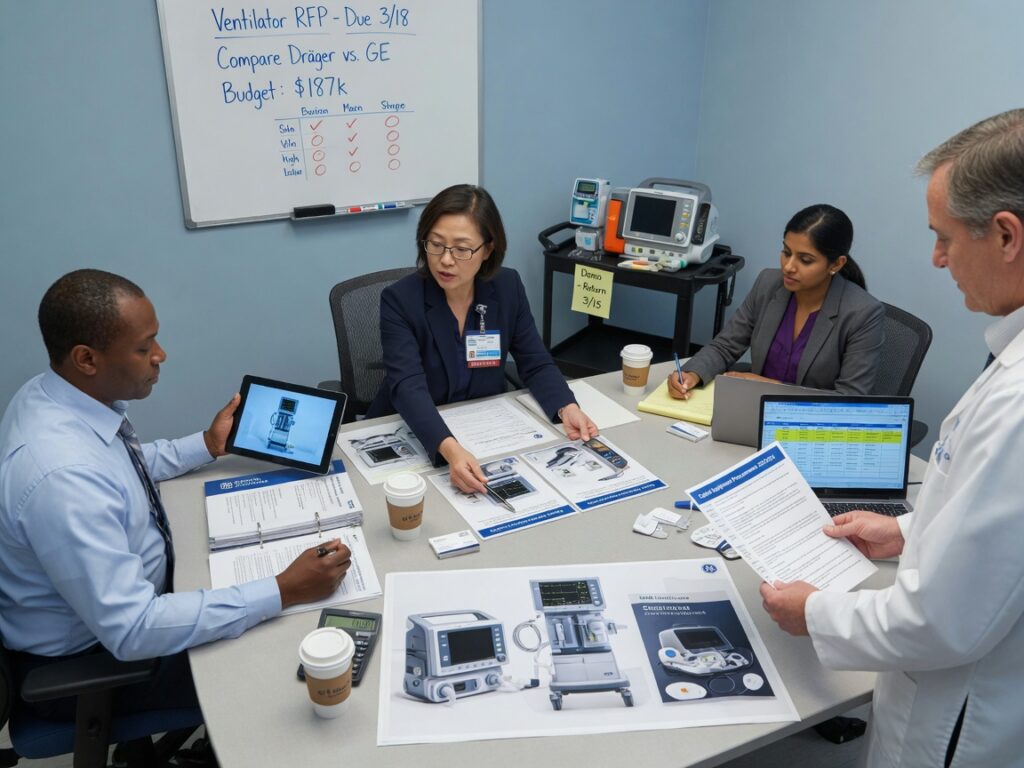
Does the supplier provide technical support? Are replacement components available? Is there a warranty? Can staff receive guidance on setup? Is the equipment appropriate for the intended patient population?
Those questions often matter more than saving a small amount on the initial purchase.
How to Choose the Right Neonatal Equipment for Your Hospital
1. Start With Your Level of Care
A primary maternity facility will not necessarily require the same equipment as a tertiary hospital.
First determine what services your facility is expected to provide.
Then build your equipment list around those services.
2. Consider Patient Volume
A hospital seeing a few newborns each week has different equipment requirements from a busy maternity center handling several deliveries every day.
Higher patient volume may justify investing in equipment with:
- Greater durability
- Faster workflows
- Larger capacity
- Easier cleaning
- Better monitoring capabilities
- Stronger technical support
3. Think About Power Requirements
This is especially important in locations where electricity supply can be inconsistent.
Before buying electrical medical equipment, consider:
- Voltage requirements
- Power consumption
- Battery backup
- Generator compatibility
- Inverter/UPS requirements
- Surge protection
The equipment should be part of a realistic facility infrastructure plan.
4. Check Product Specifications
Never purchase a neonatal device simply because the product description says “hospital grade.”
Look at the actual specifications.
Check patient-size compatibility, measurement ranges, temperature ranges, alarms, accessories, and other features relevant to your intended use.
5. Consider Consumables and Spare Parts
A machine may be affordable at purchase but expensive to maintain.
Before ordering, ask:
“What will I need six months from now?”
That could include:
- Sensors
- Cuffs
- Tubing
- Filters
- Bulbs or LED components
- Batteries
- Masks
- Replacement accessories
Availability matters.
6. Don’t Ignore After-Sales Support
Medical equipment isn’t like buying an ordinary household appliance.
Installation, maintenance, calibration, troubleshooting, and staff familiarity can all affect how effectively equipment performs.
Consequently, the supplier you choose matters almost as much as the machine itself.
Where to Buy Neonatal Equipment for Hospitals
Once you know what you need, the next question is where to source it.
For Nigerian healthcare facilities, HemacNG provides an online medical equipment platform where hospitals and healthcare providers can browse a range of medical and hospital equipment. Its catalogue includes neonatal-relevant products such as infant phototherapy equipment, oxygen concentrators, and other hospital equipment. Explore HemacNG Medical Equipment
For hospitals planning a broader procurement project, it can also be useful to contact the supplier directly about equipment requirements, availability, and support. Contact HemacNG
Why supplier support matters
A good medical-equipment supplier should help buyers understand what they are purchasing rather than simply sending a product and walking away.
For major equipment, ask about:
- Product specifications
- Warranty
- Installation
- User guidance
- Maintenance
- Replacement parts
- Delivery
- Technical support
HemacNG’s website currently lists a 2-year warranty as part of its broader equipment offering, but buyers should confirm the warranty terms applicable to the specific product before purchase.
Buying Neonatal Equipment in Different Countries
Neonatal care is a global healthcare priority, but equipment requirements and regulatory processes differ from one country to another.
For example, a hospital in Nigeria may need to consider Nigerian regulatory and import requirements, while a healthcare facility in another country may have completely different registration, certification, and procurement rules.
Therefore, international buyers should verify:
- Local medical-device regulations
- Product registration requirements
- Electrical standards
- Import requirements
- Installation requirements
- Local servicing arrangements
- Warranty coverage
- Availability of replacement components
For Nigerian buyers, NAFDAC’s medical-device framework covers medical devices and related products manufactured, imported, exported, advertised, sold, distributed, or used in Nigeria.
That makes regulatory verification an important part of procurement rather than an afterthought.
Why Equipment Should Be Purchased as a System
Here’s a mistake many new hospitals make.
They buy equipment one product at a time.
A radiant warmer is purchased from one supplier. A monitor comes from another. The phototherapy unit is sourced elsewhere. Oxygen equipment is bought later.
There is nothing inherently wrong with this approach.
However, it can create problems when nobody considers how the equipment works together.
For example, a neonatal unit needs more than a warmer.
It needs:
Equipment + electricity + accessories + trained staff + maintenance + clinical protocols + infection prevention + emergency preparedness.
WHO’s standards for small and sick newborns emphasize consistent, quality-focused care within health facilities, while its essential newborn care guidance highlights thermal care, resuscitation, infection prevention, and recognition of danger signs among core elements of newborn care.
So, when budgeting for the top neonatal equipment every hospital needs, don’t create a list of machines alone.
Create a complete care system.
Frequently Asked Questions About Neonatal Equipment
What equipment is needed in a neonatal unit?
Common neonatal equipment includes radiant warmers, incubators, phototherapy units, patient monitors, resuscitation equipment, oxygen systems, suction equipment, infant weighing scales, and appropriate neonatal monitoring devices. Exact requirements depend on the facility’s level of care and clinical services.
What are the most important neonatal machines?
Radiant warmers, incubators, patient monitors, phototherapy machines, and neonatal resuscitation equipment are among the major categories commonly considered when equipping newborn-care areas.
What equipment is used for premature babies?
Depending on the baby’s condition and the level of care required, equipment may include incubators, radiant warmers, monitors, oxygen-delivery systems, phototherapy devices, and specialized resuscitation equipment.
What is the difference between a radiant warmer and an incubator?
A radiant warmer provides an open environment with radiant heat, making it convenient when healthcare professionals need frequent access to the newborn. An incubator provides a more enclosed, controlled environment. The appropriate option depends on the baby’s needs and the clinical setting.
What equipment is used for neonatal jaundice?
Phototherapy equipment is commonly used when phototherapy is clinically indicated. Hospitals should select appropriate equipment based on clinical requirements and manufacturer specifications.
How much does neonatal equipment cost?
There is no universal price. Costs depend on the equipment category, manufacturer, specifications, country, accessories, warranty, installation, and technical support.
Where can hospitals buy neonatal equipment?
Hospitals can purchase neonatal equipment from established medical-equipment suppliers and distributors. Nigerian facilities can explore neonatal and hospital equipment available through HemacNG.
What should I consider before buying neonatal equipment?
Consider clinical requirements, patient volume, equipment specifications, power supply, consumables, maintenance, warranty, regulatory requirements, and after-sales support.
Final Thoughts: The Equipment Is Part of the Care
A neonatal unit can look impressive from the outside.
There may be bright lights, polished floors, modern furniture, and a beautiful reception area.
But when a newborn needs urgent attention, none of those things matters as much as whether the right equipment is available, functional, and ready to be used by a trained healthcare professional.
That is why choosing the top neonatal equipment every hospital needs should never be reduced to simply finding the lowest price. It is about asking better questions.
- Is the equipment appropriate for our patients?
- Can our staff use it effectively?
- Can we maintain it?
- Are the accessories available?
- What happens if something goes wrong?
- Can the supplier provide support?
And most importantly:
- Will this equipment help our healthcare team provide the level of newborn care our patients deserve?
WHO’s neonatal guidance reinforces the importance of essential newborn care, including warmth, resuscitation when needed, infection prevention, feeding support, and early recognition of danger signs.
So, whether you are opening a maternity hospital, upgrading a newborn unit, expanding a NICU or replacing aging equipment, start with the clinical need and build outward.
And when you are ready to source your equipment, explore HemacNG’s medical and hospital equipment catalogue or contact the team about your specific requirements.
Shop Medical Equipment on HemacNG
Contact HemacNG for Equipment Enquiries
The right equipment doesn’t replace good healthcare professionals. It gives them a better foundation to do what they do best: care for newborn lives.