
Uncategorized
DURABLE MEDICAL SUPPLIES FOR HOME CARE IN NIGERIA
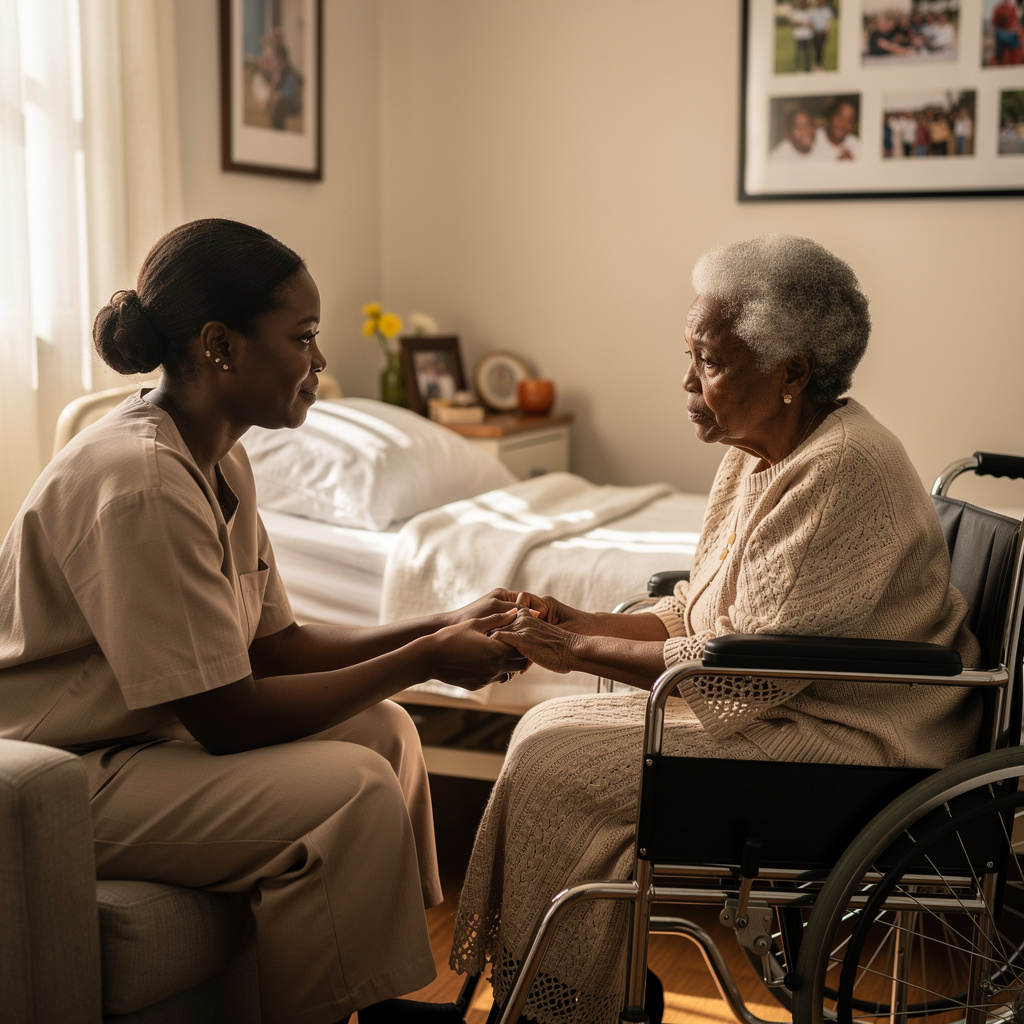
Before we get into specific equipment, let’s acknowledge something important. Nigerian families have always cared for their elderly and sick at home. It’s cultural. It’s spiritual. But the landscape is shifting in ways that make durable medical supplies for home care in Nigeria more essential now than at any previous point.
Nigeria’s population is ageing. More Nigerians are living into their seventies, eighties, and beyond and living longer with chronic conditions like hypertension, diabetes, stroke, and COPD. According to data from the World Health Organization’s Nigeria country profile, non-communicable diseases now account for an increasing share of Nigerian hospital admissions and long-term care needs.
Simultaneously, extended hospital stays have become financially unsustainable for most Nigerian families. Hospital bed occupancy in public facilities is under pressure. The cost of private ward admission can reach hundreds of thousands of naira weekly.
Home care, when supported by the right equipment, isn’t just the emotional preference; it’s increasingly the practical reality. And the good news is that Nigeria’s home healthcare market has responded. Quality durable medical equipment is more accessible, more affordable, and more reliably deliverable than it was even five years ago.
The challenge is knowing what you actually need and where to find it. That’s precisely what this guide addresses.
Should You Rent or Buy? The Question Every Family Asks First
Before we walk through specific equipment categories, this question deserves a direct answer because it affects every purchasing decision you’ll make.
| Your Situation | Recommended Approach | Why It Makes Sense |
|---|---|---|
| Short-term recovery (1–3 months) | Rent | Lower upfront cost; return when healed |
| Chronic or permanent condition | Buy | Better long-term financial value |
| Uncertain duration | Rent first, then buy | Test before committing to purchase |
| Very tight budget | Rent or consider quality used equipment | Makes care accessible without financial strain |
The honest answer is that there’s no universal right choice. A family managing a three-month post-surgery recovery has very different needs from one supporting a parent with permanent mobility limitations. HemacNG’s procurement team can help you think through this decision for your specific situation free of charge, before you spend anything.
With that framework in place, let’s get into the equipment itself.
The Top 10 Durable Medical Supplies for Home Care in Nigeria
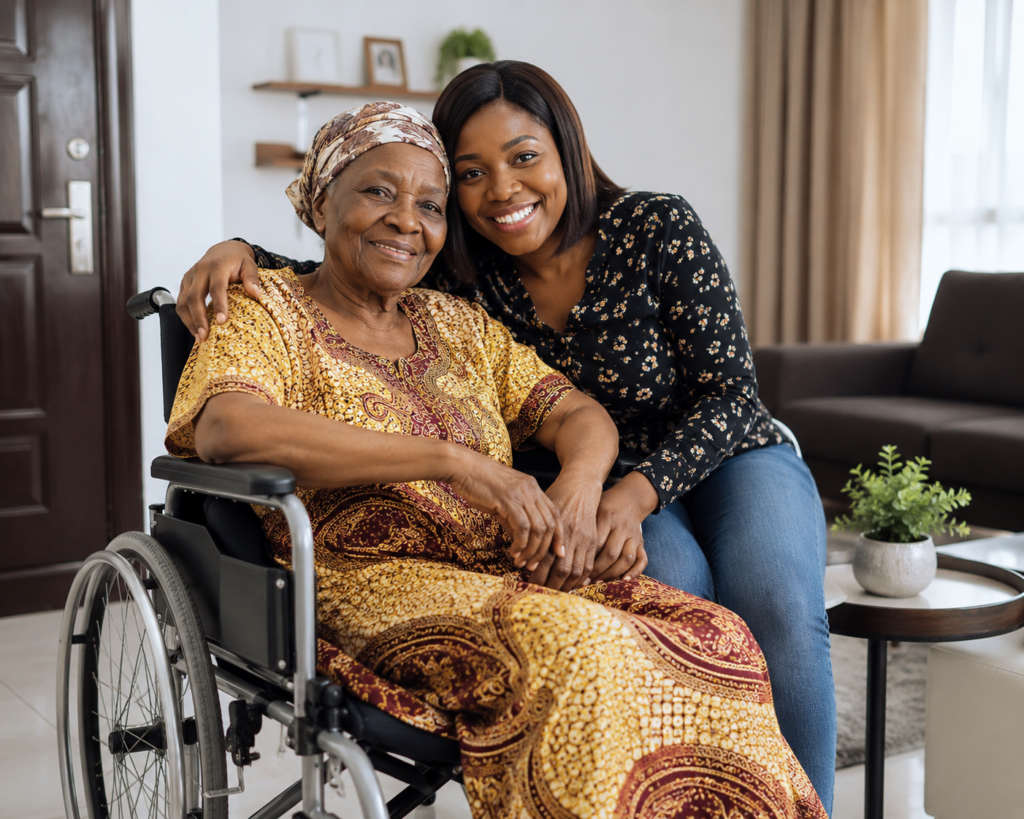
1. Wheelchairs: Because Dignity Lives in the Ability to Move
When someone you love can no longer walk safely, a wheelchair isn’t a symbol of decline. It’s a restoration of participation. It’s the difference between being confined to one room and being able to sit at the family table for Sunday rice.
Who needs a wheelchair for home care?
Stroke survivors managing ongoing mobility limitations. Elderly parents with severe arthritis or dangerous balance problems. Post-hip or knee replacement patients during recovery—anyone with paraplegia, lower limb disability, or conditions affecting safe independent walking.
The measurement mistake that costs families money:
Measure your home’s narrowest doorway — typically the bathroom door — before ordering a wheelchair. Standard Nigerian doorways are often 30–32 inches wide. A wheelchair wider than that doorway creates a daily obstacle that defeats the entire purpose of the purchase. Measure first.
Also measure your loved one’s seated hip width and add two inches. That’s the seat width you need. Too narrow causes pressure sores. Too wide compromises the support the chair provides.
Read HemacNG’s complete guide to the best wheelchairs for hospitals and home care in Nigeria for a detailed type-to-condition matching framework, and browse HemacNG’s full wheelchair range for verified, medical-grade options with nationwide delivery.
2. Adjustable Hospital Beds: Because Recovery Happens in the Details
A regular bed seems fine until you try to care for someone seriously ill in one.
Regular beds can’t adjust to help a patient breathe better, eat without choking, or relieve pressure on vulnerable skin. The fixed height forces caregivers into back-straining positions during every daily care task. There are no side rails to prevent dangerous nighttime falls. Changing sheets, repositioning a patient, or providing wound care becomes unnecessarily difficult for everyone involved.
A medical-grade adjustable hospital bed for home use changes all of these variables simultaneously.
Essential accessories to plan for:
Side rails prevent dangerous nighttime falls and should be considered standard for any bedridden patient. A pressure-relief medical mattress is critical for anyone spending extended periods in bed. An over-bed table transforms the bed space into a functional daily living environment.
For post-surgery recovery of defined duration, renting a hospital bed at approximately ₦30,000 – ₦50,000 per month is frequently the most financially sensible choice. Contact HemacNG to discuss rental availability for your specific situation.
3. Walking Aids: The Bridge Between Immobility and Independence
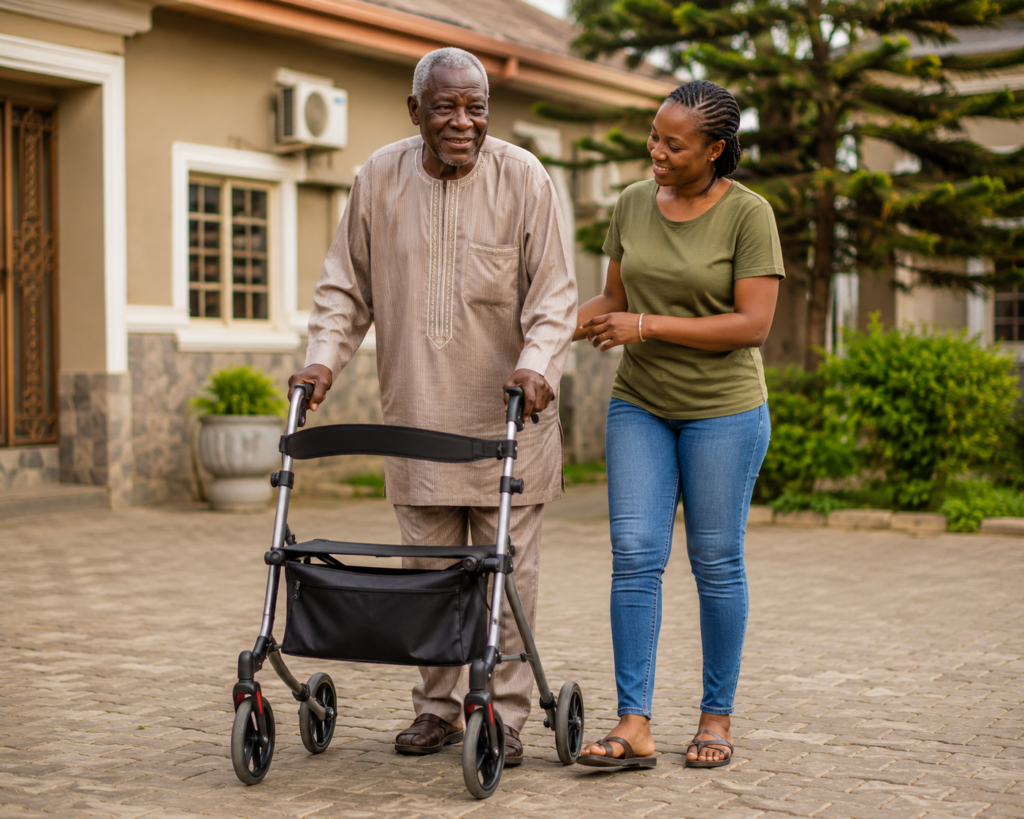
For many patients, the journey back to independent movement doesn’t start with walking unaided. It starts with a cane, a walker, or a rollator — a device that provides enough support to make movement safe while the body continues healing.
The height check that takes thirty seconds and prevents injury:
Have your loved one stand naturally. The walker or cane handles should align with their wrist. When they grip the handles, elbows should bend 15–30 degrees. This simple check prevents shoulder strain, wrist fatigue, and inefficient support that defeats the device’s purpose.
Check the rubber tips regularly. Worn tips lose grip on wet or smooth surfaces. Replace them at the first sign of wear — it’s a ₦500 replacement that prevents a potentially life-altering fall.
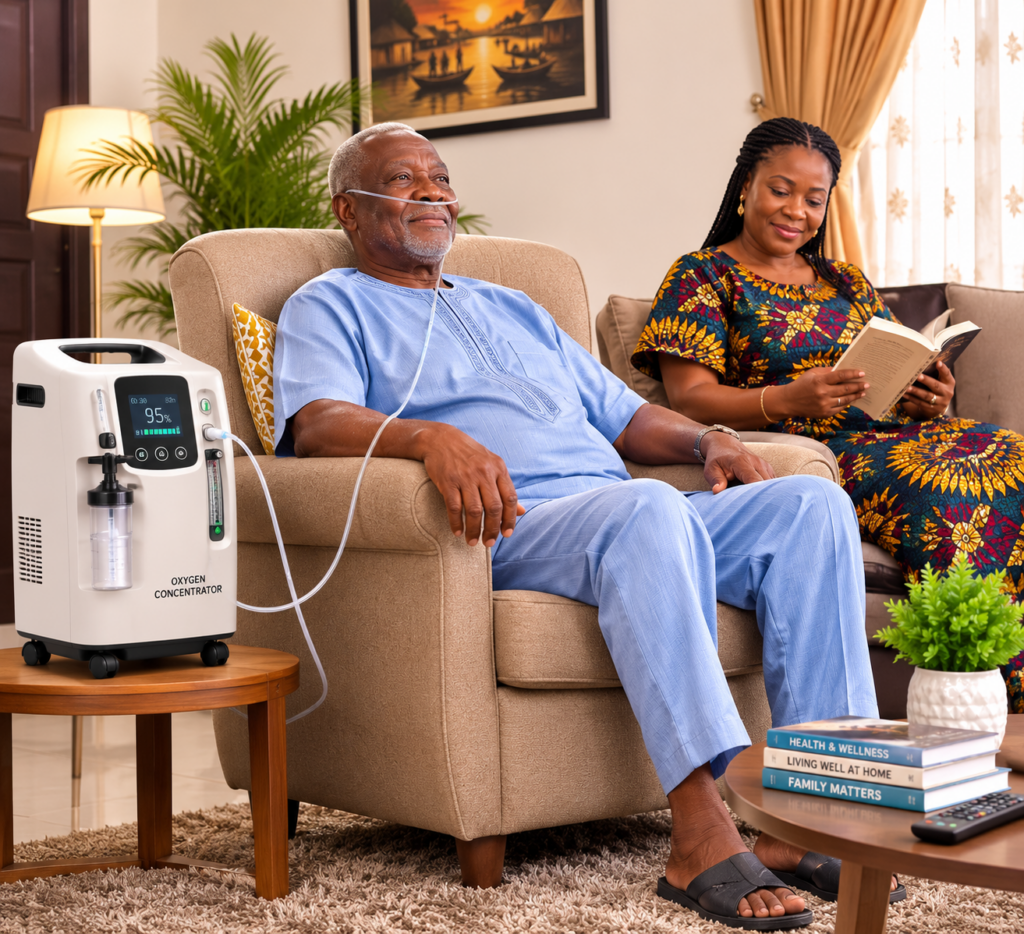
4. Oxygen Concentrators: When Every Breath Is a Battle
When breathing is difficult, everything else becomes secondary. For patients managing COPD, severe asthma, heart failure, chronic pneumonia, or post-COVID respiratory complications, an oxygen concentrator at home can mean the difference between daily suffering and genuine quality of life — and between hospital readmission and stable recovery at home.
An oxygen concentrator extracts oxygen from ambient room air and delivers it in concentrated form through a nasal cannula or face mask. Unlike oxygen cylinders that require constant logistical management and refilling, a concentrator runs on electricity and provides continuous therapy as long as it’s powered.
The Nigeria-specific consideration that cannot be ignored:
Power supply is not optional for oxygen concentrator users — it’s a safety requirement. If your area experiences frequent outages, budget for an inverter or generator as part of your oxygen therapy setup. Additionally, concentrators consume approximately ₦15,000 – ₦30,000 in electricity monthly, depending on usage hours, far cheaper than cylinder refills but a recurring cost worth planning for.
Critical safety note: Oxygen supports combustion. Open flames, smoking, and cooking areas must be kept entirely separate from oxygen equipment. This isn’t a suggestion — it’s a fire safety requirement.
Browse HemacNG’s oxygen concentrator range for models reviewed specifically for Nigerian power supply conditions. The WHO’s guidance on home oxygen therapy provides additional clinical context on appropriate use and safety protocols.
5. Pressure Relief Mattresses: Preventing the Wound That Should Never Happen
Here is something many Nigerian families discover too late: a pressure sore can develop in as little as two to three hours when a bedridden patient remains in the same position without repositioning.
Once formed, these wounds are extraordinarily painful, stubbornly resistant to treatment, frequently become infected, and can take months to heal even with excellent medical care. The tragedy is that they are almost entirely preventable with the right equipment and caregiving practices.
Who is at risk?
Any bedridden patient. Anyone spending extended hours in a wheelchair without repositioning. Elderly patients with naturally fragile, thinner skin. Diabetic patients whose compromised circulation slows wound healing dramatically.
Equipment alone isn’t enough:
Reposition your bedridden loved one at least every two hours. Keep their skin clean and completely dry. Ensure adequate nutritional intake, protein specifically is essential for maintaining skin integrity under pressure. These practices combined with the right mattress create a genuinely effective prevention system.
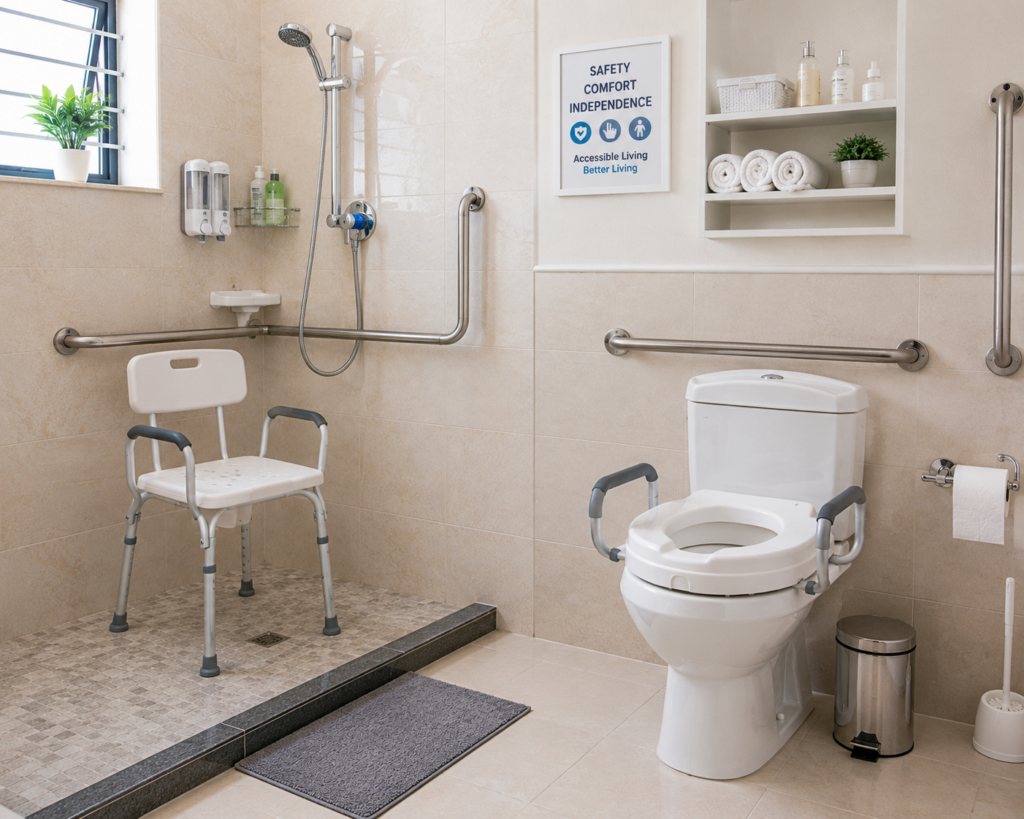
6. Bathroom Safety Equipment: Dignity Where It Matters Most
Falls in the bathroom are among the most common and most consequential accidents in home care settings. The combination of wet surfaces, physically demanding movements like lowering and rising from the toilet, and the body’s most vulnerable moments creates a genuinely dangerous environment for patients with limited mobility.
But beyond safety, bathroom equipment preserves something equally important: dignity. The capacity to maintain personal hygiene, whether independently or with minimal assistance, protects self-respect in ways that deeply affect both emotional well-being and clinical recovery.
The Nigerian bathroom consideration:
Many Nigerian bathrooms function as wet rooms where the entire floor surface gets wet during bathing. This design makes non-slip mats, rubber-tipped shower chairs, and non-slip footwear even more critical than in standard bathroom configurations. Verify that any shower chair purchased has rubber-tipped legs rated for wet tile surfaces.
7. Blood Pressure Monitors and Glucose Meters: Because Knowledge Prevents Emergencies
Hypertension and diabetes are extraordinarily prevalent across Nigerian demographics. If your loved one manages either condition — or both, which is common — home monitoring isn’t simply convenient. It is clinically essential for catching dangerous fluctuations before they become hospital admissions.
The ongoing cost to budget for:
Test strips are consumable and represent a regular monthly expense. A box of 50 strips costs ₦3,000 – ₦8,000 depending on the meter brand. Ensure the glucometer you select has strips reliably available in your local area or through your supplier — some imported meters use strips that are difficult to source consistently in Nigeria.
Home monitoring empowers families to make better daily decisions, helps physicians adjust medications more precisely, and catches dangerous patterns before they become crises. According to clinical guidance referenced through PubMed’s hypertension management literature, regular home blood pressure monitoring significantly improves treatment outcomes compared to clinic-only measurement.
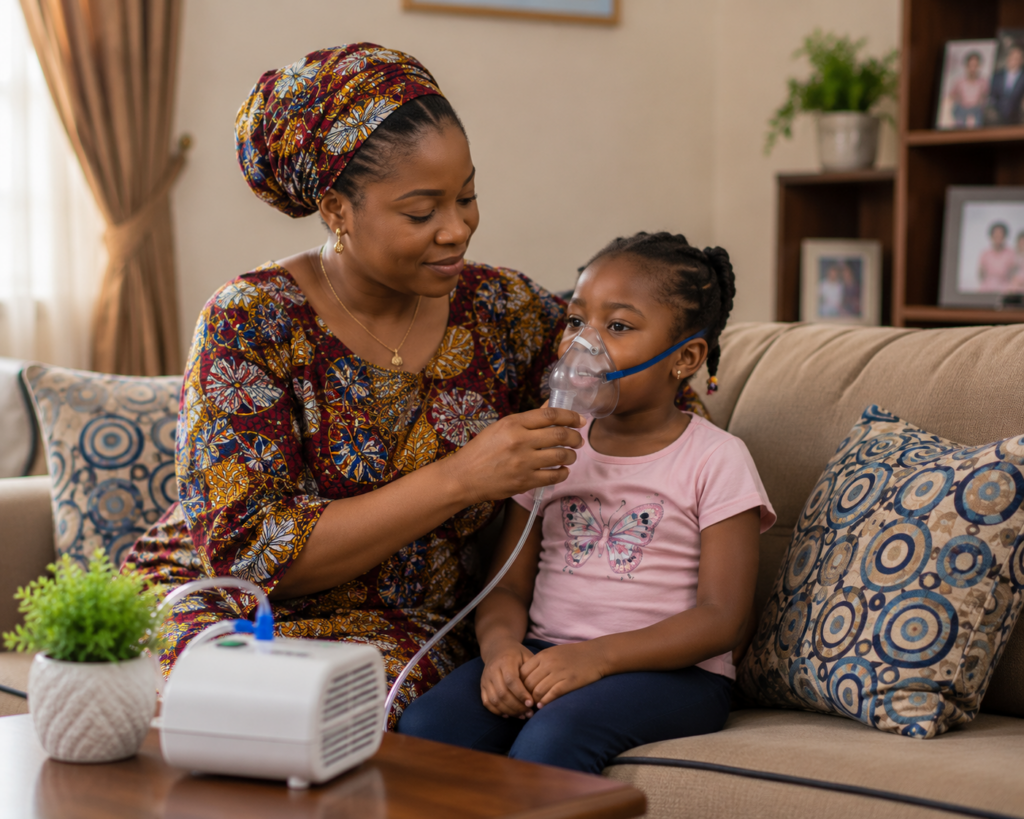
8. Nebulizers: Breathing Treatment Without the Hospital Visit
Asthma affects millions of Nigerian children and adults. For patients managing severe asthma, COPD, chronic bronchitis, or recurrent respiratory infections, a home nebulizer transforms emergency hospital visits into calm, manageable home treatments.
A nebulizer converts liquid medication into an extremely fine mist that the patient inhales directly into the lungs. This delivery method is often more effective for severe respiratory conditions than standard inhalers, particularly during acute episodes.
Maintenance that protects both device and patient:
Clean the mask or mouthpiece after every single use. Replace masks every three to six months regardless of appearance. Sterilize all components weekly. These habits prevent infection and maintain the device’s therapeutic effectiveness over its working life.
9. Patient Lifts and Transfer Equipment: Protecting the People Who Provide the Care
This category doesn’t receive enough attention in home care conversations, and the reason it matters goes beyond equipment. It’s about the people who provide care.
Incorrect manual lifting of a patient who cannot bear their own weight causes chronic back injuries, muscle damage, and disc problems in caregivers. These are devoted children, spouses, and siblings who sustain permanent physical harm while trying to help someone they love. Patient transfer equipment exists to prevent that harm while making the care itself safer for the patient.
When to seriously consider a patient lift:
When your loved one weighs more than 70kg and cannot bear their own weight during transfers.
10. Over-Bed Tables and Daily Living Aids: The Small Things That Change Everything
The final category in our guide to durable medical supplies for home care in Nigeria covers the smaller items that restore independence in the quiet, daily moments that matter enormously to someone confined to bed.
Over-bed tables (₦25,000 – ₦60,000) are height-adjustable surfaces that roll over the bed to hold meals, books, phones, tablets, or anything else the patient needs within reach. They restore the simple ability to eat a meal independently, send a message to a grandchild, or read without needing someone else to hand them everything.
HemacNG Delivers Durable Medical Supplies for Home Care Across All of Nigeria
Knowing what you need is only half the challenge. Getting it reliably to your door, whether you’re in Lagos Island or a community in Zamfara State, is the other half.
HemacNG delivers durable medical supplies for home care to all 36 Nigerian states:
Lagos | Abuja | Port Harcourt | Kano | Enugu | Uyo | Ibadan | Warri | Benin City | Kaduna | Abeokuta | Owerri | Calabar | Asaba | Jos | Ilorin | Maiduguri | Sokoto | Akure | Lokoja | And all 36 states
- Major Cities: Delivery within 1–3 working days
- Other Locations: Delivery within 3–7 working days
- Installation Support: Available for complex equipment categories
For Nigerians living abroad:
If you’re in the UK, USA, Canada, or anywhere else and you want to arrange home care equipment for a parent, sibling, or relative back in Nigeria, HemacNG handles the entire process, procurement, delivery to your family’s doorstep, delivery confirmation with photos, and optional installation guidance. You don’t need to be physically present to ensure your loved one gets what they need.
Every purchase through HemacNG is backed by a 100% money-back guarantee on returns after purchase. If anything arrives that doesn’t match your order or doesn’t meet the standard you need, your money returns in full, no conditions, no delay.
Your Questions About Home Care Medical Supplies in Nigeria, Answered
What are the most essential durable medical supplies for home care in Nigeria?
The essentials depend on your loved one’s specific condition. For most families, the foundational items include a wheelchair or walking aid for mobility, an adjustable hospital bed for bedridden patients, a pressure relief mattress, bathroom safety equipment, and a blood pressure monitor. An oxygen concentrator is essential for any respiratory condition.
Where can I buy home care medical equipment in Nigeria?
HemacNG.com is Nigeria’s most trusted supplier of durable medical supplies for home care, verified products, nationwide delivery, 2-year warranty, and a 100% money-back guarantee on every purchase.
Can I rent instead of buying?
Yes. For short-term recovery needs of one to three months, renting is frequently the smarter financial choice. Contact HemacNG to discuss rental availability for hospital beds, wheelchairs, and other equipment.
How much does a wheelchair cost in Nigeria in 2025?
Standard manual wheelchairs suitable for most home care needs cost ₦45,000 – ₦120,000. Specialized reclining models reach ₦250,000. Read HemacNG’s complete wheelchair guide for detailed type-to-price information.
Can diaspora Nigerians order equipment for delivery to family in Nigeria?
Absolutely. HemacNG supports full international ordering with delivery directly to your family’s home in Nigeria, delivery confirmation, and optional setup assistance.
Does HemacNG offer a money-back guarantee?
Yes — unconditionally. Every purchase is protected by HemacNG’s 100% money-back guarantee on returns after purchase. Wrong item, quality issue, or specification mismatch: your money returns completely, without conditions or delay.
Your Loved One Deserves to Heal at Home, With the Dignity They’ve Earned
Here’s what Adaora discovered, eventually. When she finally found the right wheelchair for her mother, the right hospital bed, and the bathroom grab bars that made Mama Chinyere’s daily routine safe and manageable, something shifted in their home. The anxiety of those first overwhelming days gave way to a rhythm. A routine. A sense that this was working, that the person who had given Adaora everything was being cared for with the quality and love she deserved.
Durable medical supplies for home care in Nigeria don’t just support bodies. They give the people we love the ability to remain at the center of their own lives even when their bodies are healing or aging or struggling.
HemacNG has helped hundreds of Nigerian families create exactly this kind of home care environment, from Lagos to Maiduguri, from Port Harcourt to Sokoto. They understand Nigerian homes, Nigerian conditions, and Nigerian families.
And they stand behind every product they supply with a 100% money-back guarantee, because when you’re caring for someone you love, you deserve a supplier you can completely trust.

Ready to Set Up Quality Home Care for Your Loved One?
- Browse HemacNG’s Complete Home Care Equipment Catalogue
- Request a Free Personalized Recommendation
- Get a Custom Quote for Your Loved One’s Specific Needs
- Order From Abroad, Delivered Directly to Your Family in Nigeria
Every home care equipment purchase through HemacNG is protected by a 100% money-back guarantee on returns after purchase. If anything doesn’t match your order or meet the standard your loved one needs, your money returns in full, no conditions, no complications, no delay. Shop with complete confidence.