
Uncategorized
Where to Buy Medical Equipment in Nigeria (2026 Guide)
The complete 2026 guide to where to buy medical equipment in Nigeria, real prices, trusted suppliers, NAFDAC-compliant options, and fast nationwide delivery for clinic owners, hospital managers, and healthcare investors who are tired of guessing
Dr. Fatima had waited for this moment for eleven years. Through medical school in Zaria, through her housemanship in Kaduna, through three years of general practice in a government hospital where equipment broke down faster than it could be repaired, she had held onto one vision: her own clinic.
When she finally secured her practice space in Kano in early 2024, she gave herself six weeks to equip it before opening. She had a budget. She had a list. What she didn’t have was reliable information about where to buy medical equipment in Nigeria that she could actually trust.
She opened her clinic eight days late, two equipment categories short, and with a frustration that took months to fully process. “Nobody told me how complicated this part would be,” she said afterwards. “The training prepares you for medicine. Nothing prepares you for procurement.”
If you’re reading this right now, there’s a reasonable chance you’re somewhere in Dr Fatima’s story. Maybe you’re at the beginning, trying to figure out where to even start. Maybe you’re midway through, having already encountered the confusion she described.
Whatever stage you’re at, this guide exists to give you what Dr. Fatima spent six weeks looking for: a complete, honest, practically useful answer to where to buy medical equipment in Nigeria in 2026, covering every major equipment category, real prices, what a legitimate supplier actually looks like, and why thousands of Nigerian healthcare providers have made HemacNG their first call rather than their last resort. Let’s work through this together.
Why Finding Trustworthy Medical Equipment in Nigeria Is Genuinely Difficult, And What That Costs You
Before we get into categories and prices, there’s a conversation worth having about the landscape itself.
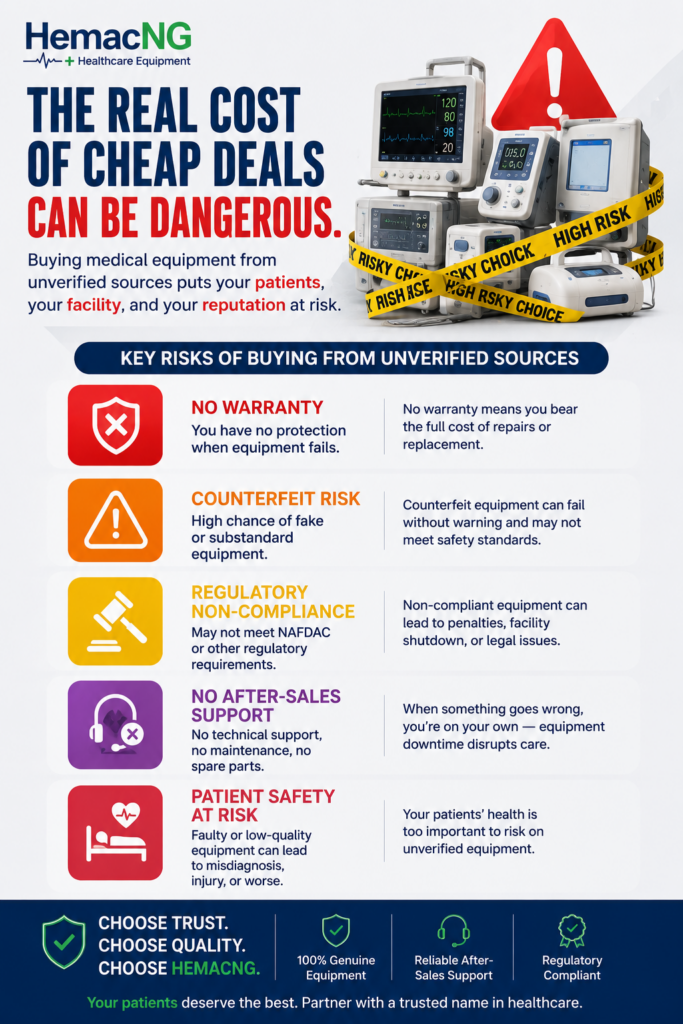
The Nigerian medical equipment market is, in honest terms, almost entirely unregulated at the retail level. What that means practically is that a genuine, clinically validated diagnostic device and a cosmetically similar counterfeit can sit on the same online listing page, described with nearly identical language, at prices that don’t tell you which is which.
According to NAFDAC’s medical device division, substandard and falsified medical devices represent a growing challenge in the Nigerian market, one that affects not just individual patients but the credibility of the facilities using them. The Standards Organisation of Nigeria maintains certification standards that legitimate medical equipment should meet, but compliance verification at the point of purchase is rarely straightforward for individual clinic owners navigating the market without institutional procurement support.
The practical consequences of buying from unverified sources are not abstract. A blood pressure monitor that reads consistently three points high leads to systematic misdiagnosis of hypertension. A pulse oximeter with an unvalidated sensor shows numbers that look legitimate but reflect nothing clinically real, a risk that Dr Adaeze, a nurse in Anambra, discovered when a patient’s SpO₂ reading showed 98% while the patient was visibly hypoxic. An autoclave that doesn’t reach the required pressure and temperature doesn’t sterilize; it warms instruments while bacteria survive.
Import duty fluctuations affect pricing significantly and unpredictably. A price quoted in January may not reflect February’s reality after a duty adjustment, which is why transparent, written quotes from verified suppliers matter so much.
Power supply inconsistency affects equipment longevity and daily functionality in ways that matter enormously when choosing between product specifications. An oxygen concentrator with a six-hour battery backup is a fundamentally different product for a Nigerian clinic than one without it.
The Essential Medical Equipment Every Nigerian Clinic Needs in 2026, With Honest Prices
Now let’s get specific. Because the most useful thing this guide can do is tell you clearly what things cost, what to look for in each category, and where to find them reliably.
Diagnostic Equipment
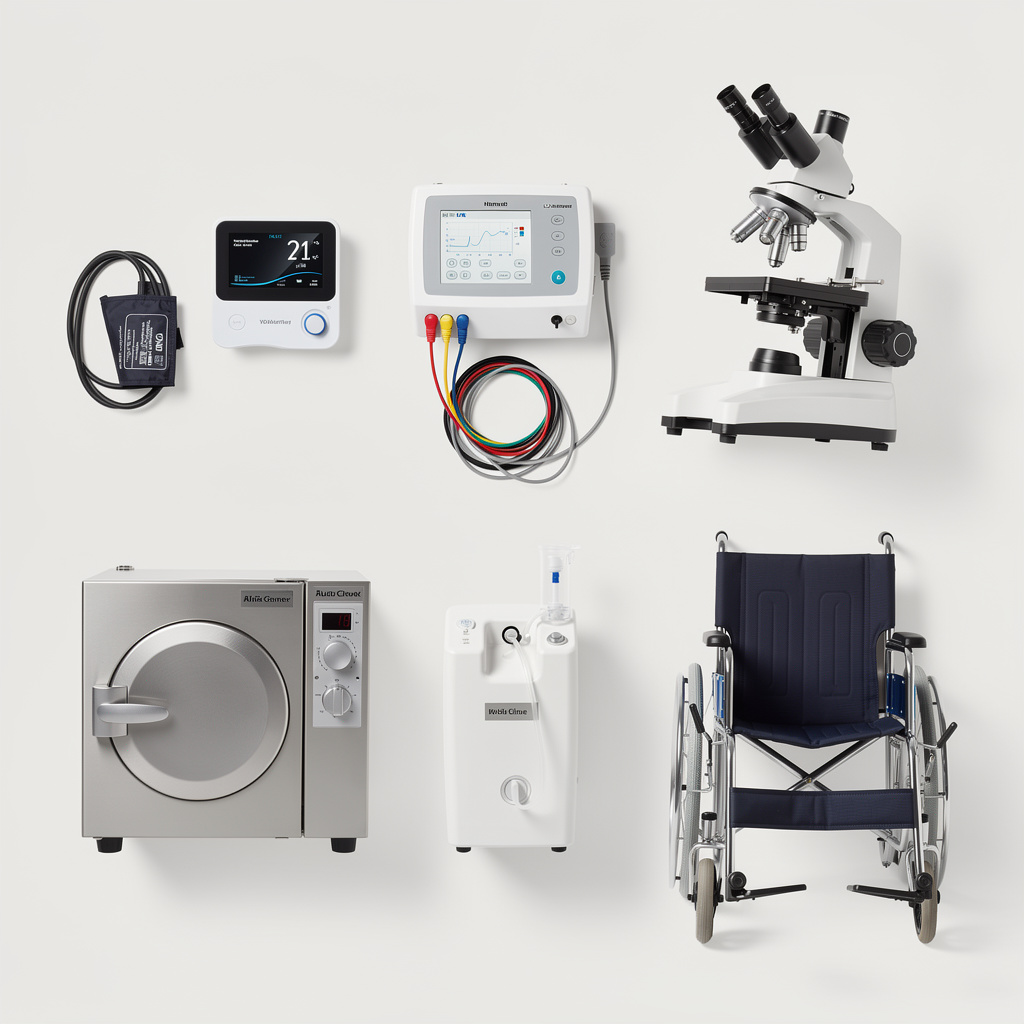
Blood Pressure Monitors and Vital Signs Monitors
Given that Nigeria carries one of the heaviest hypertension burdens in sub-Saharan Africa, a reality documented extensively in research published through PubMed, a reliable BP monitor isn’t optional in any Nigerian clinical setting. It’s the starting point.
Individual BP monitors handle single-parameter measurement. Multi-parameter vital signs monitors capture blood pressure, temperature, oxygen saturation, and pulse rate simultaneously, which is far more practical in a high-traffic clinic where every consultation minute matters.
What to look for: digital display with clear readability, validated clinical accuracy, and ideally a rechargeable battery option for resilience during power interruptions.
A small device with enormous clinical consequences. As Dr. Adaeze’s experience illustrates, a pulse oximeter that shows plausible-looking numbers without actual clinical accuracy is not just useless, it’s dangerous. Medical-grade pulse oximeters meet the ISO 80601-2-61 accuracy standard, which specifies accuracy within ±2% across the relevant saturation range. Devices sold below a certain price threshold simply cannot meet this standard.
As cardiovascular disease rises across Nigerian demographics, driven by hypertension, diabetes, and increasingly sedentary urban lifestyles, the ECG machine has moved from specialist equipment to general practice necessity. A 12-channel ECG machine with print capability and digital storage transforms a basic clinic into a comprehensive cardiac diagnostic centre. Explore HemacNG’s ECG collection for verified models built for Nigerian clinical conditions.
Imaging Equipment
Few pieces of equipment expand a Nigerian clinic’s diagnostic capability and revenue potential as dramatically as an ultrasound scanner. From confirming pregnancies and monitoring fetal development to evaluating abdominal masses, guiding drainage procedures, and assessing pelvic conditions, the clinical applications are wide enough to serve almost every specialty.
For maternity clinics, particularly, an ultrasound machine isn’t an upgrade. It’s a clinical necessity that patients now actively seek when choosing a facility.
What to look for: probe frequency range appropriate for your clinical use case, image clarity sufficient for confident diagnosis, and a portability profile that suits your clinic’s physical space. Browse HemacNG’s ultrasound machine collection for options calibrated to Nigerian practice sizes and budgets.
Laboratory Equipment
A Complete Blood Count is one of the most universally ordered diagnostic tests in Nigerian medicine, and for good reason. In a country where malaria, typhoid, sickle cell disease, and anaemia represent daily clinical encounters, an in-house haematology analyser doesn’t just improve patient management. It eliminates the referral delay that can mean the difference between early treatment and a worsened condition.
Additionally, it becomes an independent revenue stream for your clinic, attracting patients specifically for diagnostic services. What to look for: sample throughput appropriate for your patient volume, reagent availability through local supply chains, and calibration support from the supplier.
Laboratory Microscopes
In an era of sophisticated digital diagnostics, the compound microscope remains irreplaceable in the Nigerian clinical laboratory. Malaria parasite identification, bacterial culture examination, urinalysis, and blood smear review all depend on reliable microscopy that no algorithmic substitute currently replaces at the price point accessible to most Nigerian clinics.
Chemistry Analyzers
Blood glucose monitoring, liver function panels, kidney function assessment, and lipid profiles are increasingly requested across Nigerian patient demographics as diabetes, hypertension, and metabolic syndrome rates rise. An in-house chemistry analyzer makes these tests fast, profitable, and clinically actionable within the same consultation. Find verified laboratory equipment options at HemacNG, each sourced from manufacturers with documented accuracy records.
Sterilization Equipment
Autoclaves and Steam Sterilizers
Hospital-acquired infections remain a serious and largely underreported challenge in Nigerian healthcare. The autoclave, which uses high-pressure steam to eliminate bacteria, viruses, spores, and fungi on surgical instruments and reusable clinical tools, is the single most important infection control investment any Nigerian clinic can make.
Compact tabletop models serve small practices efficiently. Large-volume units are appropriate for surgical centres and high-patient-volume facilities with significant instrument sterilization demands.
What to look for: rated pressure and temperature cycle, sterilization cycle duration, and biological indicator compatibility for cycle verification. Explore HemacNG’s sterilizer collection for both tabletop and high-capacity options verified for Nigerian clinical use.
Respiratory Equipment
The COVID-19 pandemic taught Nigerian healthcare a devastating lesson about oxygen availability: facilities that didn’t have reliable oxygen delivery systems couldn’t manage their own patients during respiratory emergencies. That lesson should not require repeating.
An oxygen concentrator extracts pure oxygen from ambient air continuously, providing life-saving therapy for respiratory distress, asthma attacks, pneumonia, and obstetric emergencies without the logistical dependence on cylinder refilling.
For Nigerian settings, battery backup specifications matter enormously. A concentrator that runs only on mains power in an area with ten-hour daily outages is not a reliable respiratory safety net. Browse HemacNG’s oxygen concentrator range with models specifically reviewed for Nigerian power supply conditions.
Hospital Furniture and Mobility Equipment
The quality of a patient’s bed communicates something profound about the standard of care they’re receiving before a single clinical interaction takes place. Anti-rust frames, appropriate mattress density, height adjustability for nursing efficiency, and easy-clean surfaces that support infection control are not optional specifications for Nigerian wards; they are the minimum clinical standard.
From hospital ward transport to post-discharge home care, wheelchairs for Nigerian clinical and home use span eight distinct types, each matched to specific patient conditions, weight requirements, and usage environments. Buying the wrong type creates clinical risk and procurement frustration in equal measure. Read HemacNG’s complete guide to the best wheelchairs for hospitals and home care in Nigeria for specific type-to-condition matching.
Every consultation room needs one. The specification details that matter most in a Nigerian clinical setting: foam density sufficient to support patient positioning without bottoming out, a surface that can be thoroughly disinfected between patients, and frame stability that doesn’t shift during examinations.
Surgical and Procedure Equipment
Adequate illumination during surgical procedures and minor operations is a patient safety requirement, not a comfort preference. Shadow-reduction technology, appropriate lux intensity, and low heat emission distinguish medical-grade operating lights from general-purpose alternatives.
In maternity homes particularly, a functioning suction machine for neonatal airway management immediately post-delivery is a non-negotiable safety essential.
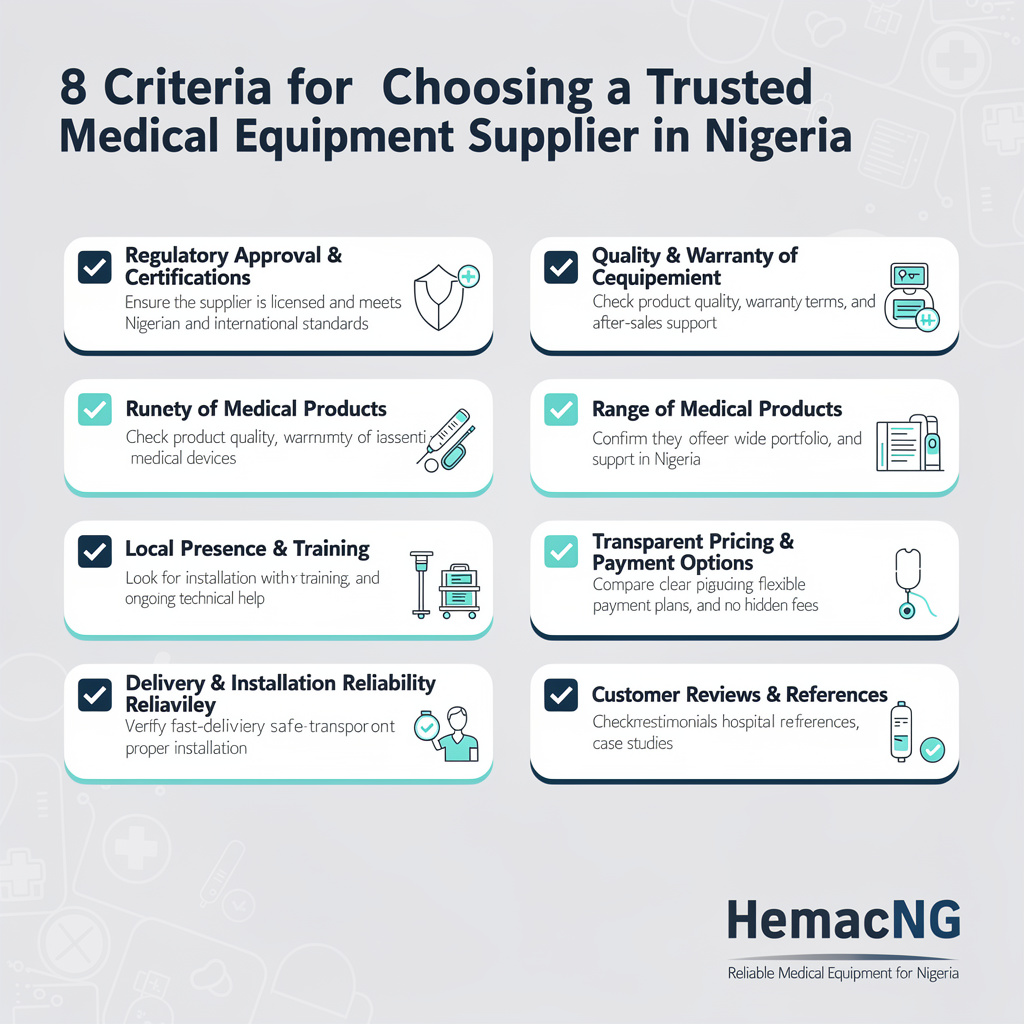
8 Things That Separate a Legitimate Medical Equipment Supplier in Nigeria From Everyone Else
Here’s the framework Dr Fatima wishes she had before she started making calls. Apply it to every supplier you consider, including HemacNG, because the right framework protects you regardless of who you’re evaluating.
1. NAFDAC and SON compliance documentation provided without hesitation.
Any supplier who cannot produce NAFDAC and SON compliance documentation for their products when asked is not a supplier whose products you should be using in clinical practice. This is not a bureaucratic formality, it’s the paper trail that protects your patients and your facility.
2. A verifiable physical address and CAC registration.
A WhatsApp number and an Instagram page are not accountability structures. Before any significant purchase, verify a physical business address and confirm CAC registration. These are the minimum requirements for a supplier you can actually hold responsible.
4. A documented product warranty with clear terms.
What does the warranty cover? How long does it last? How is a claim processed? A supplier who cannot answer these questions specifically and in writing does not actually stand behind what they sell.
5. An unconditional money-back guarantee.
This is the gold standard, and it’s rarer than it should be in the Nigerian medical equipment market. A supplier confident enough in their products to offer a full, unconditional money-back guarantee has nothing to hide about what they’re selling.
6. Genuine after-sales technical support.
Equipment requires calibration. Components wear. Software needs updating. A supplier who provides accessible, competent technical support after delivery is a long-term partner in your clinical operations, not a one-time vendor who becomes unreachable after payment clears.
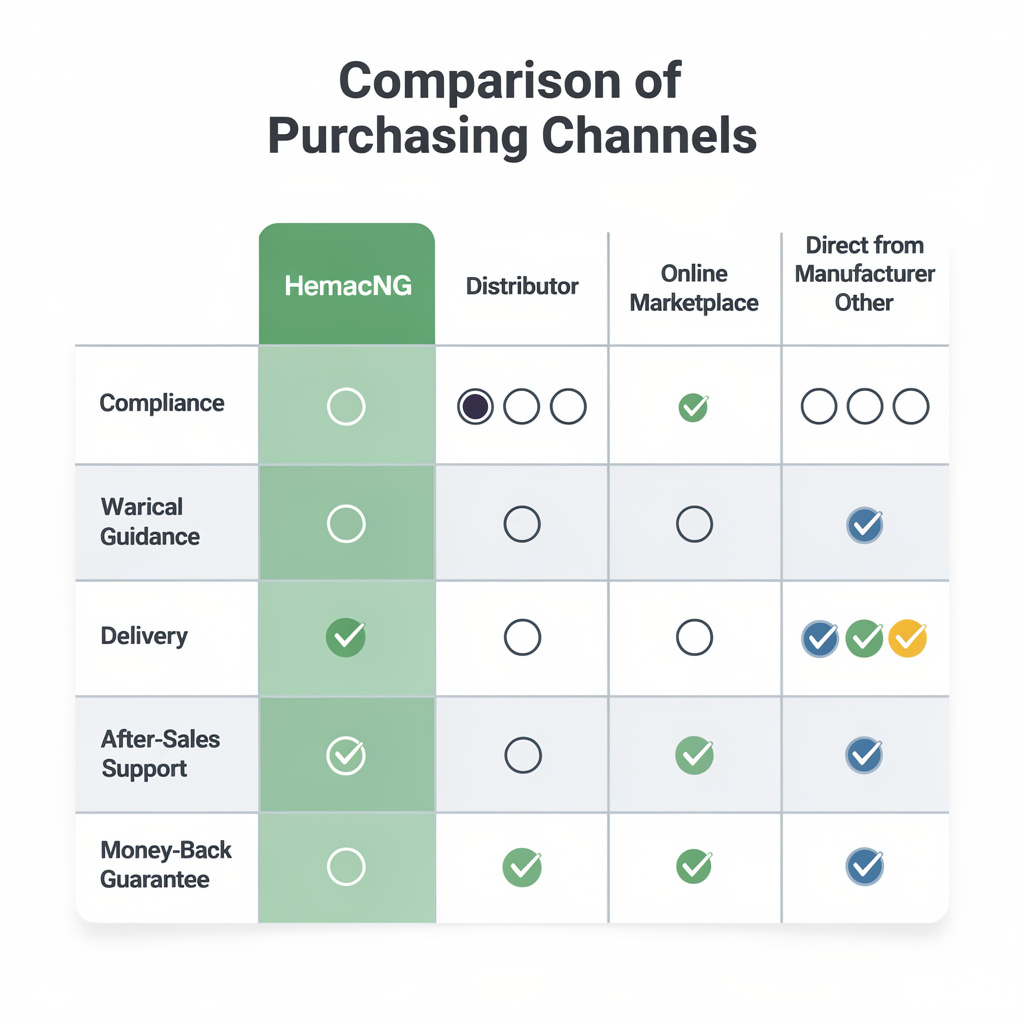
Where to Buy Medical Equipment in Nigeria: Every Option Honestly Compared
Let’s now put every available channel side by side and assess them honestly, not to dismiss alternatives, but to help you make the most informed decision possible.
Open Markets and Physical Medical Stores
Markets like Idumota in Lagos, Onitsha Main Market, and Aba Medical Supplies carry a wide range of equipment at negotiable prices. For non-critical consumables, gloves, disposable supplies, basic instruments, market sourcing can be practical and cost-effective.
For diagnostic equipment, laboratory analyzers, imaging devices, or anything where clinical accuracy is non-negotiable, the market presents a risk profile that most experienced clinic owners have learned the hard way. No regulatory compliance verification. No warranty documentation.
Social Media Vendors
Instagram and WhatsApp-based equipment sellers have proliferated significantly in the Nigerian market since 2020. Product photographs are often professional and appealing. Prices are frequently competitive. Response times are fast.
The fundamental problem remains unchanged: there is no accountability structure behind a social media page. No verifiable address. And in many cases, no reliable way to reach the seller once payment has been transferred.
General E-Commerce Marketplaces
Platforms like Jumia and Konga provide buyer protection frameworks that make them meaningfully safer than direct social media purchases. For equipment where clinical precision is relatively low-stakes, marketplace purchasing can work reasonably well.
For diagnostic, imaging, and laboratory equipment where accuracy directly affects patient outcomes, the absence of clinical specialization, installation support, and after-sales technical service represents a significant gap that marketplace buyer protection policies cannot fill.
International Direct Import
For large facilities with institutional procurement departments and established customs relationships, direct international import can provide access to a wider product range at potentially lower per-unit costs.
For individual clinic owners, the import duty complexity, clearance delays that can stretch to weeks, absence of local warranty enforcement, and zero local after-sales support make direct import a challenging and often expensive route despite the apparent unit price advantage.
Verified Nigerian Medical Equipment Suppliers
A specialized, verified Nigerian medical equipment supplier changes every variable in the procurement equation simultaneously.
HemacNG, Nigeria’s most trusted medical equipment platform, brings NAFDAC and SON-compliant products, documented warranties, an unconditional 100% money-back guarantee, clinical procurement expertise, nationwide delivery infrastructure, and genuine after-sales technical support together in a single platform built specifically for the Nigerian healthcare market.
Why HemacNG Is the Answer Nigerian Healthcare Providers Keep Coming Back To
Let’s be direct about this. Dr. Fatima eventually found HemacNG. Not at the beginning of her six-week procurement journey, unfortunately, but midway through, after enough frustrating experiences to recognize a genuinely different kind of supplier when she encountered one.
What made the difference wasn’t just the product range, though it covered every category she needed. It wasn’t just the pricing transparency, though receiving a written itemized quote that matched the invoice exactly was a relief she hadn’t expected to feel so strongly. It was the conversation that happened before she placed a single order.
Someone walked her through the clinical requirements for each equipment category. They asked about her patient volume, facility size, power supply reliability, and budget structure. They recommended specific models and explained specifically why, in terms that made clinical sense rather than sales sense. And they told her, clearly and without conditions, that if anything arrived and wasn’t right for any reason, her money would come back in full.
That unconditional 100% money-back guarantee on returns after purchase is HemacNG’s clearest expression of confidence in what they sell. It removes the financial risk from your procurement decision entirely. If the product doesn’t match what you ordered, doesn’t meet the clinical specification you required, or simply isn’t right for your facility’s specific needs, you receive a complete refund. No partial returns. No store credit offered as a substitute. Your money, returned in full and without delay.
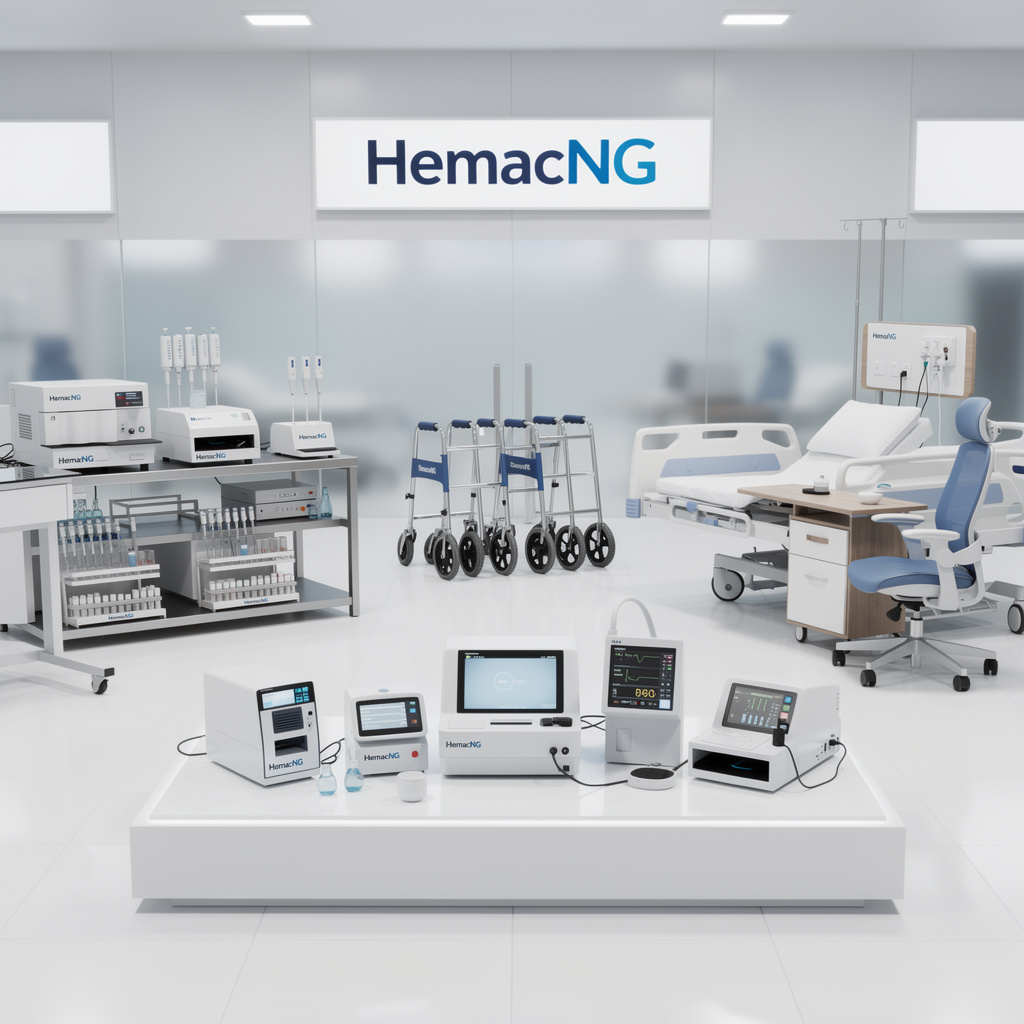
HemacNG’s Clinic Starter Kits: The Smartest Way to Equip a New Nigerian Practice
For healthcare providers opening their first clinic, one of the most overlooked sources of procurement cost isn’t the individual equipment prices, it’s the time, energy, and mistakes that come from navigating each category separately without a structured framework.
HemacNG’s Clinic Starter Kits solve this problem directly.
Each kit is a curated, pre-packaged bundle of NAFDAC-compliant medical equipment matched to a specific clinic type: General Practice, Maternity Home, Clinical Laboratory, or Dental Practice. Instead of sourcing each item individually from different suppliers with different delivery timelines and different quality standards, a starter kit delivers everything together, coordinated, verified, and covered by HemacNG’s full guarantee.
The cost advantage of bundle pricing versus individual procurement is meaningful. More importantly, the time saved and the quality assurance provided eliminate the experience Dr Fatima had, arriving at opening day two categories short, having spent more money than necessary on the wrong items.
For any Nigerian physician, nurse practitioner, or healthcare investor opening a new practice in 2025, the HemacNG Clinic Starter Kit is the most efficient, most protected, and most clinically intelligent way to get from an empty room to a functioning practice.

How HemacNG Delivers Medical Equipment Across Nigeria and Beyond
Delivery anxiety is a legitimate and rational response to the Nigerian online purchasing experience. So let’s be completely specific about what HemacNG actually delivers and how reliably.
Nationwide Delivery Across All 36 States:
Lagos | Abuja | Port Harcourt | Kano | Enugu | Uyo | Ibadan | Warri | Benin City | Kaduna | Abeokuta | Owerri | Calabar | Asaba | Jos | Ilorin | Maiduguri | Sokoto | Akure | Lokoja | Awka | Ado-Ekiti | Bauchi | Damaturu | Gusau | Jalingo | Lafia | Makurdi | Minna | Yola | Birnin Kebbi | Dutse | Gombe | Umuahia | Yenagoa
- Standard Delivery: 3–7 working days nationwide
- Express Delivery: 24–48 hours available in select major cities
- Bulk Institutional Orders: Custom logistics scheduling aligned to your facility timeline
- Installation Support: Available for complex equipment categories
Every delivery is covered by HemacNG’s 100% money-back guarantee. If what arrives doesn’t match your order, whether you’re in Lagos or Lafia- your money returns without conditions or delay.
International Shipping:
🇬🇭 Ghana | 🇨🇲 Cameroon | 🇸🇱 Sierra Leone | 🇱🇷 Liberia | 🇬🇲 Gambia | 🇿🇦 South Africa | 🇦🇪 UAE | 🇬🇧 UK | 🇺🇸 USA
Shipping options include air freight for urgent setups, sea freight for bulk cost-effective orders, and consolidated cargo for mixed equipment shipments. Export documentation, customs clearance support, and secure palletized packaging are handled by HemacNG’s logistics team throughout.
Your Most Important Questions About Buying Medical Equipment in Nigeria, Answered
Where is the best place to buy medical equipment in Nigeria?
HemacNG.com is Nigeria’s most trusted medical equipment platform — NAFDAC and SON-compliant products, verified authenticity, nationwide delivery, 2-year warranty, and an unconditional 100% money-back guarantee on every purchase.
How much does medical equipment cost in Nigeria in 2026?
Prices range from ₦8,000 for a basic pulse oximeter to over ₦5,000,000 for advanced ultrasound systems. The complete category-by-category price guide above covers every major equipment type with realistic 2026 Naira ranges.
Can I buy medical equipment online in Nigeria with reliable delivery?
Absolutely. HemacNG provides secure online procurement with nationwide delivery across all 36 states, standard 3–7 working days, express 24–48 hours in select cities, and full delivery coverage under the money-back guarantee.
Are HemacNG’s products NAFDAC and SON approved?
Yes. Every product comes with NAFDAC and SON compliance documentation provided as a standard part of the purchase, not an optional extra.
Does HemacNG offer a money-back guarantee?
Yes, unconditionally. HemacNG’s 100% money-back guarantee on returns after purchase applies to every product on the platform without exception. Wrong item, quality issue, specification mismatch: your money returns in full, without delay, without conditions.
Can I get a complete clinic setup from HemacNG?
Yes. HemacNG’s Clinic Starter Kits provide curated, NAFDAC-compliant equipment packages for General Practice, Maternity Home, Laboratory, and Dental clinic setups — delivered together, guaranteed together.
Does HemacNG supply government hospitals and NGOs?
Yes. Institutional procurement support with full documentation is available for government facilities, teaching hospitals, NGOs, and ministry-level procurement officers.
What warranty does HemacNG offer?
A 2-year warranty on all major equipment categories, plus the unconditional 100% money-back guarantee on returns. Both apply simultaneously and independently.
Your Clinic’s Reputation Starts Long Before the First Patient Walks In
Here’s the thing that procurement guides rarely say but that every experienced Nigerian healthcare provider knows instinctively.
The moment a patient walks through your door, they begin forming an impression that will determine whether they come back, whether they refer a friend, and whether they trust you with the things that genuinely matter to them. That impression doesn’t begin with your qualifications, though those matter profoundly. It begins with what they see, touch, and experience in the physical space you’ve built.
A functioning, reliable BP monitor on your nursing station communicates competence. A stable, cleanly surfaced examination couch communicates care. A well-organized, fully equipped clinic communicates that the person responsible for this space takes their work seriously. Knowing where to buy medical equipment in Nigeria that meets the standard your patients deserve isn’t a peripheral business decision. It is, fundamentally, a statement about who you intend to be as a healthcare provider.
HemacNG has helped hundreds of Nigerian physicians, nurses, and healthcare investors make that statement, from the first clinic setup to multi-department hospital expansions. They understand Nigerian healthcare specifically, not generically. And they back every product recommendation with an unconditional 100% money-back guarantee that removes the financial risk from your procurement decision entirely. Because Dr. Fatima’s six weeks of frustration shouldn’t be part of anyone’s story. And with the right supplier and the right information, it doesn’t have to be part of yours.
Ready to Equip Your Clinic or Hospital With Medical Equipment You Can Actually Trust?
The information is here. The prices are clear. The supplier is verified. The guarantee is unconditional. The next step belongs to you. Shop All Medical Equipment on HemacNG.com, Explore HemacNG’s Clinic Starter Kits, Request a Free Procurement Consultation, Get a Custom Quote for Bulk or Institutional Orders. Every medical equipment purchase through HemacNG is protected by a 100% money-back guarantee on returns after purchase. Wrong item, quality issue, specification mismatch — your money returns in full, unconditionally, without delay. This is what buying medical equipment in Nigeria with genuine confidence actually looks like.
Have a specific question about equipment selection for your clinic type, your patient volume, or your state’s delivery timeline? Leave it in the comments below or reach out to HemacNG’s procurement team directly. Whether you’re equipping a two-room general practice or a fifty-bed hospital wing, the right guidance is one conversation away, and every purchase you make is fully protected.