
Uncategorized
Top Durable Medical Supplies for Home Care in Nigeria: A 2026 Guide
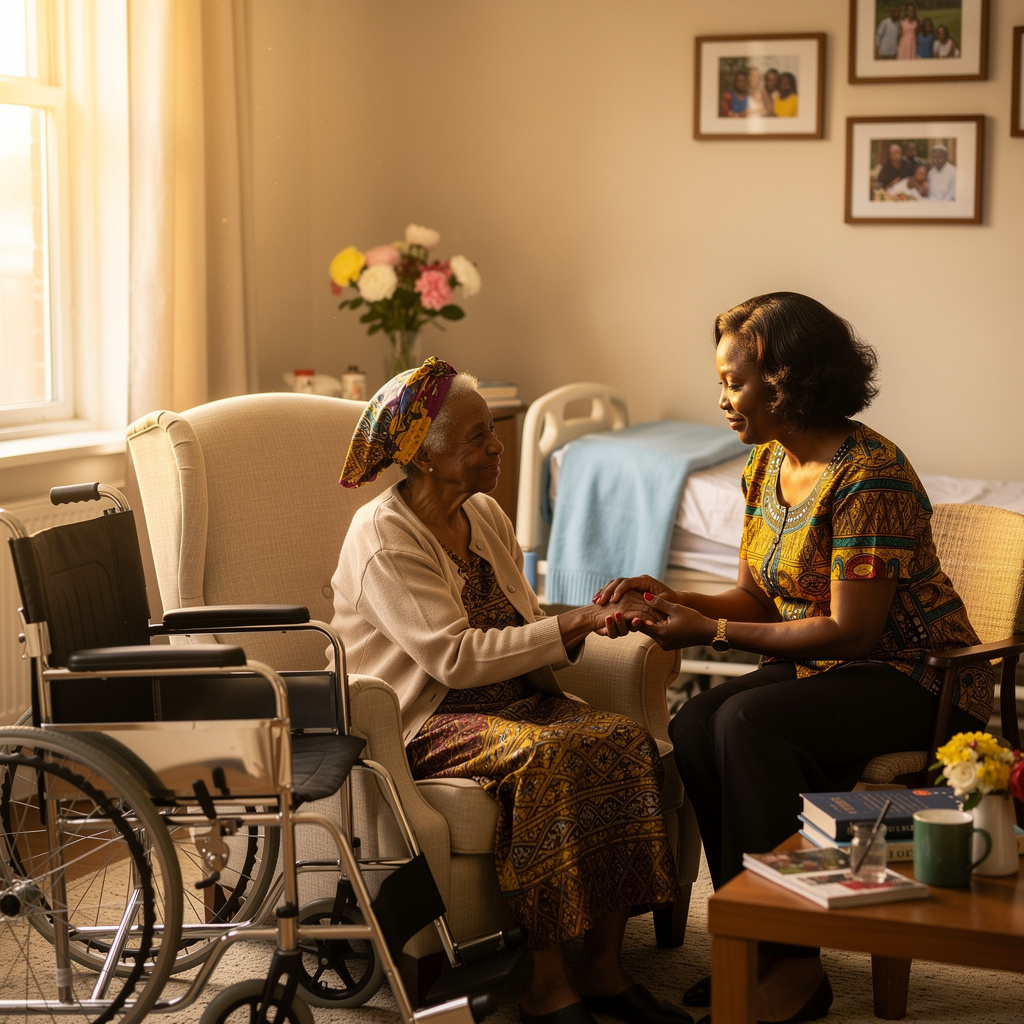
Every single day, thousands of Nigerian families face this exact moment. The hospital discharge papers are signed. The medications are prescribed. The follow-up appointments are scheduled. But then comes the question nobody prepared you for: How do I actually take care of my loved one at home?
Your mother, recovering from hip surgery, can’t climb into a regular bed. Your elderly father with severe arthritis can’t walk to the bathroom safely.
The hospital doctors mention things like “get a wheelchair” or “you might need a hospital bed at home.” “But they don’t tell you where to find these things in Nigeria. They don’t explain which type you need. They certainly don’t discuss how much it will cost or whether you should rent or buy.
That gap between “you need this equipment” and “here’s exactly how to get it” that’s the gap this guide exists to fill. Because here’s the truth that many people don’t realize: Nigeria’s home healthcare market is growing rapidly. More families are choosing to care for loved ones at home rather than in expensive hospital wards. More elderly Nigerians are living longer with chronic conditions.
So today, we’re going to walk through the top 10 durable medical supplies for home care in Nigeria. We’ll explain what each one does, who needs it, how to choose quality products, what it actually costs in Naira, and most importantly, where you can buy it with reliable delivery to your doorstep.
Whether you’re in Lagos, Abuja, Port Harcourt, or any corner of Nigeria, HemacNG supplies all categories of home care medical equipment with delivery to all 36 states. And if you’re a Nigerian living abroad looking to support your family back home, we deliver directly to your loved ones’ doorstep. Because when the right equipment meets the right care, your loved one doesn’t just survive at home, they thrive with dignity, comfort, and independence. Let’s begin.
Understanding Medical Equipment for Home Care in Nigeria
Before we dive into specific products, let’s make sure we understand what we’re talking about. Durable medical equipment (DME) refers to medical devices designed for repeated use over an extended period in a home setting. Unlike consumables, things like gloves and bandages that you use once and throw away, durable equipment is built to last for months or years.
These devices share several important characteristics. First, they’re specifically designed for home use, not just hospitals. Second, they’re built to withstand daily use by patients and family caregivers with minimal training. Third, and most importantly, they improve your loved one’s independence and quality of life while reducing the need for hospital readmissions.
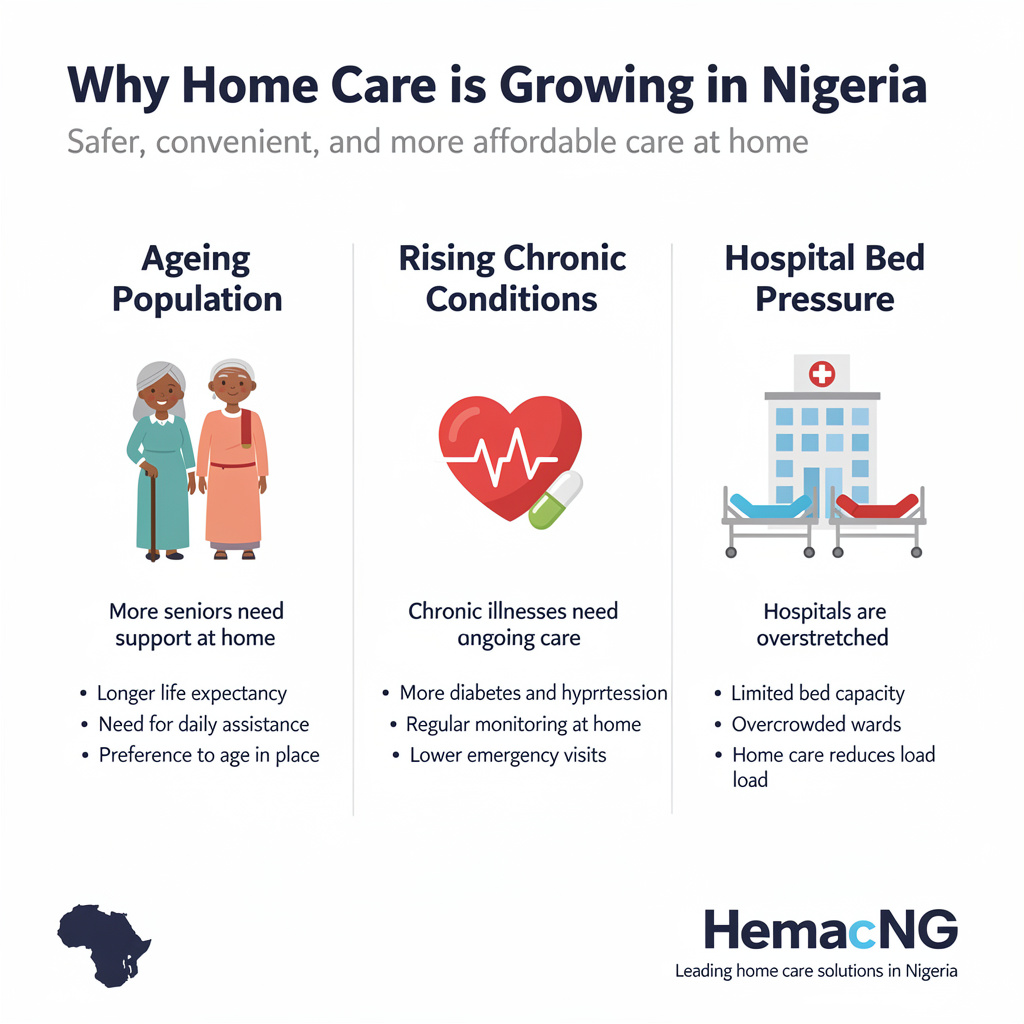
Why Home Care Is Growing in Nigeria
Several powerful forces are driving the growth of home care in Nigeria. Demographically, our population is ageing. More Nigerians are living into their 70s, 80s, and beyond. Additionally, chronic diseases, diabetes, hypertension, and stroke are rising dramatically across all age groups.
Economically, hospital beds are in short supply. Extended hospital stays can cost hundreds of thousands of naira weekly. For many families, home care isn’t just preferable; it’s financially necessary.
Culturally, Nigerians have always valued family care. There’s a deep preference for ageing parents to remain at home, surrounded by family, rather than in institutional settings. The spiritual and emotional comfort of the home environment cannot be understated.
Should You Rent or Buy?
This is one of the first questions families ask. Here’s a simple framework:
| Your Situation | Our Recommendation | Why |
|---|---|---|
| Short-term recovery (1-3 months) | Rent | Lower upfront cost; return when healed |
| Chronic/permanent condition | Buy | Better long-term value |
| Uncertain duration | Rent first, buy later | Test before committing |
| Very limited budget | Rent or consider used equipment | Makes care accessible |
The Top 10 Essential Durable Medical Supplies for Home Care in Nigeria
Now, let’s explore the equipment that makes home care possible. Based on the most common needs we see across Nigerian families, here are the ten essential categories every caregiver should know about.
1. Wheelchairs: Restoring Mobility and Independence
When someone you love can no longer walk safely or for extended distances, a wheelchair isn’t just equipment. It’s freedom.
Who needs a wheelchair?
Stroke survivors who can’t walk independently. Elderly parents with severe arthritis or dangerous balance issues. Post-surgery patients recovering from hip or knee replacements. Anyone with paraplegia or severe mobility limitations
How do you choose the right wheelchair?
This is critical. First, measure your loved one’s hips and add 2 inches, that’s the seat width you need. A wheelchair that’s too narrow causes discomfort and pressure sores. One that’s too wide doesn’t provide adequate support.
Next, check the weight capacity carefully. Ensure it exceeds your loved one’s current weight.
Consider the tyres. Solid tyres require almost no maintenance, perfect for Nigerian conditions. Pneumatic (air-filled) tyres give a smoother ride but need occasional inflation. Finally, make sure it’s foldable. Nigerian homes often have limited storage space, and you’ll need to transport it in vehicles.
A common mistake to avoid:
Many families measure doorways after buying the wheelchair, only to discover it doesn’t fit through their bathroom door. Measure first. Standard Nigerian doorways are often 30-32 inches wide. Your wheelchair should be narrower. Ready to find the right wheelchair? Browse our complete wheelchair range at HemacNG.
2. Adjustable Hospital Beds: Comfort That Heals
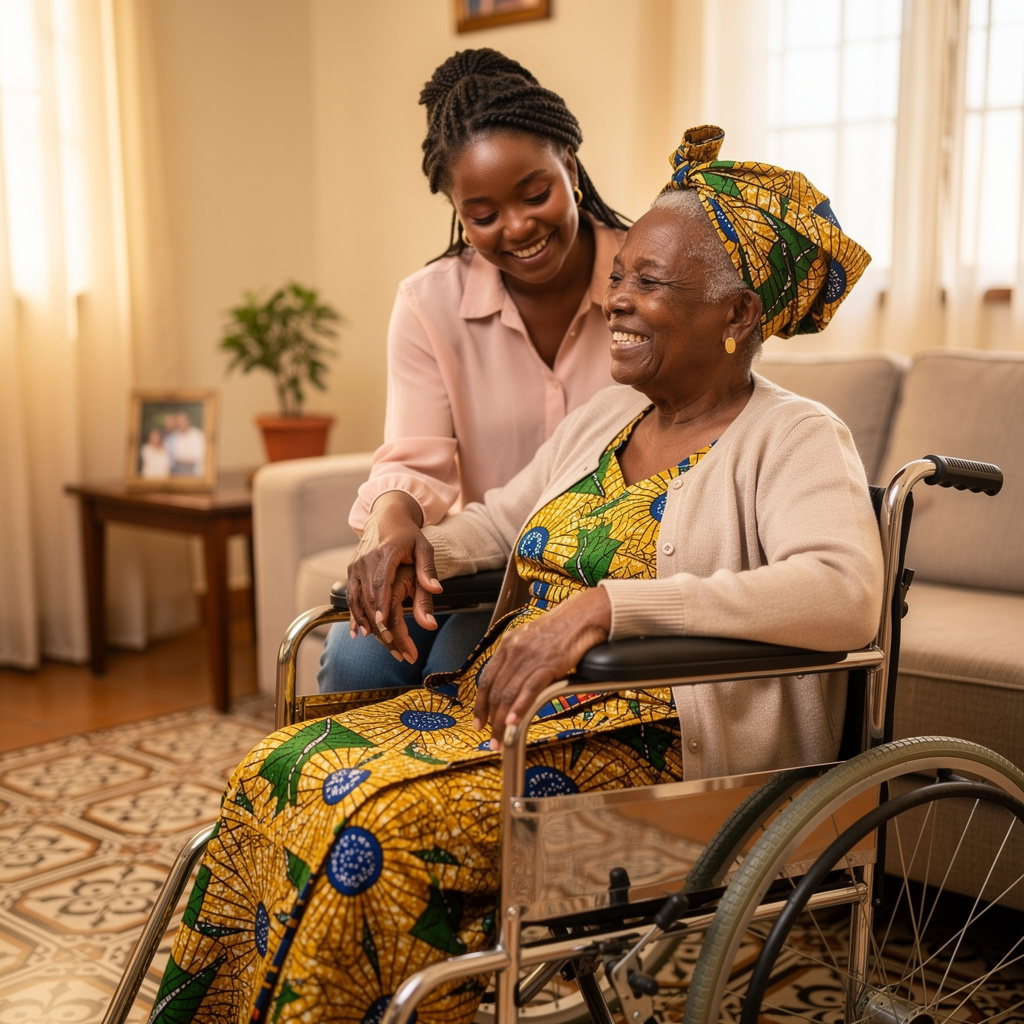
If your loved one will be spending significant time in bed, whether recovering from surgery, managing chronic illness, or dealing with severe mobility limitations, a regular bed simply won’t do.
Here’s why. Regular beds can’t adjust to help patients breathe better, eat safely, or relieve pressure on different parts of the body. The fixed height makes it backbreaking work for caregivers to provide daily care. There are no safety rails to prevent falls. And performing basic care tasks, changing sheets, helping with toileting, and dressing wounds become unnecessarily difficult and dangerous for everyone involved.
What types of hospital beds are available for home use?
- Manual 2-Crank Beds (₦150,000 – ₦300,000) let you adjust the head and foot positions using hand cranks. They’re affordable and don’t require electricity.
- Manual 3-Crank Beds (₦200,000 – ₦400,000) add height adjustment, which is invaluable for caregivers’ backs.
- Semi-Electric Beds (₦350,000 – ₦600,000) use electricity for head and foot adjustments but have manual cranks for height. They offer convenience with some independence from the power supply.
- Full Electric Beds (₦500,000 – ₦1,200,000) provide push-button control for all adjustments. However, they require consistent electricity, so consider pairing with an inverter if you experience frequent power outages.
Essential accessories to consider:
Don’t forget about side rails, they prevent falls during the night. A medical mattress designed to prevent pressure sores is crucial for bedridden patients. You might also need an IV pole attachment and an over-bed table for meals and activities.
The rental option:
Many Nigerian families rent hospital beds for post-surgery recovery periods. Rental typically costs ₦30,000-₦50,000 per month. This can be an excellent option when you’re not sure how long the bed will be needed. Explore hospital beds for home use at HemacNG.
3. Walking Aids: Safe Steps Forward
For many people, the journey from complete immobility back to independence starts with a simple walking aid.
Your mother, who just had knee surgery. Your father is recovering from a stroke. Each of them needs support, but not necessarily the same support.
Let me walk you through the options:
Walking canes come in two main types. The single-point cane (₦3,000 – ₦8,000) provides mild balance support. It’s suitable for people who just need a little extra stability. However, the quad cane with its four-point base (₦8,000 – ₦15,000) offers significantly more stability and is better for people with moderate balance issues.
Standard walkers without wheels (₦15,000 – ₦35,000) provide maximum stability. The patient lifts the walker with each step. These are excellent for indoor use when someone needs substantial support but can still bear their own weight.
Rollators, walkers with wheels (₦45,000 – ₦120,000), are game-changers for active seniors. They roll smoothly, often include a seat for resting, and work wonderfully for outdoor use. Your loved one can walk to church, visit neighbours, or simply enjoy fresh air with confidence.
How do you choose the correct height?
This is simple but crucial. Have your loved one stand naturally. The handles of the walker or cane should be at wrist level. When they hold the handles, their elbows should bend 15-30 degrees. This positioning provides optimal support without straining the shoulders or wrists.
Safety reminder: Check the rubber tips regularly. Worn tips lose their grip and become dangerous. Replace them at the first sign of wear. Shop walking aids and mobility support equipment.
4. Oxygen Concentrators: Every Breath Matters
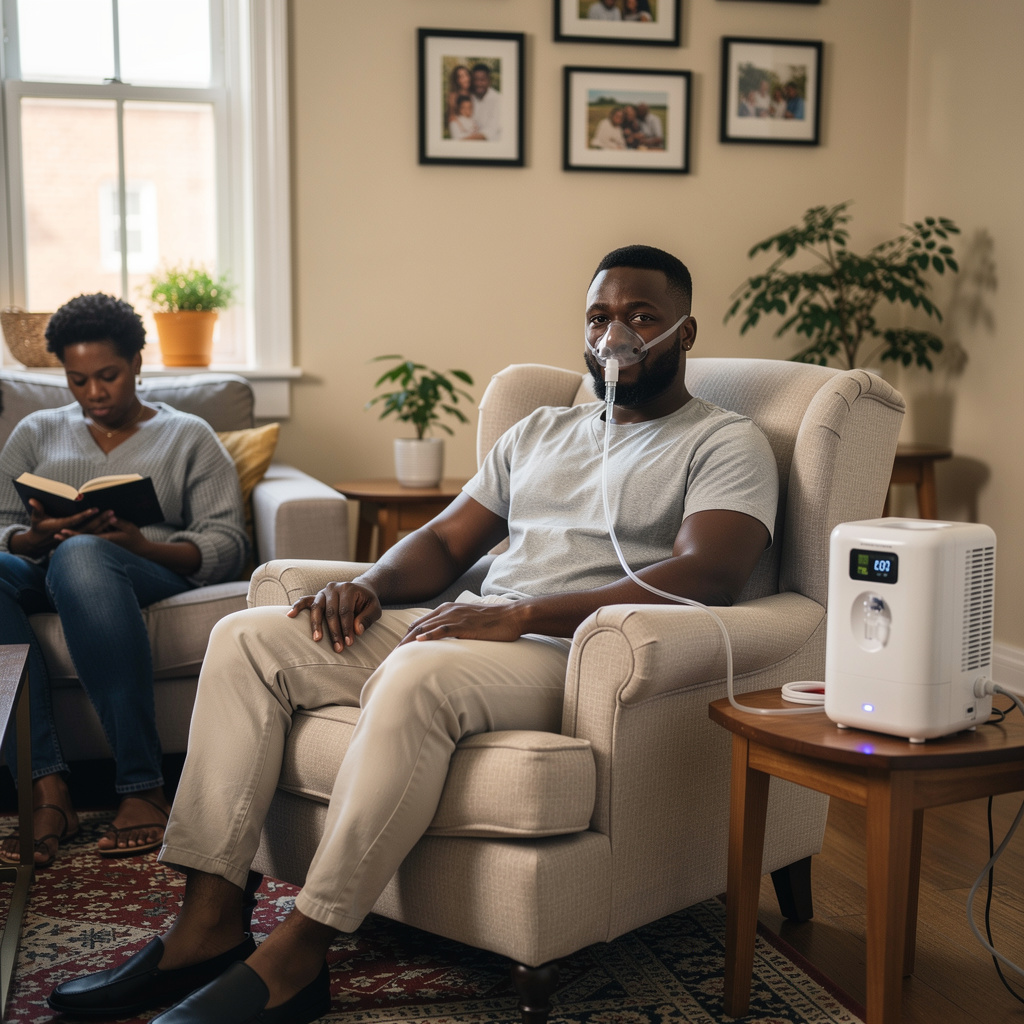
When someone struggles to breathe, everything else becomes secondary. For patients with COPD, severe asthma, heart failure, chronic pneumonia, or those recovering from COVID-19, an oxygen concentrator can literally mean the difference between suffering and comfort, between hospital readmission and recovering at home.
What exactly is an oxygen concentrator?
Think of it as a machine that extracts oxygen from regular room air and delivers it to the patient in concentrated form through a nasal cannula or mask. Unlike oxygen cylinders that need constant refilling, concentrators run on electricity and provide continuous oxygen as long as they’re powered on.
Critical considerations for Nigeria:
Power supply is everything. Oxygen concentrators need stable electricity. If you live in an area with frequent outages, you absolutely must have backup power, either an inverter or a generator. Factor this into your budget.
Important safety warning:
Oxygen supports combustion. Never smoke or allow open flames anywhere near oxygen equipment. Keep it away from cooking areas. Browse oxygen concentrators and respiratory equipment.
5. Bathroom Safety Equipment: Dignity Where It Matters Most
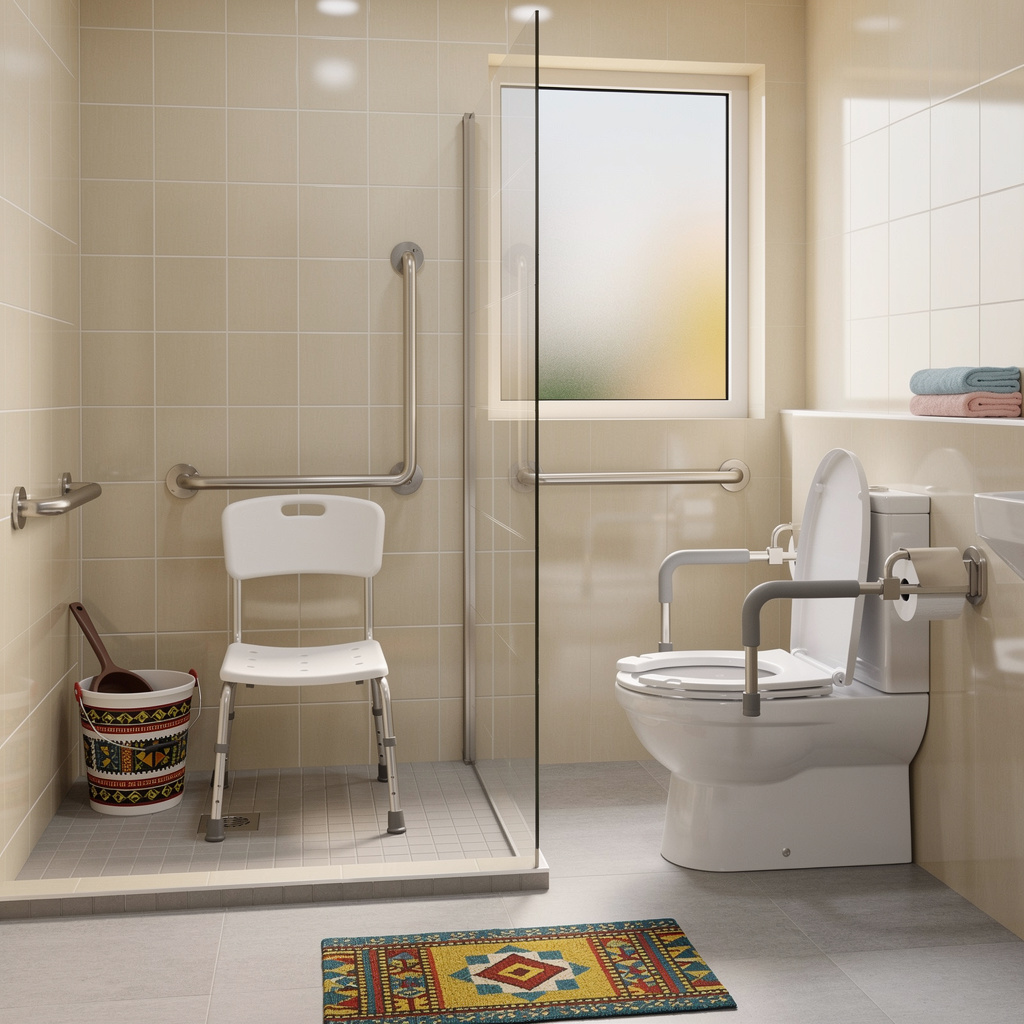
Falls in the bathroom represent one of the most common and dangerous accidents in home care. The combination of wet surfaces, limited space, and moments when balance is most compromised creates a perfect storm of risk.
But more than safety, bathroom equipment preserves something equally important: dignity. The ability to maintain personal hygiene independently or with minimal assistance protects self-esteem in profound ways.
Consider your Nigerian bathroom design:
Many Nigerian bathrooms are wet rooms where the entire floor gets wet during bathing. This makes non-slip footwear and mats even more critical. Additionally, ensure that shower chairs have rubber-tipped legs that won’t slide on wet tiles. Browse bathroom safety and patient care equipment.
7. Blood Pressure Monitors and Glucose Meters: Knowledge Is Power
Hypertension and diabetes are incredibly common in Nigeria. If your loved one has either condition, or both, home monitoring isn’t just convenient. It’s essential for catching dangerous changes early and managing medications effectively.
Blood Pressure Monitors:
Upper arm digital monitors (₦8,000 – ₦25,000) are the most accurate type and the one doctors recommend. They’re easy to use, just wrap the cuff, press start, and read the result.
Wrist monitors (₦6,000 – ₦15,000) offer convenience but are generally less accurate because wrist position affects readings significantly.
Blood Glucose Meters:
Basic glucometers (₦5,000 – ₦12,000) provide straightforward blood sugar readings. They’re sufficient for most diabetic patients.
Glucometers with memory (₦8,000 – ₦18,000) store previous readings, which helps both patients and doctors track patterns over time.
Don’t forget the ongoing cost:
Test strips for glucose meters are consumables. A box of 50 strips costs ₦3,000 – ₦8,000. Depending on how often your loved one tests, this becomes a regular monthly expense.
Why home monitoring changes outcomes:
When patients monitor regularly, they catch dangerous spikes or drops in blood pressure or blood sugar before they become emergencies. They see how food, medication, and activity affect their readings. This knowledge empowers better daily decisions and helps doctors adjust treatment more precisely. Browse diagnostic and monitoring equipment.
8. Nebulizers: Breathing Treatments at Home
Asthma is extremely common in Nigeria, affecting millions of children and adults. For people with severe asthma, COPD, chronic bronchitis, or recurrent respiratory infections, a home nebulizer transforms treatment from “rush to the hospital” to “handle it calmly at home.”
What does a nebulizer do?
It converts liquid medication into an extremely fine mist that the patient inhales. This delivers medication directly to the lungs where it’s needed most. For severe respiratory conditions, nebulizers are often more effective than standard inhalers.
Maintenance matters:
Clean the nebulizer mask or mouthpiece after every use. Replace masks every 3-6 months. Sterilize components weekly. These simple habits prevent infections and keep the device working efficiently. Browse nebulizers and respiratory care equipment.
9. Patient Lifts and Transfer Equipment: Protecting Caregivers
This is something many families don’t think about until a caregiver gets injured. Lifting or transferring a heavy patient incorrectly can cause permanent back damage to the caregiver. I’ve seen too many devoted children, spouses, and siblings develop chronic pain or disability while caring for loved ones.
When should you seriously consider a patient lift?
When your loved one weighs more than 70kg and cannot bear their own weight.
Options available:
Manual patient lifts (₦180,000 – ₦350,000) use hydraulic systems operated by the caregiver. They don’t require electricity.
Electric patient lifts (₦400,000 – ₦800,000) provide powered lifting at the push of a button. They’re easier on the caregiver but require charging.
For budget-conscious families:
Transfer boards (₦15,000 – ₦35,000) allow you to slide patients between surfaces, bed to wheelchair, wheelchair to car seat, with minimal lifting. They’re affordable and surprisingly effective.
Transfer belts (₦5,000 – ₦12,000) provide secure hand-holds when helping someone walk or stand. They distribute force better than grabbing clothing or under the arms. Browse patient handling and transfer equipment.
10. Over-Bed Tables and Daily Living Aids
Finally, let’s talk about the smaller items that make daily life manageable and comfortable for bedridden or limited-mobility patients.
Over-bed tables (₦25,000 – ₦60,000) are height-adjustable tables that roll over the bed. They hold meals, books, phones, or laptops at the perfect height. They restore independence in small but meaningful ways.
Additional helpful aids:
Bed ladders (₦8,000 – ₦18,000) are rope ladders that hang from the bed frame, helping patients pull themselves to a sitting position independently.
Reacher tools (₦3,000 – ₦8,000) grab items from high shelves or the floor without bending, crucial for people with hip or back problems.
Pill organizers (₦2,000 – ₦6,000) organize daily medications by time, preventing dangerous missed doses or double doses. Browse patient care and daily living aids.
HemacNG Delivers to Every Corner of Nigeria
Throughout this guide, I’ve been telling you about equipment. Now let me tell you about access. Because knowing what you need doesn’t help if you can’t actually get it.
HemacNG delivers durable medical supplies for home care to all 36 states in Nigeria. Lagos, Abuja, and Port Harcourt typically receive delivery within 1-3 days. Other locations receive delivery within 3-7 days.
For Nigerians living abroad, you can order from anywhere in the world. We deliver directly to your family in Nigeria, provide delivery confirmation with photos, and ensure your loved ones receive exactly what they need.
Our process is simple:
- Browse our catalog online or call to discuss your needs
- Confirm the delivery address
- Make a secure payment
- Receive tracking information
- Equipment arrives at your loved one’s doorstep
- Optional installation and setup service available. Contact HemacNG for delivery anywhere in Nigeria.

Frequently Asked Questions
What are the most essential medical supplies for home care in Nigeria?
The most essential items depend on your loved one’s specific condition, but generally include: a wheelchair or walker for mobility, an adjustable hospital bed for bedridden patients, an oxygen concentrator for respiratory conditions, a blood pressure monitor for hypertension, bathroom safety equipment, and a pressure relief mattress to prevent bedsores.
Where can I buy home care medical equipment in Nigeria?
You can purchase quality, durable medical supplies for home care in Nigeria from HemacNG. We supply all categories with delivery to all 36 states. You can order online or contact us directly for personalized guidance.
How much does a wheelchair cost in Nigeria?
Wheelchair prices range from ₦35,000 for basic transport chairs to ₦250,000 for specialized reclining wheelchairs. Standard manual wheelchairs suitable for most home care needs cost ₦45,000-₦120,000. Browse our wheelchair range.
Can I rent medical equipment instead of buying?
Yes, renting is often the smarter choice for short-term needs. Hospital beds, wheelchairs, and some other equipment can be rented. Contact HemacNG to discuss rental availability and pricing for your specific situation.
Does HemacNG deliver to all states in Nigeria?
Yes, we deliver home care medical equipment to all 36 states in Nigeria. Major cities receive delivery within 1-3 days; other locations receive delivery within 3-7 days.
Can I buy medical equipment for my parents in Nigeria from abroad?
Absolutely. Diaspora Nigerians can order from anywhere in the world. We deliver directly to your family in Nigeria and provide delivery confirmation. Contact us for international orders.
Your Loved One Deserves Quality Home Care
Home care in Nigeria isn’t just possible, it’s increasingly the preferred choice for families who want their loved ones to recover and age in comfort and dignity. The right durable medical supplies for home care in Nigeria transform overwhelming situations into manageable ones. Every wheelchair represents restored freedom. Every hospital bed represents better sleep and less pain. This equipment doesn’t just support bodies. It supports families, hope, and healing.
At HemacNG, we don’t just sell medical equipment. We partner with Nigerian families to create safe, comfortable home care environments. From Lagos to Maiduguri, from Calabar to Sokoto, we’re with you. Ready to set up quality home care for your loved one? Browse Our Complete Home Care Equipment Catalog. Contact Us for Personalized Recommendations and Quotes. Let’s make home the best place for healing, together.