
Uncategorized
The Top 7 Medical Essentials for Every Nigerian Clinic (2026 Buyer’s Guide)

Introduction
It’s a Tuesday morning in Kaduna. Dr. Tunde, a passionate young physician who spent six years studying medicine and two more years doing his housemanship, finally opens the doors of his first private clinic. He’s excited. His family is proud. His community is hopeful, But within the first week, something goes wrong. A patient comes in with suspected malaria and typhoid. Without an in-house hematology analyzer, Dr. Tunde has to refer the patient to a lab three streets away. The results take two days. By that time, the patient’s condition has worsened. Another patient comes in gasping for breath after an asthma attack, and there’s no oxygen concentrator to stabilize them. Dr. Tunde is skilled. He’s dedicated. But without the right medical essentials for Nigerian clinics, even the best doctor can fall short of delivering the care their patients deserve.
Does that story sound familiar? If you’re a Nigerian healthcare provider, whether you’re just starting out or you’ve been running a clinic for years, this guide is for you. Today, we’re breaking down the top 7 medical essentials for Nigerian clinics in 2025, why they matter deeply, and where you can get them without breaking the bank. Let’s get into it.
Why Equipping with the Right Medical Essentials Matters
Behind every accurate diagnosis in your clinic, there’s at least one piece of equipment that made it possible:
- A vital signs monitor that caught dangerously low oxygen
- A hematology analyzer that revealed a severe infection
- An ECG machine that confirmed a silent heart attack
- A sterilizer that quietly prevented a deadly infection
In Nigeria’s challenging healthcare environment, choosing the right medical essentials for Nigerian clinics is not a luxury; it’s a survival strategy.
When your equipment is reliable and SON/NAFDAC‑approved, you get:
- Patient safety
- Lower risk of infections and diagnostic errors
- Better monitoring of critically ill patients
- Professional image and trust
- Patients feel more confident when they see proper equipment
- Referring doctors and HMOs take you more seriously
- Efficiency and revenue
- Faster diagnoses and shorter waiting times
- More services delivered in‑house instead of referring everything out
The World Health Organization (WHO) stresses that basic diagnostic and sterilization equipment is central to safe health service delivery—especially in low‑ and middle‑income countries like Nigeria.
Equipping your facility with the right medical essentials for Nigerian clinics is, therefore:
- A clinical decision
- A business decision
- And a reputation decision
Now, let’s look at the 7 devices that no serious clinic in Nigeria should be without.
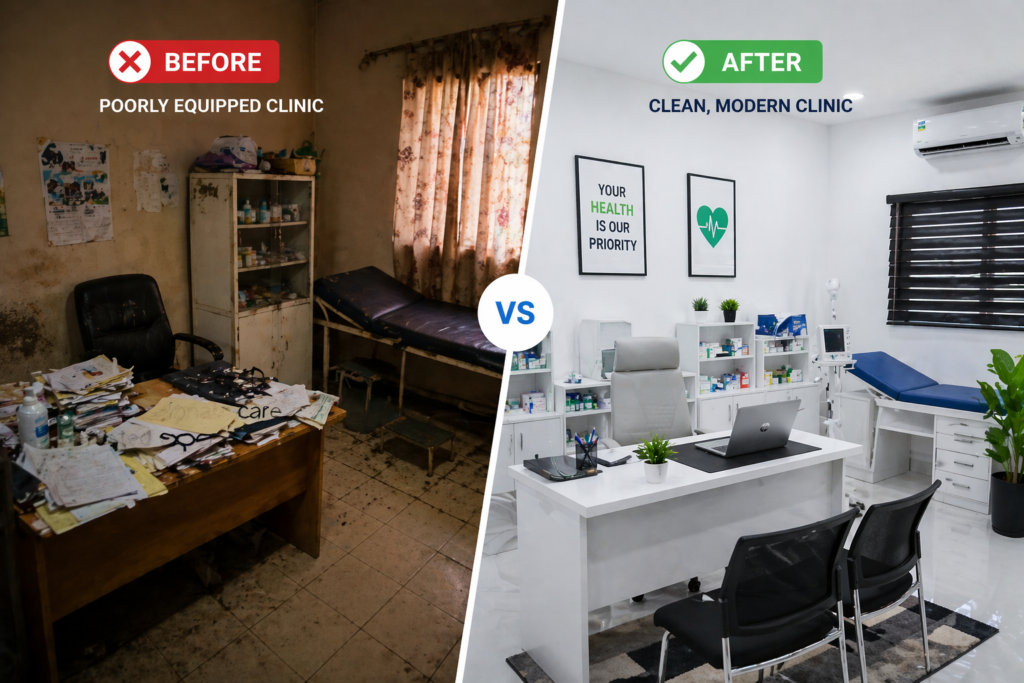
The Top 7 Medical Essentials for Nigerian Clinics in 2026
These are the core medical essentials for Nigerian clinics—whether you’re in Lagos, Kano, Aba, Makurdi, or a smaller town in between.
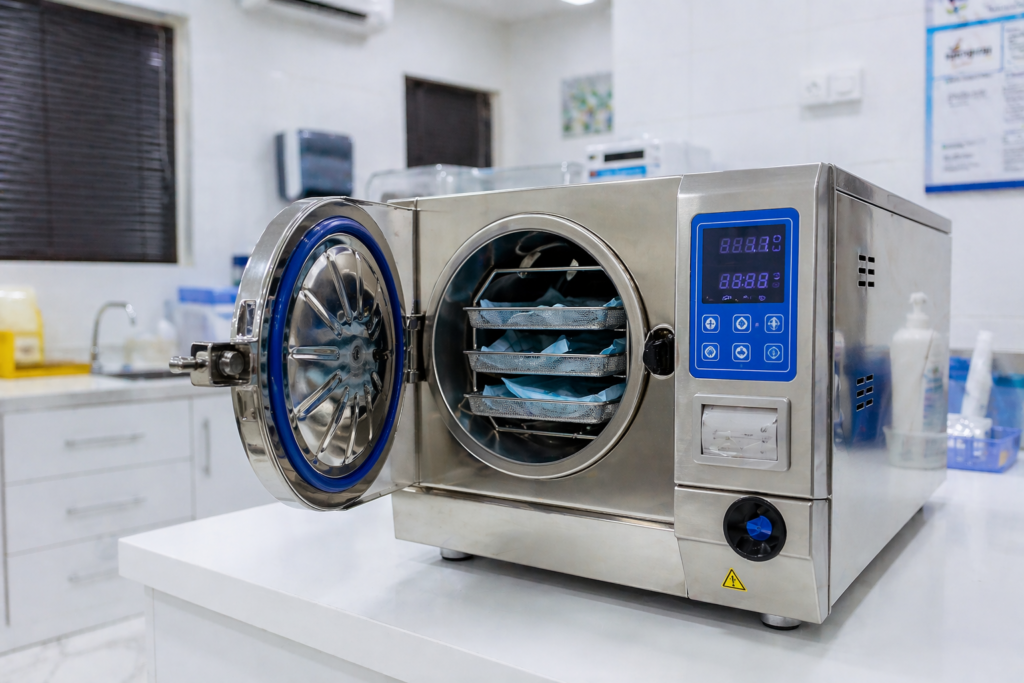
1. Autoclave / Sterilizer – The Guardian of Infection Control
If you remember only one thing from this guide, let it be this:
No clinic is safe without a good sterilizer.
An autoclave (steam sterilizer) uses high-pressure steam to destroy all forms of microorganisms, including spores, on reusable instruments:
- Surgical scissors
- Forceps and clamps
- Speculums
- Dental instruments
- Reusable syringes or equipment parts
Why does this medical essential matter so much in Nigerian clinics?
- Prevents cross‑infection with HIV, hepatitis B/C, and other blood‑borne pathogens
- Protects mothers in maternity units from puerperal sepsis
- Makes sure every procedure, no matter how small, is done with safe instruments
In Nigeria, where hospital‑acquired infections are a continuing concern, a reliable autoclave is not optional.
UV cabinets can help with surface disinfection, but they do not replace steam sterilization for surgical and invasive tools.
What to look for:
- SON/NAFDAC compliance
- Adequate chamber size (e.g., 12L for small clinics; 18–23L for medium)
- Strong after‑sales support and availability of spare parts
You can explore options here: HemacNG Sterilizer Collection
For a deeper dive into types of sterilizers (UV vs. steam) and how to choose, you may also read: Top Sterilizers for Clinics in Nigeria (UV vs Steam)
2. Patient Vital Signs Monitor – The Diagnostic Triad
Before you prescribe anything, vital signs tell the patient’s story.
A vital signs monitor (or at least a set of individual tools like a BP monitor, thermometer, and pulse oximeter) is one of the most fundamental medical essentials for Nigerian clinics.
It typically measures the following:
- Blood pressure
- Pulse rate
- Oxygen saturation (SpO₂)
- Temperature (sometimes)
Why it’s essential:
- Quickly flags hypertensive crises, shock, or sepsis
- Helps triage who needs urgent attention in a busy waiting room
- Monitors response to treatment (e.g., after nebulisation or oxygen therapy)
In a Nigerian clinic, where you’ll see a high number of hypertensive, diabetic, and febrile patients, this data can be the difference between “go home and rest” and “you must go to a bigger hospital now.”
What to look for:
- Accurate, validated devices
- Clear, bright display
- Adult and paediatric cuffs (if relevant)
- Reliable NIBP and SpO₂ modules
You can browse multi‑parameter monitors suited for clinics here: Shop Vital Signs Monitors on HemacNG
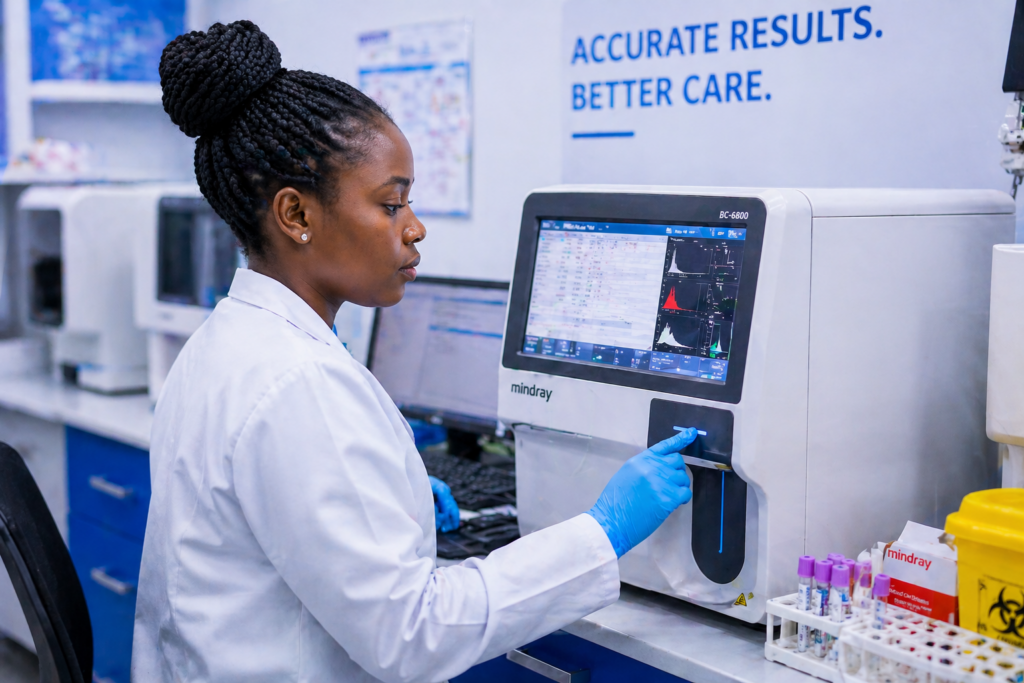
3. Hematology Analyzer – Your Internal Lab Powerhouse
If your clinic is serious about diagnostics, a hematology analyzer (for Complete Blood Count – CBC) quickly moves from “nice to have” to essential.
What it does:
- Measures red blood cells, white blood cells, platelets, haemoglobin, etc.
- Gives quick results on anaemia, infection, and some haematological issues
Why it’s one of the key medical essentials for Nigerian clinics:
- In a country where malaria, typhoid, and infections are common, CBC is ordered daily
- Faster results mean faster decisions—and fewer patients lost to competing labs
- In‑house testing generates additional revenue and improves patient loyalty
What to look for:
- 3‑part or 5‑part differential (depending on your case mix and budget)
- Ease of use and maintenance
- Availability of reagents and local after‑service
You can start with basic, reliable options here: HemacNG Laboratory Equipment
4. ECG Machine – The Heart’s Storyteller
As lifestyles change and non‑communicable diseases rise, cardiac issues are becoming more common in Nigeria.
An ECG (Electrocardiogram) machine records the heart’s electrical activity, helping you detect:
- Arrhythmias (irregular heartbeats)
- Ischaemia or heart attacks
- Conductive abnormalities
Why this is now one of the crucial medical essentials for Nigerian clinics:
- You can evaluate chest pain in your clinic instead of immediately referring everyone
- You identify high‑risk cardiac patients early
- You elevate your clinic from “basic” to a more complete diagnostic centre
What to look for:
- 3‑channel or 12‑channel devices (12‑channel is standard)
- Paper or digital output (or both)
- Simple interpretation features (waveform quality, some have basic analysis)
Explore easy‑to‑use options in: HemacNG ECG Machine Collection
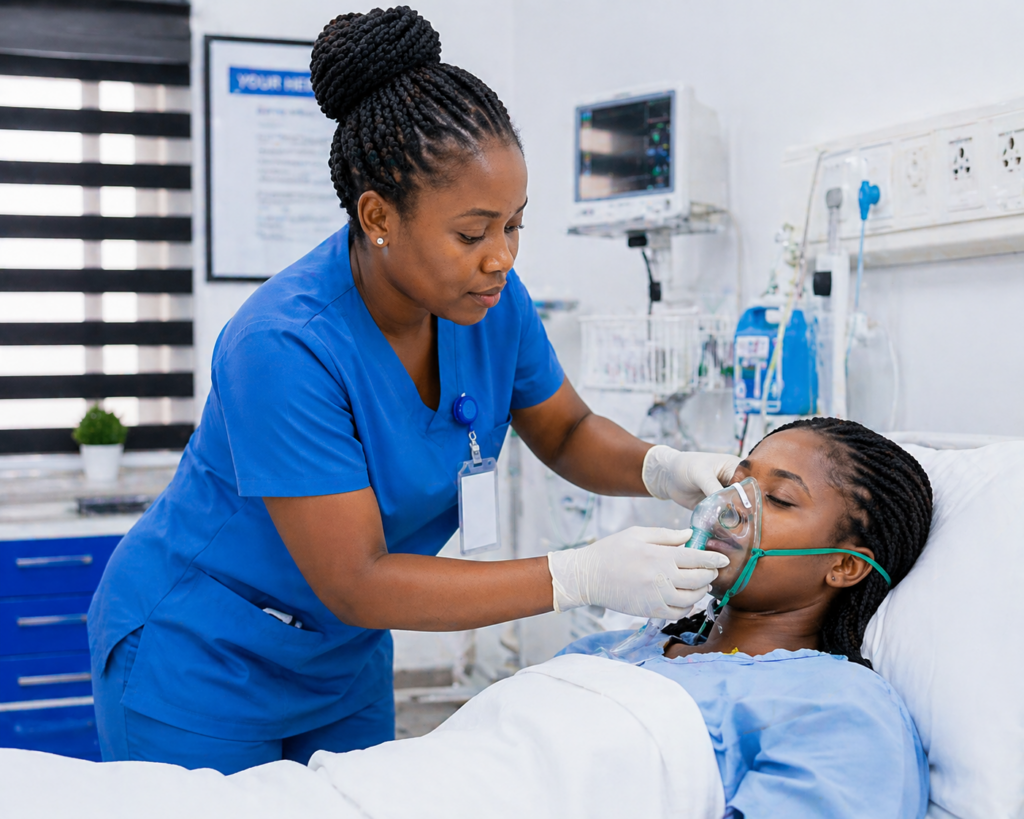
5. Oxygen Concentrator & Delivery Systems – The Breath of Life
When someone is struggling to breathe, seconds feel like hours.
An oxygen concentrator draws in regular air and concentrates the oxygen so you can deliver it to patients via:
- Nasal cannula
- Face mask
- Non‑rebreather masks (depending on severity)
This is essential for:
- Asthma attacks
- Severe pneumonia
- Heart failure exacerbations
- Post‑surgery respiratory distress
Why it’s one of the medical essentials for Nigerian clinics:
- In acute crises, you can stabilise patients while arranging referral
- For some milder cases, you can treat fully in‑house
- It’s much more sustainable than relying entirely on oxygen cylinders
What to look for:
- Adequate flow rate (e.g., 5L/min or 10L/min depending on clinic type)
- Reliable filters and alarms
- Power consumption that matches your reality (PHCN + generator/inverter)
You can browse concentrators designed for Nigerian conditions here: Oxygen Concentrators on HemacNG
For general global guidance on oxygen in health facilities, WHO and partners provide resources via the Oxygen Therapy section.
6. Ultrasound Scanner – The Non‑Invasive Eye
An ultrasound scanner uses sound waves (not radiation) to create images of internal organs.
Why it’s one of the most transformative medical essentials for Nigerian clinics:
- Confirms and dates pregnancies
- Assesses foetal wellbeing
- Evaluates abdominal pain (gallstones, kidney issues, masses, fluid)
- Quickly checks for things like ectopic pregnancy, ovarian cysts, or fibroids
Owning an ultrasound scanner means:
- Better, faster answers for worried patients
- Less need to send them away for basic scans
- New revenue streams for your clinic
What to look for:
- Abdominal + obstetric probes as a minimum
- Clear image quality (especially for OB/GYN work)
- Portability if you plan to do outreach or bedside scans
See a range of budget‑friendly and mid‑range scanners here: Ultrasound Machines on HemacNG
7. Laboratory Microscope – The Foundation of Diagnosis
Even with modern analyzers, a compound microscope remains one of the most fundamental medical essentials for Nigerian clinics—especially those with in‑house labs.
It allows you to:
- Identify malaria parasites
- View blood films and cell morphology
- Examine urine and stool samples for parasites and crystals
- Assist in basic bacteriology and microbiology work
Why it’s essential in Nigeria:
- Malaria remains highly prevalent
- Many infections present non‑specifically
- On‑site microscopy means faster, more accurate diagnosis
What to look for:
- Good optics (glass lenses, not plastic)
- Built‑in illumination
- Durability for daily use in a Nigerian lab environment
Check the options here:
Microscopes on HemacNG
Why Choose HemacNG for Your Clinic’s Medical Essentials
Choosing what to buy is one thing. Choosing who to buy from is just as critical.
HemacNG has become a trusted source of medical essentials for Nigerian clinics because we focus on:
1. Authentic, Approved Equipment
- Only verified, original brands
- SON and NAFDAC‑aligned products
- No counterfeit or “grey market” equipment
2. Nationwide Delivery
- Fast, reliable shipping to all 36 states and the FCT
- Transparent timelines so you can plan your setup
3. After‑Sales Support and Training
- Basic training on how to install and use key devices
- Technical assistance and guidance when issues arise
- Access to after‑service and maintenance support, where applicable
4. Affordable Clinic Packages
- Starter kits for new clinics
- Discounts on bundles (e.g., monitor + ECG + ultrasound)
- Solutions for small budgets that still prioritise safety and quality
You can explore our curated:
Clinic Starter Kits for Nigerian Clinics (internal link placeholder)
Final Thoughts: Your Equipment, Your Legacy
Equipping a clinic is not just about buying machines; it’s about shaping your standard of care.
Each item on this list of medical essentials for Nigerian clinics—from the autoclave that quietly prevents infections, to the ultrasound that reassures an expectant mother, to the microscope that confirms malaria—contributes to:
- Lives saved
- Complications avoided
- Fewer unnecessary referrals
- Stronger trust between you and your community
At HemacNG, we’ve seen brand‑new clinics grow into respected centres of excellence because they invested early in the right foundation.
If you’re:
- Launching your first clinic, or
- Upgrading an existing facility,
then your next step is clear:
- Review these top 7 medical essentials for Nigerian clinics.
- Decide what you must have now, and what you can phase in later.
- Reach out to a partner who understands both the clinical and the Nigerian realities.
You can start that conversation today:
Contact HemacNG to Plan Your Clinic’s Medical Essentials
Your patients may never know the brand names on your devices. But they will feel the difference every time you diagnose accurately, treat safely, and send them home healthier than they arrived.