
Uncategorized
Top Sterilizers for Clinics in Nigeria (UV vs Steam): The 2026 Guide
You see, starting or running a clinic in Nigeria is never easy. The challenges are endless, erratic power supply, rising equipment costs, regulatory requirements, staff training. But perhaps the most critical challenge, the one that silently determines whether your practice thrives or fails, is infection prevention. And that starts with having the top sterilizers for clinics in Nigeria, the kind that keeps instruments genuinely safe, protects patients from harm, and maintains the trust that took years to build.
Dr. Amina’s story is unfortunately not unique. In her first week of operation, she watched helplessly as patients who should have had routine, complication-free procedures developed infections. Small infections at first. But enough to raise alarm. Enough to damage the reputation she was desperately trying to build.
The reason? That inherited sterilizer wasn’t actually sterilizing anything. It was going through the motions, heating up, making the right sounds, but it wasn’t reaching the temperatures necessary to kill resistant microorganisms.
When she finally invested in one of the top sterilizers for clinics in Nigeria from a trusted supplier, everything changed. Infection rates dropped to nearly zero. Patient trust soared. Referrals increased. Her practice transformed from struggling to thriving. That’s exactly why this guide exists today. To help you make that same informed, potentially life-saving decision.
In this comprehensive 2025 guide, we’re going to break down everything you need to know about the top sterilizers for clinics in Nigeria. We’ll compare UV sterilizers versus steam autoclaves, explain realistic pricing, outline the pros and cons of each type, and most importantly, show you exactly where to buy original, SON/NAFDAC-approved sterilizers backed by a genuine 2-year warranty. Because your patients’ safety, and your clinic’s reputation, depend on getting this decision right.
Why Every Nigerian Clinic Needs a Reliable Sterilizer
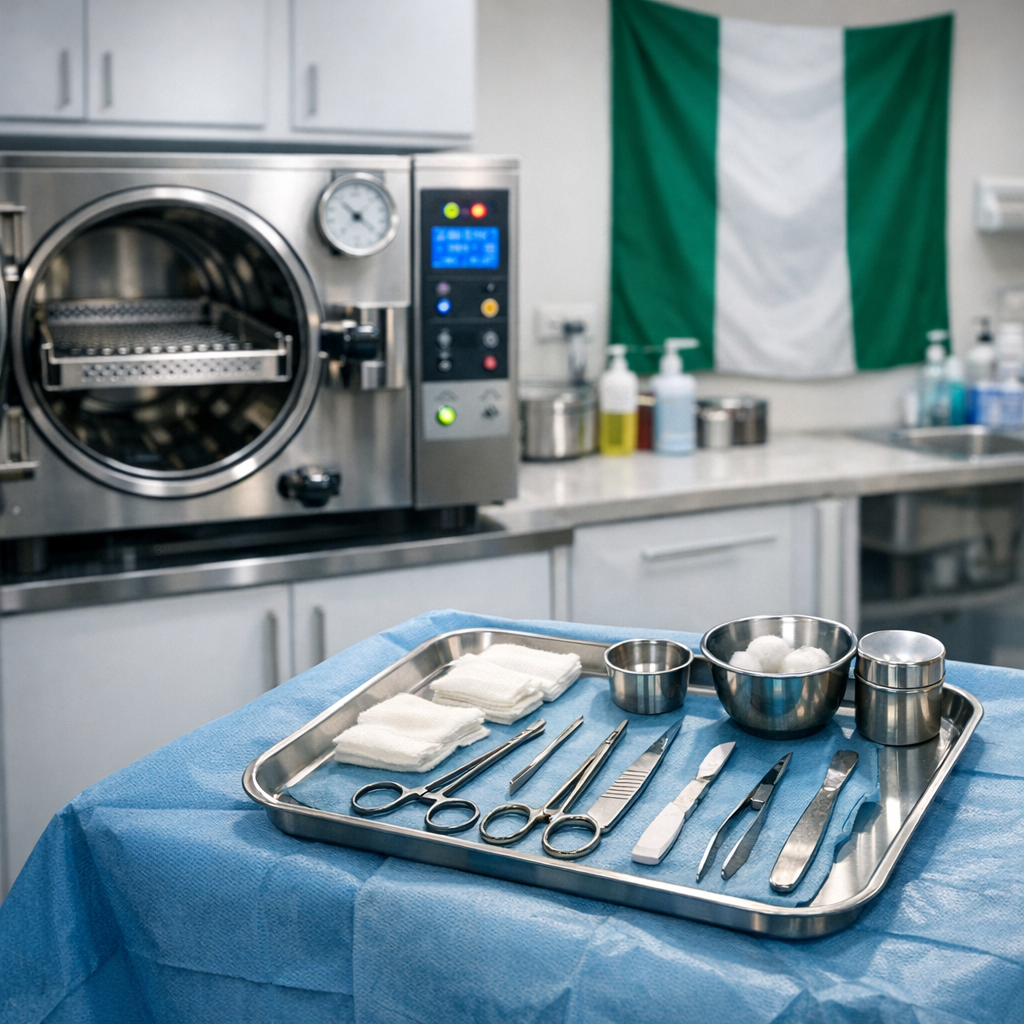
Behind every safe injection, wound dressing, delivery, dental extraction, or minor surgical procedure is a properly sterilized instrument. Think about that for a moment. Every single invasive procedure you perform relies entirely on the assumption that your instruments are sterile. Not clean. Not disinfected. Sterile.
Yet, disturbingly, many clinics in Nigeria unknowingly operate with substandard sterilization systems. These aren’t intentionally reckless clinic owners. They’re dedicated healthcare professionals who simply didn’t know what to look for when purchasing sterilization equipment. They bought based on price alone, or from an unreliable supplier, or accepted whatever came with the clinic space they rented. The consequences can be devastating.
Whether you run a small private GP practice, a maternity clinic, a dental center, a diagnostic lab, or a surgical unit, choosing from the top sterilizers for clinics in Nigeria ensures several critical outcomes:
Compliance with SON and NAFDAC standards. Medical regulators are increasingly emphasizing sterilization as a non-negotiable requirement for clinic licensing and renewal. You cannot afford to fail an inspection.
According to the World Health Organization, sterilization is a core component of Infection Prevention and Control (IPC), especially critical in regions with high burdens of infectious diseases. In Nigeria, where patients often delay seeking care due to cost concerns, when they finally come to your clinic, they’re placing enormous trust in you. Don’t let inadequate sterilization betray that trust.
Understanding the Two Main Types: UV vs Steam Sterilizers
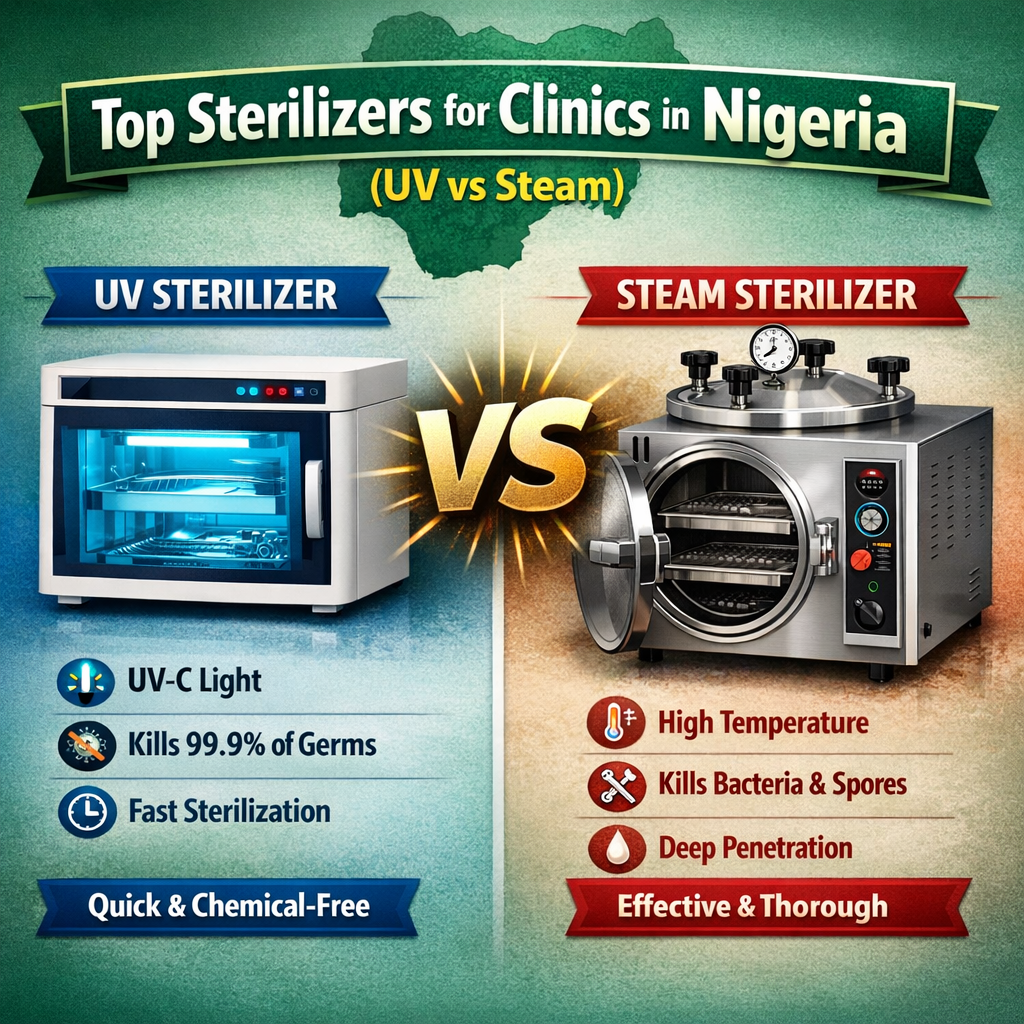
Before you can choose from the top sterilizers for clinics in Nigeria, you need to understand the fundamental difference between the two major categories commonly used in Nigerian healthcare settings:
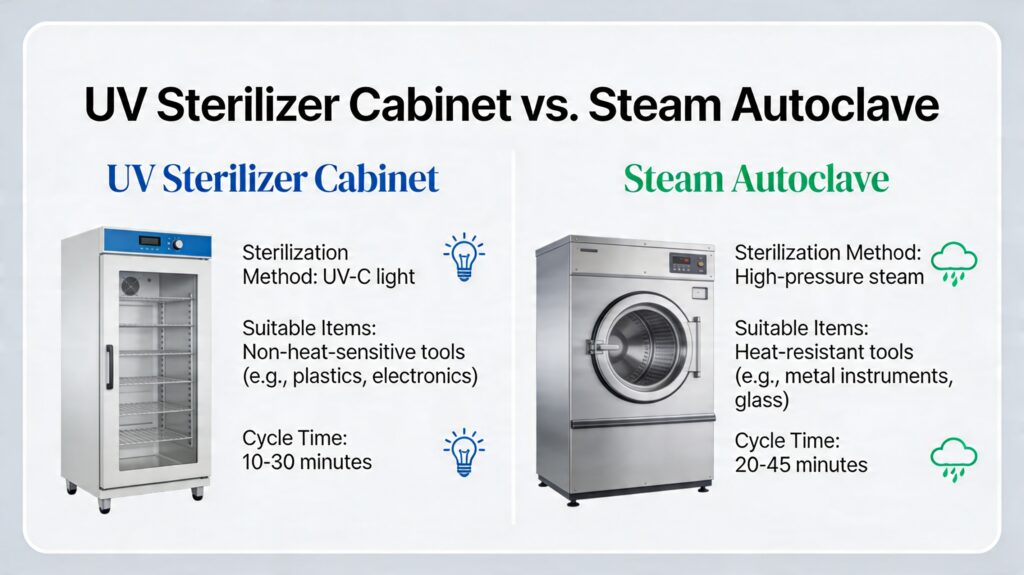
UV Sterilizers (cold sterilization using germicidal UV-C light)
Steam Sterilizers/Autoclaves (high-temperature, high-pressure steam sterilization)
Each type has specific uses, distinct strengths, and important limitations. Choosing the wrong type for your clinic’s needs can seriously compromise patient safety, no matter how expensive or well-made the unit is. Let’s break them down clearly.
UV Sterilizers: Fast Surface Disinfection
How UV Sterilizers Actually Work
UV sterilizers use UV-C light, the same powerful germicidal wavelength used in hospital air disinfection systems and water purification, to destroy bacteria, fungi, viruses, and some spores on exposed surfaces.
When UV-C light hits microorganisms, it damages their DNA, rendering them unable to reproduce or cause infection. This happens quickly, making UV sterilizers extremely useful for rapid, surface-level disinfection between patients.
What UV Sterilizers Are Best For
- Lightweight medical tools
- Plastic instruments that can’t withstand high heat
- Beauty and dermatology clinic tools
- Dental accessories and smaller items
- Quick disinfection needs between patients
- Clinics with extremely limited or unreliable electricity
- General practice clinics performing low-risk procedures
The Advantages of UV Sterilizers
No heat damage — Perfect for plastic instruments, rubber items, and heat-sensitive equipment that would melt or degrade in an autoclave.
Remarkably fast cycles — Most UV sterilization completes within 15-30 minutes, allowing rapid instrument turnover.
Minimal electricity consumption — These units draw very little power, making them viable even with small generators or inverter systems during frequent power outages.
No water or pressure required — Unlike autoclaves, UV sterilizers don’t need distilled water or create steam, simplifying operation.
Easy operation — Even junior clinic staff can safely operate UV sterilizers with minimal training.
Budget-friendly initial investment — Generally, UV sterilizers are among the most affordable sterilization options.
The Critical Limitations You Must Understand
However—and this is absolutely crucial—UV sterilizers have serious limitations that every clinic owner must understand:
Surface-only sterilization — UV light cannot penetrate into crevices, internal channels, or between stacked instruments. It only sterilizes the surfaces directly exposed to the light.
Not suitable for surgical instruments — For any invasive surgical procedure, UV sterilization is insufficient.
Cannot replace autoclaves — In clinics performing procedures like deliveries, minor surgeries, or any invasive procedures, UV sterilizers alone do not meet medical-grade sterilization requirements.
Positioning is critical — Instruments must be arranged so all surfaces receive direct UV exposure. Shadows and overlaps leave areas unsterilized.
Think of UV sterilizers as excellent supplementary disinfection tools, perfect for quick turnover between patients in low-risk scenarios—but not as your primary sterilization method for surgical instruments.
Steam Sterilizers (Autoclaves): The Gold Standard
Now, let’s talk about the equipment that sets the global gold standard for medical sterilisation.
How Steam Autoclaves Work
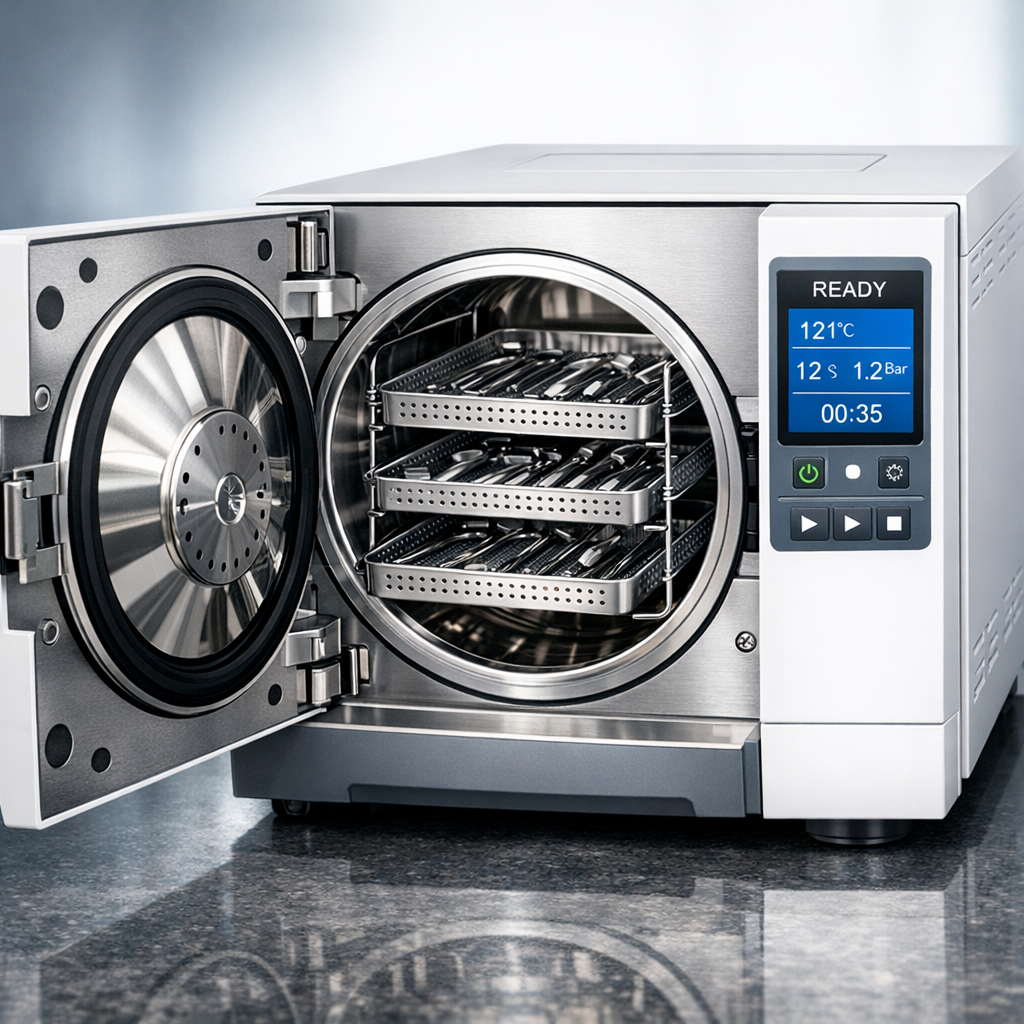
Steam sterilisers, commonly called autoclaves, use a combination of high pressure and high temperature (typically 121°C to 134°C) to generate saturated steam. This pressurized steam penetrates deeply into instruments, surgical packs, and even the internal channels of hollow instruments.
The combination of heat, moisture, and pressure destroys absolutely everything: bacteria, viruses, fungi, and even the most resistant bacterial spores. This is why you’ll find autoclaves in every hospital operating theatre, every surgical centre, and every properly equipped maternity clinic worldwide.
What Steam Sterilizers Are Essential For
- All surgical instruments without exception
- Metal tools of all types
- Dental instruments and handpieces
- Speculums, forceps, scissors, clamps
- Instruments with internal channels or lumens
- Any tools used in high-risk, invasive procedures
- Maternity clinic delivery equipment
- Minor surgery clinic instruments
The Powerful Advantages of Autoclaves
True hospital-grade sterilization — Autoclaves meet the highest international standards for medical sterilization.
Destroys even resistant spores — Unlike other methods, autoclaves eliminate endospores, the most resistant form of microbial life.
Deep penetration for complete sterilization — Steam reaches every surface, every crevice, every internal channel.
Regulatory compliance — Autoclaves are mandatory for surgical, maternity, and dental clinics to meet SON and NAFDAC standards.
Proven durability — High-quality autoclaves, when properly maintained, can serve your clinic reliably for 10-15 years or more.
Professional credibility — Patients and regulators recognize autoclaves as the mark of a serious, safety-conscious practice.
What You Need to Know About the Limitations
Requires stable electricity — Autoclaves need consistent power to reach and maintain sterilization temperatures. Frequent power interruptions can extend cycles.
Needs distilled water — Using regular tap water causes mineral buildup that damages the unit over time. Budget for distilled water as an ongoing expense.
Longer cycles compared to UV — Complete autoclave cycles typically take 45-90 minutes including heating, sterilization, and cooling.
Higher initial cost — Quality autoclaves represent a more significant investment upfront—but absolutely worth every naira for the safety they provide.
Nevertheless, if your clinic performs any invasive procedures—deliveries, minor surgeries, wound care, dental procedures—an autoclave isn’t optional. It’s mandatory for patient safety and regulatory compliance.
For a deeper understanding of medical equipment management, read our comprehensive guide: What Goes Into Hospital Medical Equipment Management?
UV vs Steam: Quick Comparison Table
To make your decision clearer, here’s a direct comparison:
| Feature | UV Sterilizer | Steam Autoclave |
|---|---|---|
| Sterilization Method | UV-C light exposure | High-pressure saturated steam |
| Penetration Depth | Surface only | Deep + internal channels |
| Operating Temperature | No heat (room temperature) | 121–134°C |
| Ideal Use Case | Quick disinfection, low-risk items | Medical-grade surgical sterilization |
| Power Consumption | Very low | Moderate |
| Sterilization Speed | Fast (15-30 min) | Medium (45-90 min complete cycle) |
| Water Required | None | Yes (distilled water) |
| Regulatory Compliance | Limited to specific uses | Full SON/NAFDAC approval for surgical use |
| Initial Investment | Lower | Higher (but essential) |
| Best For | GP clinics, beauty clinics, dermatology | Surgical, maternity, dental, invasive procedures |
This comparison is essential when evaluating the top sterilizers for clinics in Nigeria for your specific practice needs.
Top Sterilizers for Nigerian Clinics: 2026 HemacNG Recommendations
Based on years of supplying Nigerian healthcare facilities, here are the specific sterilizers that consistently deliver reliability, safety, and value. All units listed are SON/NAFDAC-approved, clinically tested, and available through HemacNG with a comprehensive 2-year warranty, the strongest warranty available in Nigeria for clinical sterilization equipment.
1. UV Light Sterilizer Box — Best for Surface-Level Tools
Perfect for: GP clinics, beauty and aesthetic centers, dental accessory storage, midwifery practices needing quick intermediate disinfection.
This compact UV sterilizer offers convenient surface disinfection for lightweight tools. It’s ideal as a supplementary unit for rapid turnover between low-risk procedures.
Key features:
- Low power consumption (inverter-friendly)
- Compact footprint for small clinic spaces
- Simple operation
- Budget-friendly entry point
Important note: Not sufficient as your sole sterilization method for invasive procedures. Browse UV sterilizers at HemacNG
2. Portable UV Cabinet Sterilizer — Best for Small Clinics
This larger UV cabinet offers more internal space for multiple tools simultaneously. Perfect for clinics with high patient turnover but limited access to stable electricity.
Key features:
- Larger capacity than box models
- Better organization with multiple shelves
- Still operates on minimal power
- Excellent for quick instrument turnover. Explore portable UV sterilizers
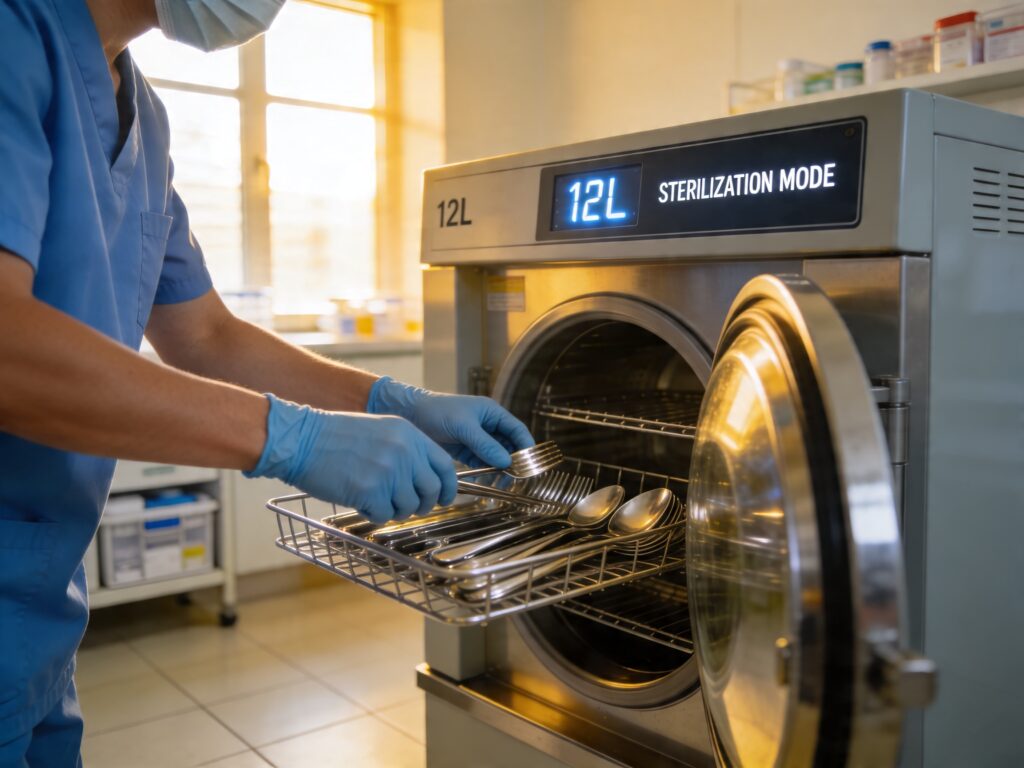
3. 12L Steam Autoclave — Nigeria’s Most Popular Choice
This is the best-selling sterilizer among Nigerian clinics today, and for excellent reasons. The 12-liter capacity strikes the perfect balance between functionality and affordability.
Ideal for:
- Maternity homes and birthing centers
- Dental clinics and orthodontic practices
- General practice clinics performing minor procedures
- Small surgical units
- Wound care clinics
Why Nigerian clinics love this model:
- SON/NAFDAC compliant for surgical use
- Perfect capacity for daily clinic use (not too small, not unnecessarily large)
- Highly durable construction
- Fits comfortably in small clinic spaces
- Proven reliability across thousands of Nigerian facilities
Price range: Contact HemacNG for current pricing
This autoclave provides true hospital-grade sterilization for all reusable metal instruments. If you’re unsure which autoclave to choose, this 12L model is almost certainly the right answer for most Nigerian clinics. View 12L autoclave specifications
4. 18L or 23L Autoclave — Best for Medium to Large Clinics
As your practice grows, or if you perform high volumes of procedures daily, these larger autoclaves become essential for operational efficiency.
Perfect for:
- Busy maternity clinics with multiple daily deliveries
- Dental practices with multiple chairs operating simultaneously
- Surgical clinics performing numerous minor procedures
- Diagnostic centers with laboratory sterilization needs
Advantages over smaller models:
- Sterilize significantly more instruments per cycle
- Reduce waiting time between procedures
- Improve workflow efficiency dramatically
- Handle surgical packs and larger instrument sets
Price range: Premium pricing reflecting larger capacity and capabilities
These units represent the top sterilizers for clinics in Nigeria that are scaling operations or handling high patient volumes. Explore large capacity autoclaves
5. Automatic Steam Sterilizer — Best for High-Volume Hospitals
This is the premium choice for large clinics, surgical centers, and hospitals requiring maximum efficiency and automation.
Features:
- Fully automated cycles with minimal manual intervention
- Digital controls and cycle monitoring
- Fastest sterilization times
- Highest daily throughput
- Built-in cycle recording for compliance documentation
Best for facilities that:
- Run operating theaters
- Perform high volumes of surgical procedures
- Require detailed sterilization documentation
- Demand maximum reliability and speed
Investment level: Premium, but absolutely worth it for high-volume facilities. Contact HemacNG for automatic sterilizer pricing
Understanding Sterilizer Prices in Nigeria (2026 Guide)
One of the most common questions clinic owners ask is: “How much should I actually budget for a quality sterilizer?”
The answer depends on several factors:
- Capacity (liters for autoclaves)
- Type (UV vs. steam)
- Brand quality and country of origin
- Level of automation (manual vs. automatic controls)
- Energy efficiency features
- Included accessories (instrument trays, biological indicators, etc.)
General Pricing Trends
UV Sterilizers → Most affordable entry point (budget-friendly for supplementary use)
12L Autoclaves → Mid-range investment (best value for most clinics)
18-23L Autoclaves → Premium pricing (justified by increased capacity and efficiency)
Automatic Sterilizers → Premium investment (highest capacity and automation)
The HemacNG Pricing Advantage
When you purchase through HemacNG, you benefit from:
✅ Transparent, honest pricing — No hidden fees or surprise charges
✅ 2-year comprehensive warranty — The longest and strongest in Nigeria
For current, specific pricing on any of the top sterilizers for clinics in Nigeria, contact HemacNG directly. Prices fluctuate with exchange rates, so getting a current quote ensures accuracy. Request a sterilizer quote from HemacNG
How to Choose the Right Sterilizer for Your Specific Clinic
Choosing a sterilizer can feel overwhelming with so many options. Here’s a clear, step-by-step framework to guide your decision:
Step 1: Honestly Assess Your Clinic Size and Type
Small GP clinic or beauty clinic? → UV sterilizer or 12L autoclave
Medium-sized maternity or dental clinic? → 12-18L autoclave
Large surgical facility or hospital? → 23L autoclave or automatic sterilizer
Step 2: Calculate Your Daily Instrument Volume
How many procedures do you perform daily? How many instruments does each procedure require? High patient numbers mean you need adequate capacity to avoid bottlenecks.
A 12L autoclave might need to run 2-3 cycles daily in a busy clinic. An 18L autoclave could handle the same load in fewer cycles, improving workflow.
Step 3: Evaluate Your Power and Water Situation
Frequent power outages? UV sterilizers operate on minimal power and work well with small generators or inverters.
Stable electricity available? Autoclaves become highly practical and should be your choice for invasive procedures.
Water access? Autoclaves require distilled water. Factor in the ongoing cost and availability.
Step 4: Confirm SON & NAFDAC Compliance
This is non-negotiable. Regulatory bodies conduct inspections. Non-compliant equipment can result in license suspension or revocation.
HemacNG exclusively distributes sterilizers that meet Nigerian regulatory standards. This eliminates guesswork and risk from your purchasing decision.
Step 5: Buy From a Genuinely Trusted Supplier
This final step is where many Nigerian clinic owners make devastating mistakes.
Buying sterilization equipment from the wrong vendor can mean:
- Counterfeit autoclaves that look legitimate but don’t reach sterilization temperatures
- Weak heating elements that fail within months
- Zero warranty or customer support
- No access to spare parts when components fail
- Fundamentally unsafe “sterilization” that puts patients at risk
HemacNG eliminates every single one of these risks.
For more guidance on making smart equipment purchases, read: Better Ways for Hospitals to Buy Medical Equipment
Why Thousands of Nigerian Clinics Trust HemacNG for Sterilizers
HemacNG has earned its position as Nigeria’s leading and most trusted distributor of medical equipment. This reputation was built over years through consistent delivery of authenticity, quality, and reliability.
Here’s specifically why thousands of clinics across Nigeria choose HemacNG when purchasing the top sterilizers for clinics in Nigeria:
1. Authenticity Guaranteed — 100% SON/NAFDAC-Approved Equipment
Every single sterilizer sold by HemacNG is authentic, verified, and approved by Nigerian regulatory bodies. Zero tolerance for counterfeit equipment. Ever.
2. Industry-Leading 2-Year Comprehensive Warranty
HemacNG backs every sterilizer with a full 2-year warranty, the longest and strongest warranty available in the Nigerian medical equipment industry. This isn’t a marketing gimmick. It’s a genuine commitment to quality.
3. Direct Manufacturer Sourcing = Best Possible Pricing
By sourcing directly from manufacturers without middlemen, HemacNG delivers premium equipment at competitive prices. You get quality without the inflated markups.
4. Lightning-Fast Nationwide Delivery (24-72 Hours)
Lagos, Abuja, Port Harcourt, or anywhere in Nigeria, HemacNG’s logistics network delivers quickly and reliably.
5. Expert Technical Support & Installation Guidance
Biomedical engineers and equipment specialists are always available to answer questions, provide installation guidance, and troubleshoot any issues.
6. Proven Trust Among Nigerian Healthcare Providers
Thousands of successful equipment installations across:
- Maternity clinics and birthing centers
- Diagnostic laboratories
- Dental practices
- General hospitals
- Surgical centers
- NGO healthcare projects
7. Complete Clinic Setup Capability
Beyond sterilizers, HemacNG can furnish your entire clinic from the ground up, from basic stethoscopes to complete operating room equipment. One trusted partner for all your equipment needs. Explore HemacNG’s complete medical equipment catalog
Making the Investment That Protects Everything
As Dr. Ahmed discovered after upgrading his clinic’s sterilization equipment: “The right sterilizer doesn’t just prevent infections. It builds the foundation of trust that every successful medical practice needs.”
Your patients may never see your sterilizer. They probably won’t ask about your infection control protocols. But they will absolutely experience the impact, through the safety and quality of care you consistently provide.
Every time a patient walks out of your clinic without developing a preventable infection, your sterilizer has done its job. Every time a mother delivers her baby safely and recovers without complications, your sterilizer has protected her.
These invisible victories accumulate into something incredibly valuable: a reputation for safety and quality that becomes the bedrock of your practice. The top sterilizers for clinics in Nigeria aren’t just equipment purchases. They’re investments in patient safety, professional credibility, regulatory compliance, and long-term practice success.Ready to make the right choice for your clinic? Explore HemacNG’s Complete Range of SON/NAFDAC-Approved Sterilizers, Contact HemacNG for Expert Guidance and Current Pricing, Learn More About HemacNG’s Commitment to Nigerian Healthcare.
Because when you choose quality sterilization equipment from a trusted supplier, you’re not just buying a machine. You’re protecting lives, building trust, and creating the foundation for a practice that thrives. Let HemacNG help you make that happen.